Akai Professional Introduces MPC Sample Portable Standalone Sampler
Akai Professional is expanding its standalone lineup with the release of MPC Sample, a compact, battery-powered sampler that brings the core MPC workflow into a more accessible and portable format. Priced at $399 and available now, the unit is positioned as an entry point into the MPC ecosystem while still carrying enough depth to hold up in more experienced workflows.
The concept is clear. This is about reducing friction without stripping away the identity of what makes an MPC feel like an MPC. The device takes cues from legacy systems like the MPC60, then translates that workflow into a smaller footprint that can run entirely without a computer. That matters in a landscape where a lot of production tools are still tied to laptops, updates, and external dependencies.
Instead of trying to do everything, MPC Sample narrows in on sampling, chopping, sequencing, and quick idea generation, then supports that with just enough connectivity to integrate into a larger setup when needed.
A portable MPC designed for immediate use
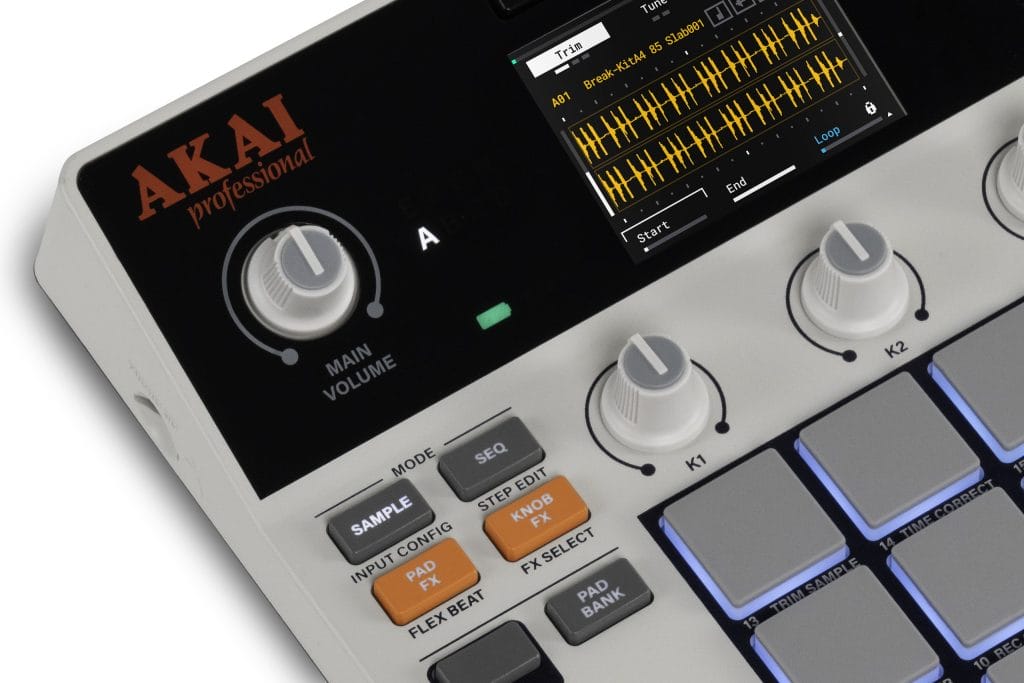
MPC Sample is built around mobility. The unit runs on a rechargeable lithium-ion battery that delivers up to five hours of use, and it includes a built-in speaker and microphone so ideas can be captured without external gear. The size makes it easy to throw into a backpack, and the simplified layout keeps the workflow direct.
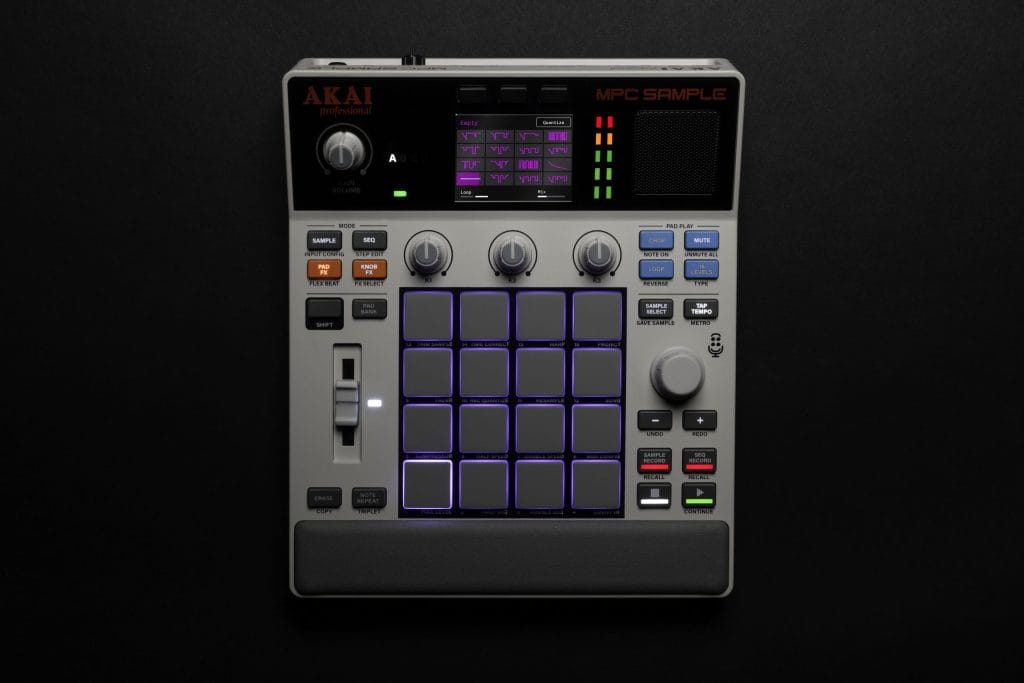
The hardware centers on 16 RGB velocity-sensitive pads with poly aftertouch, supported by three real-time control knobs and a dedicated parameter fader. A 2.4-inch color display handles waveform editing, giving users direct visual control when chopping and arranging samples.
Under the hood, the unit includes 2 GB of RAM, 8 GB of internal storage, and microSD expansion, which is enough for most sketching and performance use cases. It also supports a wide range of audio formats, keeping it flexible when pulling in source material.
Focused workflow with modern production tools
The core functionality stays aligned with what producers expect from the MPC lineage. Instant Sample Chop Mode allows users to quickly divide samples into playable sections, while real-time timestretch and repitch controls give flexibility when adjusting loops and one-shots. Internal resampling with effects makes it possible to build and reshape sounds without leaving the device.
Akai has also included over 100 factory kits spanning hip-hop, house, drum and bass, and lo-fi, along with 60 effect types across four engines, including Pad FX, Knob FX, FlexBeat, and Color-Compressor. These are practical additions that support quick idea development without overwhelming the interface.
Connectivity rounds things out with stereo inputs and outputs, MIDI I/O, sync out, and USB-C for power, data, and integration with other gear. Projects can also be transferred directly into MPC3, which helps bridge the gap between sketching ideas on the device and finishing them in a more detailed environment.
MPC Sample does not try to replace larger MPC units. It focuses on portability, speed, and accessibility while keeping the core workflow intact, and that positioning gives it a clear role within Akai’s current lineup.