OneOdio Studio Max 2 Review: Wireless DJing’s New Contender?
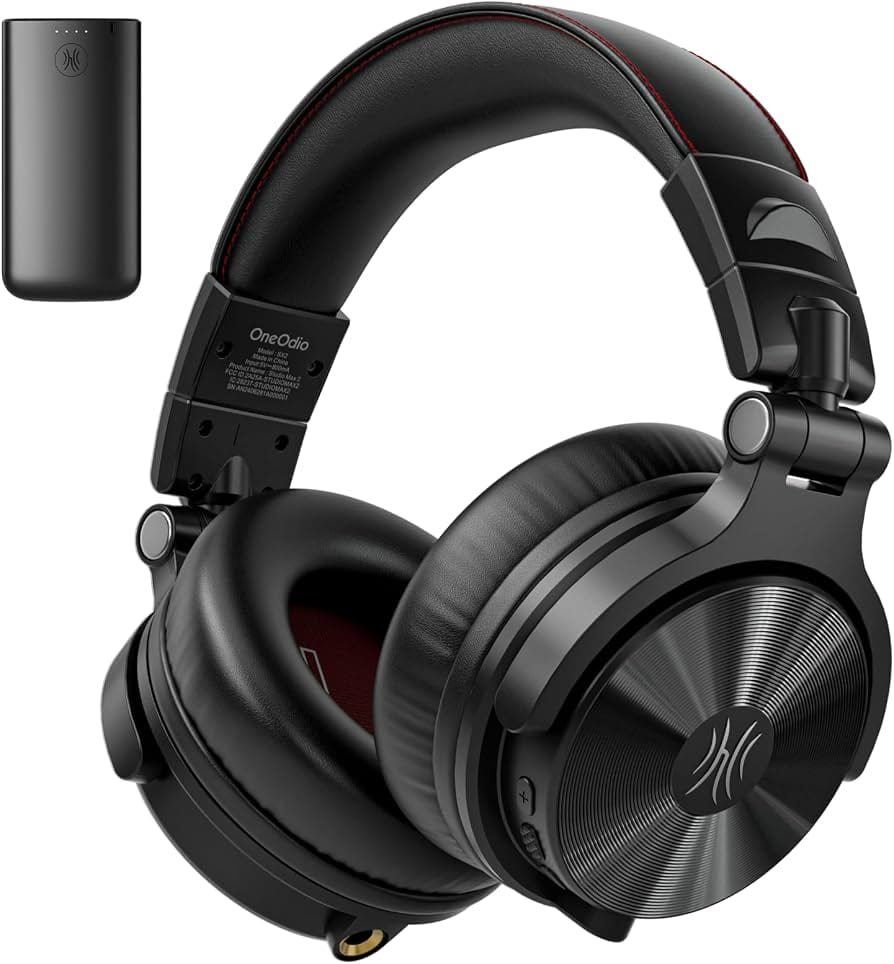
Wireless DJ headphones have long been the industry’s equivalent of artificial reality—an enticing concept that usually falls short in execution, leaving performers reaching for a cable to avoid the dreaded latency. While brands like AiAiAi previously bridged the gap with proprietary transmitters, the market has been waiting for a more accessible solution. Enter the OneOdio Studio Max 2, a $200-ish offering built around third-generation RapidWiLL+ wireless technology, promising a 9ms latency threshold that aims to make wireless DJing, producing, and instrument tracking a reality.
Build Quality and Design
OneOdio has made significant strides in presentation compared to the original Studio Max. The inclusion of a premium EVA hard case is a welcome upgrade, offering robust protection for travel. Inside, the package is comprehensive, featuring the RapidWiLL+ transmitter, a coiled DJ cable, and necessary adapters. The headphones themselves are sturdy, featuring the classic DJ-friendly design with 90-degree swiveling earcups. A particularly thoughtful detail is the use of large red left/right indicators, which prove surprisingly effective in the dim lighting of a DJ booth.
However, comfort and portability remain points of contention. While the adjustment mechanism is precise, the headphones can feel bulky. For a working DJ already managing a packed gear bag, the footprint of the Studio Max 2—especially when accounting for the transmitter and case—is significant. The faux leather ear pads provide decent passive isolation but tend to retain heat during extended sets.
Performance and Sound Quality
The core promise of the Studio Max 2 is its 9ms latency, and in practice, it delivers. Beatmatching feels natural and responsive, effectively removing the tether of a cable. Setup is refreshingly straightforward: plug in the transmitter, pair, and you are ready to go. The companion app further enhances the experience by offering firmware updates, LDAC codec support, and EQ adjustments.
Where the Studio Max 2 struggles is in its out-of-the-box sound profile. The tuning leans toward a thin, nasal quality in the vocals, with high frequencies that can become harsh during long listening sessions. While the companion app’s EQ allows for significant improvement, the necessity of manual correction at this price point is a drawback. For casual listeners, it is perfectly serviceable, but professional DJs seeking critical monitoring accuracy may find the performance lacking compared to industry stalwarts.
The Competitive Landscape
The low-latency wireless market is becoming increasingly crowded. Competitors like the AIAIAI TMA-2 DJ Wireless and the AlphaTheta HDJ-F10 offer more refined, rugged, and sonically balanced experiences. While these alternatives command a higher price, they are often viewed as long-term investments for professionals. The Studio Max 2 serves as an accessible entry point for those curious about the wireless future, but it stops short of being a definitive replacement for the seasoned pro’s wired setup.
Final Verdict
The OneOdio Studio Max 2 proves that affordable, low-latency wireless DJing is no longer a novelty. It is a capable, user-friendly tool that makes the freedom of being untethered a reality. However, for those who prioritize long-term durability, superior sonic fidelity, and compact travel, the current market offers more robust, albeit more expensive, alternatives. It is a glimpse into the future of the category, even if it isn’t the final word on the subject.