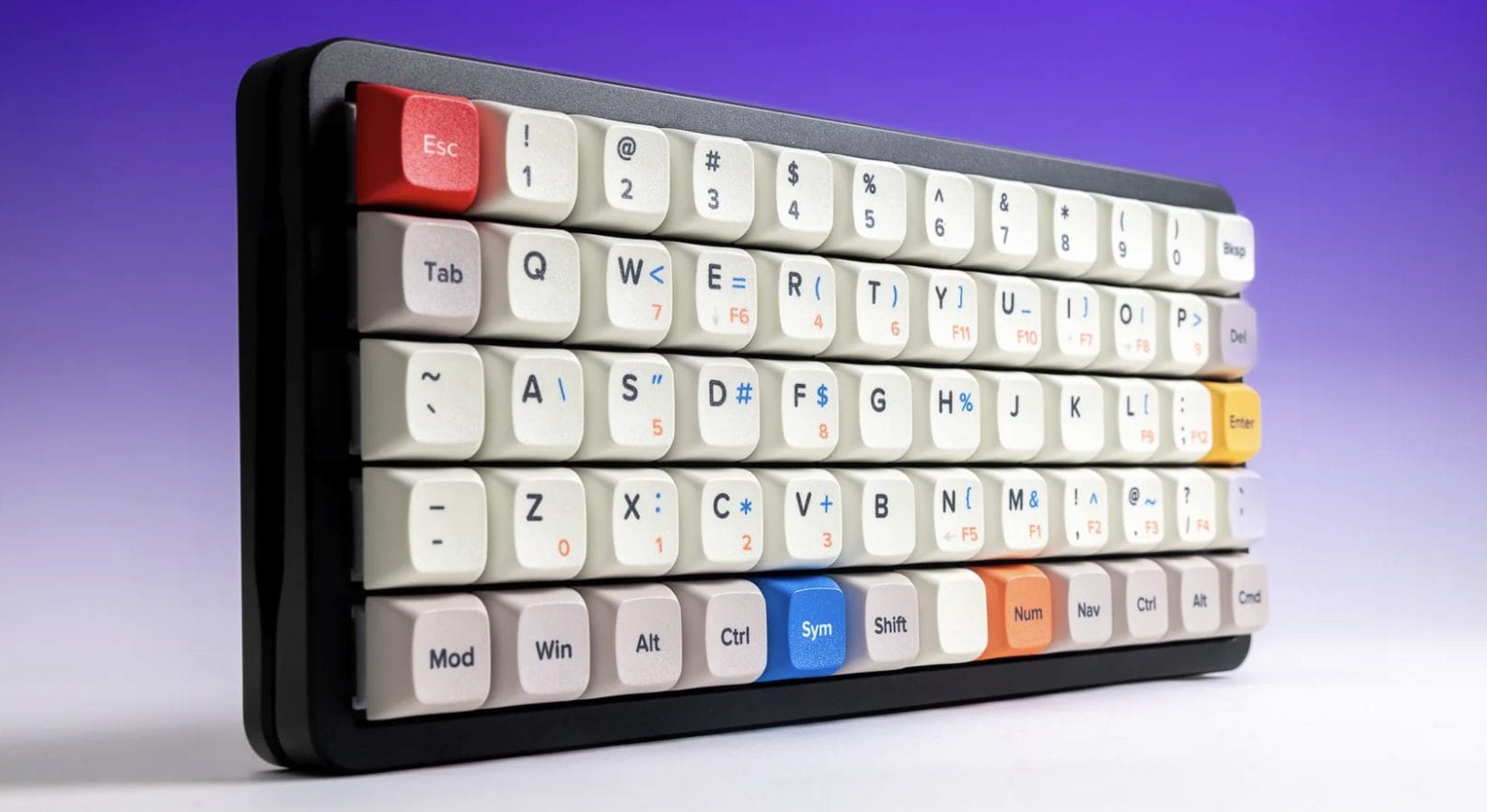
Why the Apos x OLKB Preonic Rev 4 is a Game-Changer for Producers
Music producers often focus heavily on controllers—pads, faders, knobs, and MIDI keyboards—but the computer keyboard remains the most essential, yet overlooked, tool on the desk. It handles everything from DAW shortcuts and track naming to plugin management and timeline navigation. This is precisely why the Apos x OLKB Preonic Rev 4 Ortholinear Keyboard is a more relevant addition to a studio setup than it might first appear.
Ortholinear Layout for Enhanced Workflow
The Preonic Rev 4 utilizes a 50% ortholinear layout, replacing the traditional staggered typewriter keys with a clean, uniform grid. This design is not merely aesthetic; it is functional. A grid layout allows for more intuitive memorization of layered shortcuts, as key positions become geometric and predictable. For producers working within complex DAWs like Ableton, FL Studio, or Logic, this reduction in cognitive load can significantly speed up the creative process.
Furthermore, the compact footprint of the Preonic is a major advantage in professional studio environments. By saving desk space, it allows for better integration with audio interfaces, desktop synths, and other essential hardware, ensuring the main workspace remains uncluttered and efficient.
QMK Customization and Encoder Support
The true power of the Preonic Rev 4 lies in its QMK compatibility. This allows producers to transform the keyboard into a dedicated DAW command surface. By programming custom layers and macros, users can map transport controls, editing commands, and sample-browsing navigation directly to the keys. This minimizes repetitive movements and helps maintain creative momentum.
The inclusion of support for up to ten rotary encoders is a standout feature. These encoders can be mapped to handle volume, timeline scrolling, zoom, or even browser navigation. By offloading these tasks to a physical knob, producers can achieve a level of tactile control that is often missing from standard typing keyboards.
The Importance of the Number Row and RGB
While many compact keyboards sacrifice the number row, the Preonic retains it, which is vital for music production. From BPM values and MIDI notes to track numbers and plugin versions, music production is inherently numerical. Having a dedicated row ensures these inputs remain accessible without the need for layer switching.
Additionally, the per-key RGB backlighting serves a practical purpose beyond aesthetics. Producers can color-code keys to group shortcuts, mark layers, or highlight transport controls, making it easier to navigate the board in dimly lit studio environments. The Apos x OLKB Preonic Rev 4 is not just a peripheral; it is a sophisticated tool designed to help producers stay within their creative flow, making it a worthy investment for any modern studio.