Christian Hornbostel on Craft, Credibility, and the Rise of DJ Influencer Culture
Christian Hornbostel’s catalog spans more than two decades, and that long view shapes how he sees the current state of DJ culture. Known for early work tied to the Renaissance era through projects like Virtualmismo and VFR, and later releases across Global Underground and a wide range of labels, he has remained active through multiple shifts in how music is made, shared, and consumed.
His latest remix of Pole Folder’s “Elo” continues that trajectory, focusing on structure, clarity, and club function.
This conversation centers on a different topic. Instead of focusing on production or performance, it looks at how visibility, branding, and audience perception have changed the landscape around DJing. Hornbostel draws a clear distinction between music as a craft and music as content, and he speaks directly to how those lines have shifted over time, from early social platforms to current algorithm-driven systems.
What stands out is his consistency. While acknowledging the direction the industry has taken, he keeps his focus on the fundamentals: sound, composition, and a record’s ability to stand on its own. In a space where reach often shapes perception, his perspective stays anchored in experience and a long-term commitment to the work itself.
Interview with Christian Hornbostel
When did you first notice the influencer economy bleeding into DJ culture?
I believe the real paradigm shift occurred between Myspace and the rise of Facebook. In my view, Myspace was still primarily music-focused, similar to how Bandcamp operates today.
For the first time, producers and DJs could customize their profiles to promote their music and tour dates. However, the focus remained on the product itself – intended as artistic and intellectual substance – rather than on appearance.
Do you ever feel a pressure to be presentable in ways that have nothing to do with music?
Fortunately, no. The only kind of pressure I consider positive is the one that pushes me to make my music presentable, or better yet, inspiring and immersive.
This is independent of my personal image, because I believe the music should, first and foremost, speak for itself. After all, a book can be extraordinary even if you don’t know the author, right?
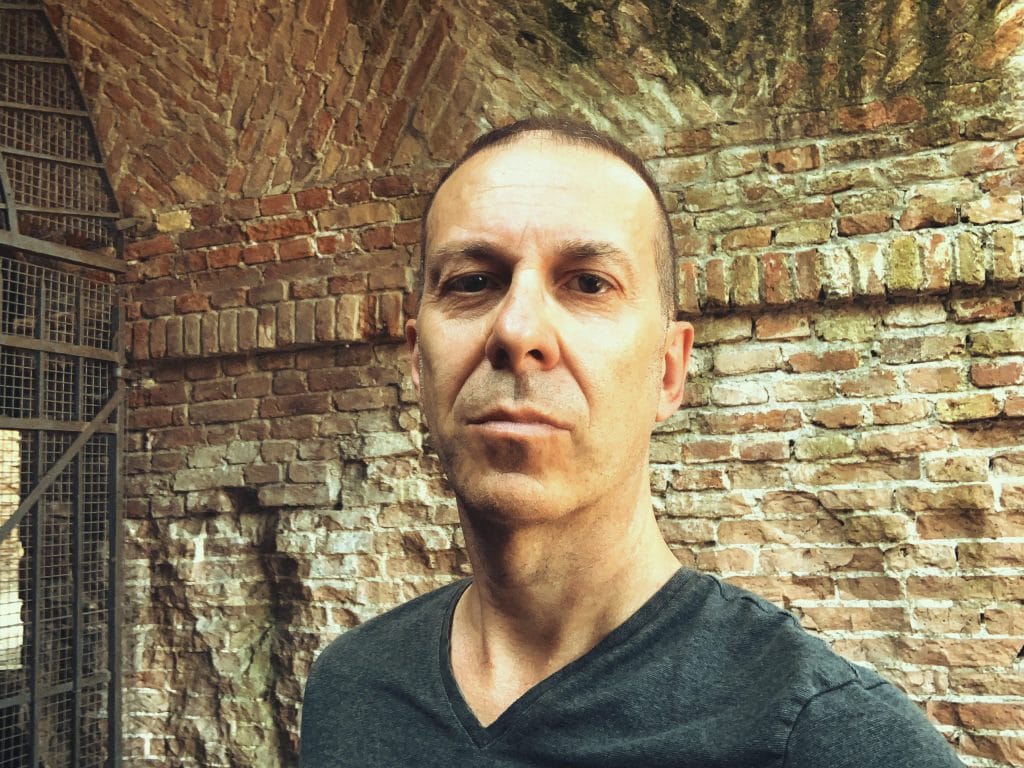
How do you personally draw the line between being an artist and becoming a brand?
Personally, I have no issue with artists becoming a brand. What I find less convincing is the opposite: brands behind which the artistic component is weak or largely artificial. Unfortunately, the problem is that today’s mainstream audience is often unable to distinguish whether a professional profile reflects genuine talent or simply purchased followers and this goes beyond the music industry.
What’s something you’ve turned down or avoided because it felt too influencer-coded?
Honestly, I have not yet found myself in such a situation. Perhaps this is because I am fortunate enough to work with full creative freedom, without having to conform to codes or stereotypes, and therefore without encountering these kinds of constraints.
Have you seen careers accelerate because someone had better content, not better sets?
I believe this dynamic has been present for years.
However, if the mainstream audience accepts it, there is little we can do to change it. The next step is already in front of us, and the real, uncomfortable question is: how many people can truly detect or identify AI-generated material? Unfortunately, everything seems to be moving in that direction and I’m afraid that even the “content specialists” won’t have an easy time either
Do you think followers are starting to confuse reach with skill?
First, we need to clarify what kind of followers we are talking about.
Only listeners with a broad musical background can make meaningful comparisons and informed judgments. I’m not saying one must recognize a Wayne Shorter sax solo, but even knowing who Weather Report were already helps in identifying talent, ability and – above all – genuine musical quality.
How do you think we can protect the craft in a culture that rewards optics over ability?
Historically, the term “craft” refers to small-scale production. Applied to our context, it describes an artist or producer who is not overly concerned with external validation, because their primary fulfillment lies in the act of creation itself. And there will always be a niche audience that actively seeks out and values quality. So, as a great band once said… “Take it easy.”