Neumann Revives the M 50 V Tube Microphone for Modern Recording
Neumann has announced the return of one of its most historically important microphones with the release of the M 50 V, a meticulously crafted reissue of the original M 50 tube microphone. First introduced in 1951, the M 50 became foundational to orchestral recording practices and played a defining role in the development of the Decca Tree technique, shaping decades of classical recordings and film scores.
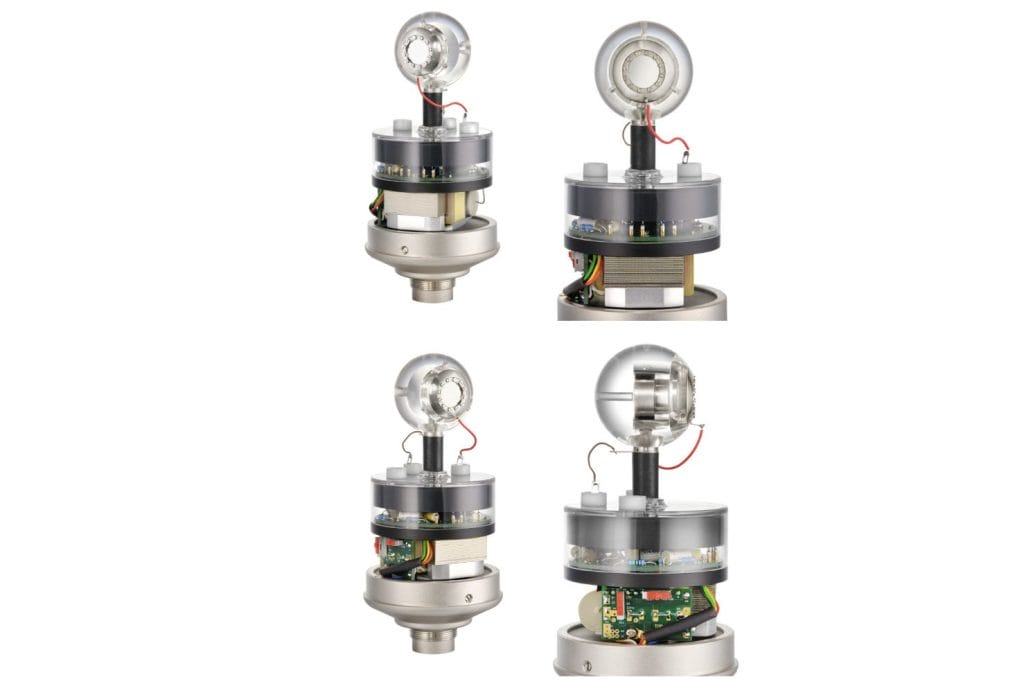
The M 50 V preserves the original acoustic concept that made the microphone distinctive, including its small-diaphragm omni capsule mounted inside a 40 mm sphere. This design produces the characteristic combination of precise imaging, controlled directivity at higher frequencies, and extended low-frequency response that engineers relied on for large ensemble recordings. While the core design remains intact, Neumann has introduced carefully considered updates to meet modern reliability and longevity standards.
Precision Engineering With Respect for History
At the capsule level, the M 50 V replaces the original diaphragm material with a titanium diaphragm, chosen for improved mechanical stability and long-term durability while maintaining the original sonic behavior. The microphone retains the classic circuit topology, paired with a specially selected ultra-low-noise subminiature tube, ensuring faithful reproduction of the original tonal balance and transient response.
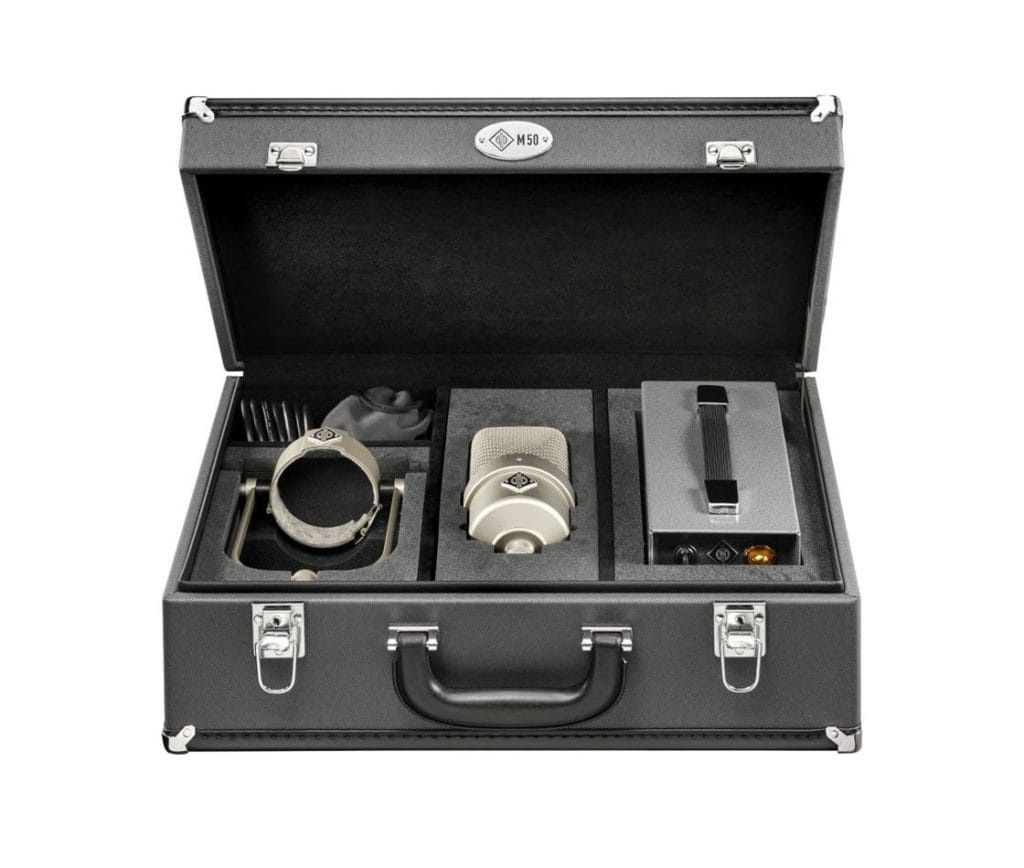
Mechanical refinements include improved decoupling within the iconic yoke mount, reducing the transmission of structure-borne noise in modern studio and scoring environments. The included NM V power supply automatically adapts to local mains voltage and supports both the new M 50 V and vintage M 50 microphones, allowing seamless integration into existing setups. RF-proof connectors and cabling further ensure reliable operation in contemporary studios where electromagnetic interference is more prevalent.
Each M 50 V is built to order in Germany by Neumann’s service and quality control team. Production is intentionally limited, with every unit assembled and inspected by hand to maintain consistency and authenticity across the series.
A Defining Tool for Orchestral and Scoring Work
The original M 50 earned its reputation through widespread adoption in orchestral recording, particularly within the Decca Tree configuration, where its imaging accuracy and depth reproduction became essential. Over time, the microphone also found use as a room microphone for drums, brass, and ensemble recordings in pop and jazz contexts, valued for its smooth high-frequency rise and spatial realism.
The M 50 V continues this legacy, positioned for use in stereo, surround, and immersive recording formats. Matching is available for multi-microphone orders, supporting critical applications where consistency across channels is required.
With the release of the M 50 V, Neumann adds another historically significant microphone back into active production, offering engineers access to a reference sound that helped define modern recording practice while meeting contemporary expectations for stability, precision, and build quality.