Paul Venus: The Filmmaker’s Approach to Hawaiian Tropical Electronic
Paul Venus approaches music with the precision of a seasoned editor. He views songs not merely as verse-chorus structures, but as sequences—complete with wide shots, close-ups, and the subtle emotional turns that define a narrative. This perspective is deeply rooted in his upbringing in Lahaina, where he spent his formative years at his father’s television station, MCTV-7. Surrounded by the visual language of storytelling from a young age, Venus learned to observe the world with a filmmaker’s eye long before he ever considered a career in music.
The Intersection of Memory and Sound
This background provides the foundation for what he describes as Hawaiian Tropical Electronic. The genre is more than a label; it is a synthesis of his life experiences, blending Hawaiian folklore, the atmosphere of his home, and the rhythmic possibilities of modern technology. Venus explains that his music is an attempt to capture the stories he grew up with—legends of the Menehune, the changing landscape of Maui, and the profound sense of loss and resilience following the Lahaina fire.
His creative process is intentionally transparent regarding the use of AI-assisted technology. Rather than hiding the machine, he invites the listener to hear it. He believes that while technology can provide the tools, it is the human element—the memory, the taste, and the emotional intent—that gives the music its soul. As he notes, the technology does not know what it felt like to grow up in Lahaina or the weight of the stories he carries; that is the unique contribution of the artist.
Editing as a Musical Language
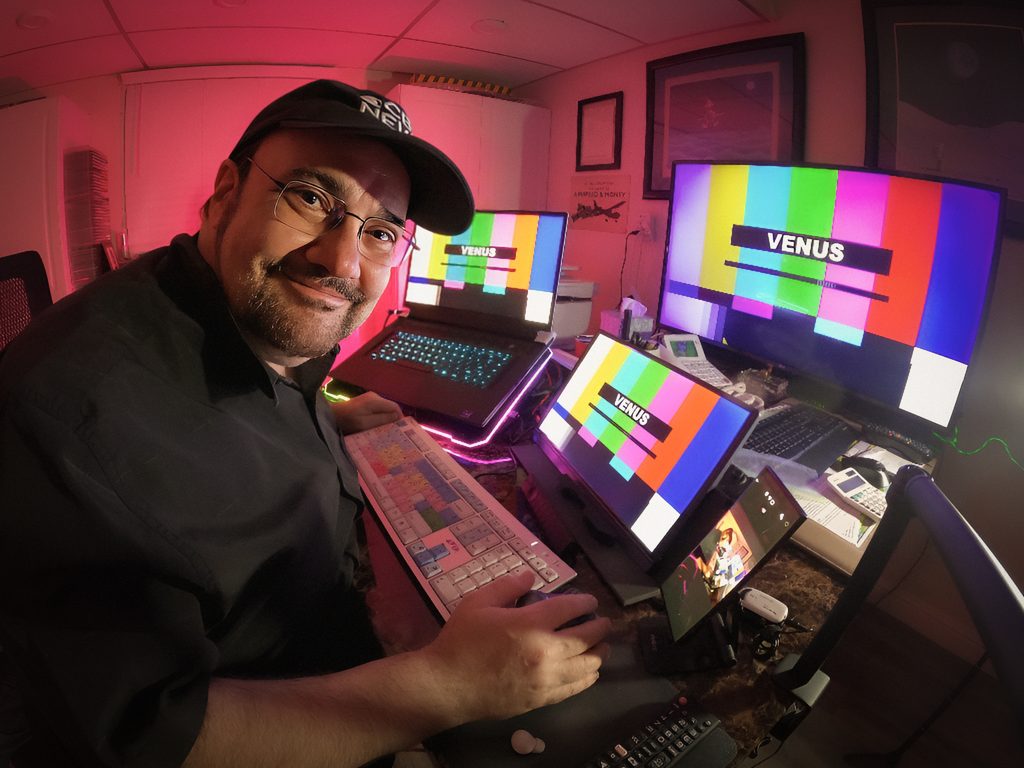
Venus’s career as a television producer and editor, including his work for Dateline NBC and CBS Mornings, has fundamentally shaped his musical output. He describes how covering real human stories taught him that genuine emotion often resides in the smallest, most honest moments. This philosophy translates directly into his music, where he focuses on pacing, transitions, and the importance of silence.
For Venus, the screen is the primary stage. He often envisions the visual components of a song—the location, the character, or the camera angle—while still in the production phase. This symbiotic relationship between film and music allows him to create immersive experiences that stand on their own while inviting the listener to visualize their own narrative. By bridging the gap between his past as a filmmaker and his present as a musician, Paul Venus is crafting a sound that is as much about the stories we keep as it is about the future of electronic music.