EASTWEST Sounds Enters AI Partnership With ACE Studio
ACE Studio has announced a new strategic partnership with virtual instrument developer EASTWEST Sounds aimed at advancing AI-assisted music production tools for computer-based musicians. The collaboration brings together ACE Studio’s artificial intelligence technology with EASTWEST’s catalog of virtual instruments, with the goal of improving workflow efficiency, realism, and expressive control for producers and composers working in software-based environments.
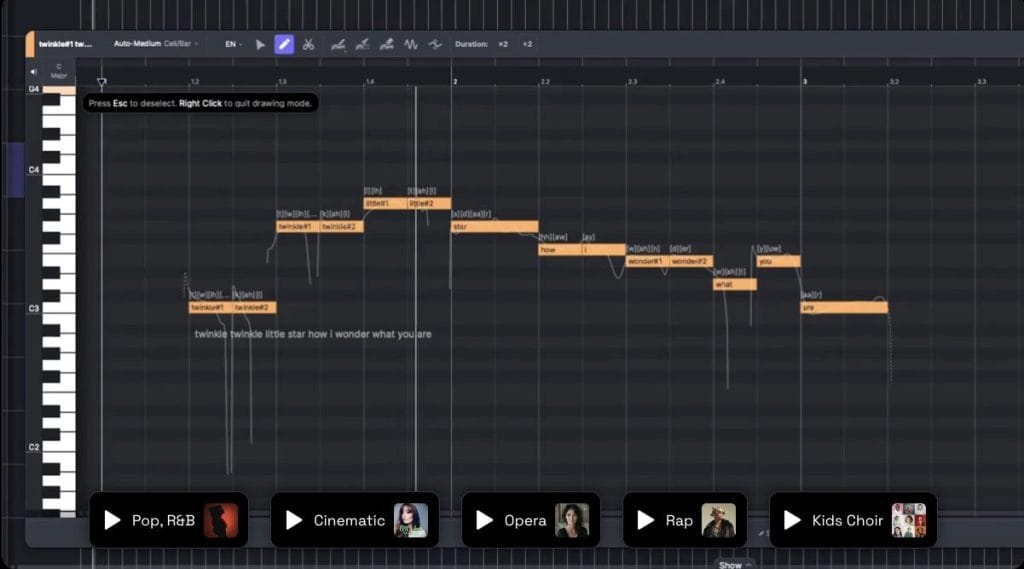
EASTWEST is recognized for its long-standing role in virtual instrument development, with its libraries widely used in film, television, games, and commercial music production. The company has received more than 100 industry awards, including multiple NAMM TEC Awards for musical instrument software. ACE Studio, meanwhile, positions its platform around performance-based AI tools rather than automated song generation, emphasizing vocal modeling, MIDI-driven expression, and editable AI instruments designed for hands-on production use.
According to both companies, the partnership is focused on integrating intelligent software tools with established sound libraries to support modern creative workflows. By combining AI-driven performance control with EASTWEST’s curated instrument collections, the collaboration aims to provide musicians with production tools that maintain musical nuance while accelerating the technical aspects of composition and arrangement.
A Focus on Expressive AI Tools
Unlike generative systems built to automatically create complete songs, ACE Studio is structured around controlled performance and detailed sound manipulation. The platform centers on AI-powered vocal synthesis, MIDI-based input, and parameter-level editing intended to support musicians who want to shape performances rather than rely on preset output. This design approach aligns with EASTWEST’s long-standing emphasis on realism and detailed sampling.
The partnership is described as a technical alignment between AI systems and high-resolution sound libraries. The goal is to reduce production time while preserving depth and tonal character, particularly for composers working under deadlines and producers seeking detailed control without relying on live performers for every part.
ACE Studio’s leadership has framed the collaboration as a way to remove technical obstacles that slow down creative decision-making. The integration is intended to give musicians access to intelligent tools that respond to musical input while maintaining compatibility with professional production standards.
EASTWEST has also emphasized that the partnership is centered on maintaining musical quality while incorporating machine learning as a functional tool rather than a replacement for musicianship. The companies state that the combined platform is designed for working producers and composers who need adaptable tools that support real-world production demands.
Roadmap for Software-Based Production
Additional information on specific integrations and product updates is expected to be released in the coming months. While technical details have not yet been disclosed, both companies indicate that the collaboration will focus on software workflows rather than standalone generative systems.
The partnership reflects a broader trend toward hybrid production tools that combine traditional sound design with AI-assisted performance features. By pairing EASTWEST’s established virtual instrument catalog with ACE Studio’s AI-based control systems, the collaboration targets musicians working entirely in digital environments across film scoring, game audio, and independent production.
Rather than presenting AI as a replacement for creative input, the partnership frames it as an extension of existing production methods. The emphasis remains on musician-directed control, with tools designed to respond to intent rather than operate autonomously.
As software-based production continues to expand across genres and professional fields, the ACE Studio and EASTWEST partnership positions both companies within the evolving space of AI-assisted music tools built around expressive control and professional sound libraries.