How It Was Made: Uakoz Breaks Down ‘Land Of Many’
Uakoz (@uakoz_) has been building his name through groove-led techno for years, and Land Of Many feels like one of the more complete statements in that lane. The London-based Italian producer has released on labels including ARTCORE, KMS Records, Kneaded Pains, and Odd Recordings, while also bringing that same energy into rooms like Fabric, Junction 2, Sisyphos, and Melkweg. This EP on Planet Rhythm leans into that foundation, but it also gives the dub techno side of his sound room to stretch.
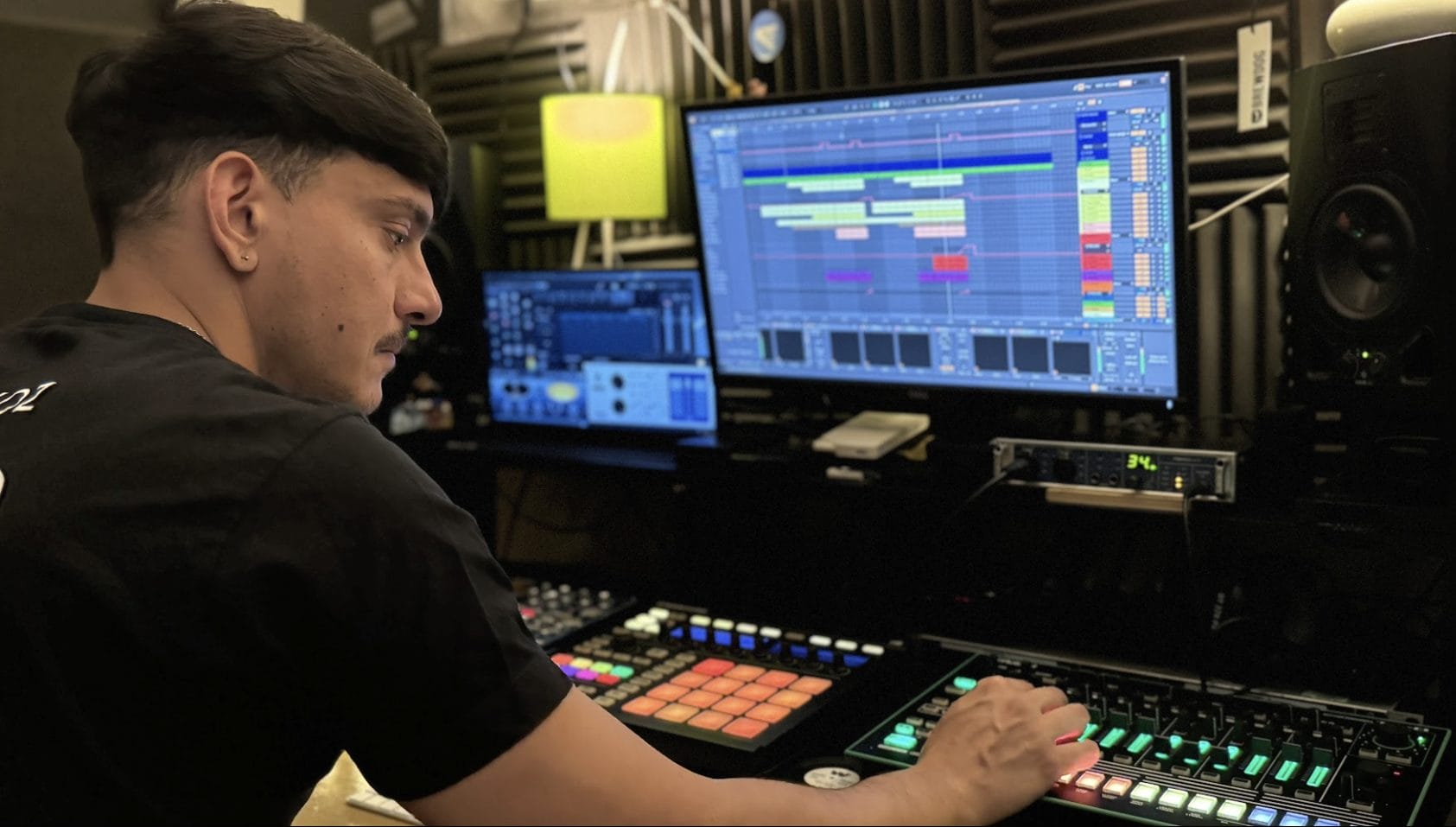
The title track works because it keeps the idea restrained while letting the processing do a lot of the movement. A simple harmonic bed in D minor becomes the center of the record, and the whole thing opens up through delay, filter movement, saturation, and console-style tone shaping. It is hypnotic without feeling flat, and that comes down to the way the core synth is treated after the notes are written.
For this feature, Uakoz breaks down the processing behind “Land Of Many,” from Ableton Operator and Ping Pong Delay to Kush Omega Model N, SSL and NLS channel strips, and detailed EQ and compression work. The useful part here is how much of the track comes from committing to one simple idea, then using tone, space, and automation to make it feel alive across the arrangement.
Operator And Its Processing Chain
Operator is Ableton Live’s built-in FM synthesiser, and it’s one of those tools that looks deceptively simple but goes incredibly deep once you know how to push it. It uses up to four oscillators that feature clean sine-wave tones to heavily distorted sawtooth waves. It also has its own onboard filter, LFO, and envelope sections for each oscillator, giving you a ridiculous amount of control over the sound.
In Land Of Many, I used Operator as the core harmonic bed of the main synth, building the patch from scratch with only one oscillator. I wrote a simple three-note voicing in D minor: D2, F2 and A2, and over time modulated the filter frequency and sent reverb from the return tracks to create movement, tension and overall engagement.
The processing chain is where the sound really comes to life; an essential FabFilter Pro-Q 3 to carve out unwanted sub-frequencies, right after Ableton’s Ping Pong Delay, which is what made it immersive and hypnotic, adding that classic dub echo depth, a Volcano 3 with some drive for warmth, an SSL and NLS Channels for analog coloring and equalising, a Pro-Q 4 for fine sculpting. Glue Compressor to hold everything together, Kickstart 2 for sidechaining against the kick, Kush Omega Transformer for subtle saturation, and finally one more compressor at the end of the chain to control dynamics and keep everything sitting exactly where I wanted it.
Kush Omega Transformer Model N
The Kush Audio Omega Model N is a saturation plugin modelled after classic vintage Neve preamp transformers, and it’s one of those deceptively simple tools that does a lot with very little: just one Intensity knob, a phase flip, and a -20dB pad. Under that minimal interface, it emulates the harmonic richness and natural compression of vintage transformer circuits, rounding off harsh digital edges and adding analogue weight and density.
SSL And NLS Channel Strips
Another “secret sauce” in my workflow is combining the SSL E-Channel with the NLS Channel. The SSL E-Channel emulates the legendary SSL 4000 E Series console, whose sound helped shape countless records by artists such as 2Pac, Dr Dre, Snoop Dogg, Madonna, Oasis and U2, and it’s also the desk I learned on during my university studies. The NLS Channel models the actual circuit behaviour of three famous console channels: Neve 5116s, EMI G12345 from the garage of Abbey Road Studios and SSL 4000G, adding analogue warmth, harmonic complexity, and that analogue summing flavour.
Ableton Ping Pong Delay
One last thing I can’t leave out is Ableton’s stock Ping Pong Delay; it’s definitely what gives the main synth its movement and engagement. I use it not just on the main synths but also across other synth layers, some drums and percussion too.