[INTERVIEW] Emi Galvan Talks Career, Beginnings, 2026, And More
We recently sat down with one of the Progressive artists with the most momentum around.
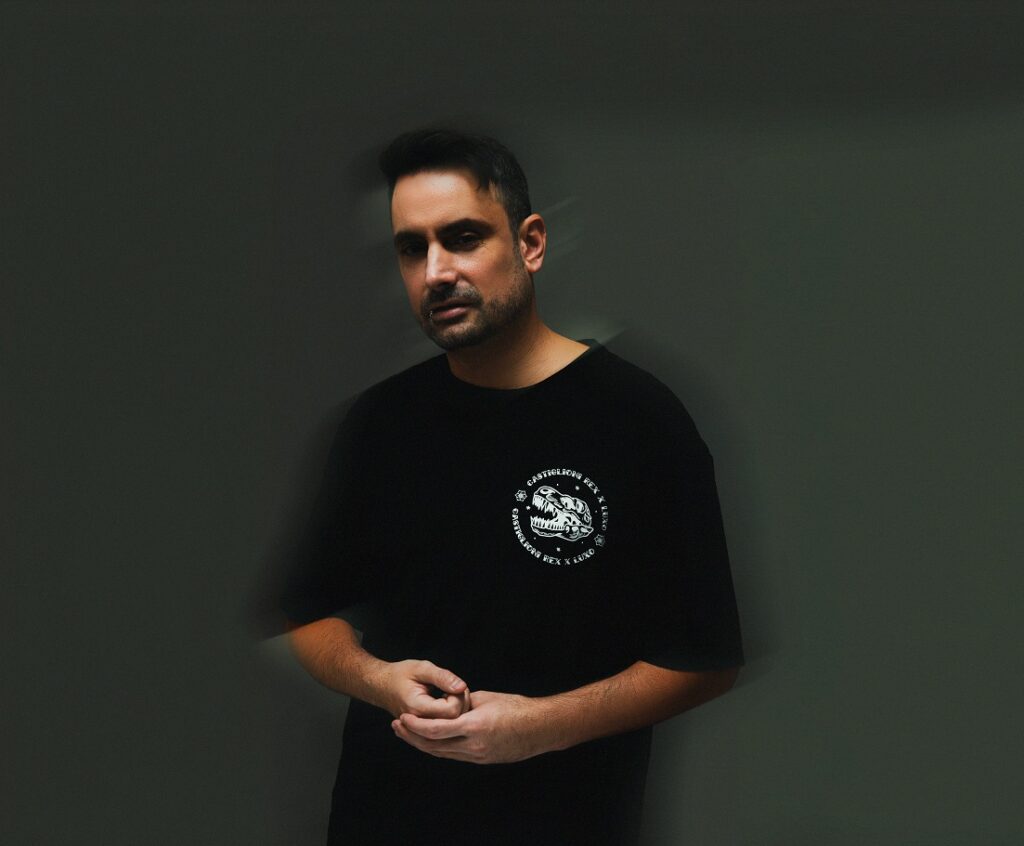
As we wave 2025 goodbye, we have one last interview for you all. And it comes from my favourite place in the world: Argentina. For many, the Land of Tango is the hottest nation in the entire world when it comes to Progressive House. The icon himself Hernan Cattaneo comes from Argentina, and so do many incredible artists following suit, such as Ezequiel Arias, Mariano Mellino, Nathan Katz (one of our interviewees this year), and the one and only Emi Galvan.
Emi has been a part of the musical side of Life for many years, originally directing his talent at being the guitarist of a Rock band, but things took a turn around 2017. I won’t spoil it for you since we’ll talk about this later on — I want you to hear it from Emi himself. His extensive discography is backed by high-profile releases on labels like SUDBEAT and Balance, as well as turned-viral reworks of Massive Attack and Underworld (God this remix is good).
Galvan’s output often dominates the charts, with singles like ‘Frequency Shift’ and ‘Supernova’ securing consecutive #1 spots on Beatport, and also reaching a very decently sized listening base that soars past the million-user mark across platforms. Not bad at all. And so, we ached for an interview with him. And Emi sure delivered.
In the following paragraphs we dive deep into the beginnings, stories, points of view, and so much more, of one of the most promising artists of the Progressive scene in the entire world. Ladies and gentlemen, sit tight, and read on, as we unveil the very last EDMTunes interview of 2025: Emi Galvan.
The Interview
(Please note, the bolded text represents a question, while the paragraph(s) following it represent Emi’s answers.)
Welcome, Emi, and thank you so much for joining us. We’ve caught you at a very busy time of year as you conclude an extensive South American tour that kicked off in October, maybe even earlier.
Yes, I’ve been playing all across the length and breadth of Argentina. Now, for December and January, I’ve just come from Santiago, Chile, and I have a mini-tour of three shows in Brazil coming up: December 31st at Surreal for New Year’s Eve, January 3rd at a pool party in Camboriú, and Sunday the 4th at Supra Festival in Florianópolis. From there, we head back to Argentina for dates in Córdoba, Mar del Plata, and several other cities.
Of course, you have to make the most of the summer season in Argentina; it’s peak time.
Exactly. And I also have to take advantage of the high season in Brazil, which is when a lot of weekday shows pop up. I’ll go there for a week, come back to Argentina, and then head back to Brazil for another week. It’s great because it’s close to home and the Brazilian scene is growing so much. Last year was massive for me—I had the chance to play at the iconic Warung Club in Itajaí. After releasing an EP on Warung Records with Albuquerque, the opportunity arose to do the Warung Tour across cities like Búzios, Cascavel, and Joaçaba.
That’s great news about the Warung Tour. I had the impression that after the original club closed, that was it, but I see the brand is still going strong.
Yes, it’s still going. From what I’ve gathered, the physical club closed, but the brand will continue hosting touring events throughout Brazil.
Out of the crowds you’ve played for recently, who would you say are the most “hyped” or respond best to your sound?

I always say that Argentina is the most enthusiastic crowd; they bring the most energy to this genre. I remember when I used to listen to Rock, international bands always said Argentina was one of the best countries because the crowd gave it their all. Something very similar is happening with electronic music, largely thanks to Hernán Cattaneo. He gave the scene an incredible push, creating events for 20,000 people where many “debut” in the electronic world and eventually discover other artists, perhaps ending up at one of my shows.
Argentina is number one, without a doubt. But number two for me is Sri Lanka. It’s an island south of India, on the other side of the world, and it’s crazy because the fanatical love they have for Progressive House is absolute. I’ve been there several times and I’m always surprised by the size of the crowds and how they dance. They have a completely different culture to Argentina, but musically, we are on the exact same wavelength.
I’ve seen videos of Sri Lanka, and yes, the energy looks a lot like the Argentine one.
Absolutely. The first time I played in the capital, Colombo, it felt like a rock concert. During the first track—which you usually play to start things off chill—everyone was already jumping and singing along as if they’d known me forever. That’s when I knew I had to go back. I’ve also built a great friendship with Noiyse Project, who is the number one DJ over there, and we’ve released music together. I try to go back every year.
What is tour life like for you? How do you avoid the famous “burnout”?
The reality is that I don’t do four-month tours without going home like Rock bands do. My tours are shorter. During the week, I produce, download music, and handle management tasks with my manager. If I’m playing in Argentina, I travel on Friday and I’ll be back home working by Monday. This upcoming week in Brazil will be intense—maybe sleeping or eating poorly for a few days—but it’s short.
That said, for next year, I plan to spend all of August in Europe because I’m playing Balance Festival in Croatia. I’ll have a full month-long tour there. In those cases, I try to do a lot of sightseeing between the weekend shows. I love learning about the local culture and food. It doesn’t drain me because I enjoy it so much.
The “tourist” aspect must be one of the most beautiful things in a musical career.
It was one of my dreams when I decided I wanted to live off music. I started playing guitar in bands and ended up as a DJ, and in some ways, it worked out better this way. I’m so grateful to see places I never imagined, meet spectacular people, and get paid to play music on top of that. It’s genius.
What’s on the horizon for Emi Galván in 2026?

I have several important releases coming up. On January 29th, an EP drops on Mango Alley with two originals and two remixes. And on February 20th, a collaboration with Durante will be released on Anjunadeep. It will first appear on the James Grant & Jody Wisternoff compilation and later as part of its own EP.
Anjuna—that’s very interesting.
It’s a label I love. I look at myself as a musician with different “color palettes” or recipes, like a chef. One path led to this track with Durante for Anjuna, while another palette comes out through Mango Alley. It’s good to show different concepts without losing your identity. Over the years, you manage to develop a signature sound. For instance, when Hernán Cattaneo plays one of your unreleased tracks—which is one of the biggest validations of quality you can get—people already recognize certain details and come up to me asking if that ID is mine. That’s an amazing feeling.
Speaking with Paul Thomas from UV, he told me exactly that: “Emi has a very particular sound.” How would you define your sound? What does a track need to “sound like Emi Galván”?
Like I mentioned, before electronic music, I played the guitar. I was heavily influenced by the guitarist from the band 311, who has a very specific riff style. That influence stayed with me; my electronic melodies usually start in my head as if they were guitar riffs.
On the percussive side, I look for a good groove that makes you dance—maybe that’s my Latin American influence. But the main thing is that the music must evoke an emotion: joy, sadness, nostalgia. To me, instrumental music has to take you somewhere; otherwise, it has no meaning.
What is your creative process like? Do you need a solid idea before entering the studio, or do you sit in front of the gear with a blank mind?
In 95% of cases, it’s a melody that comes to me while I’m walking down the street, for example. I record myself humming it into my phone’s voice notes. When it’s time to produce, I review those notes; the ones I still like, I start producing, and the ones that don’t convince me anymore, I delete.
Is there a track of yours that you hold especially dear?
I think the remix I did for Nick Warren’s ‘Freebird’ marked a new chapter for me. It was such a compliment because Nick personally reached out to ask for the remix, but it was also a challenge. The original was less “club” and more atmospheric/breakbeat with no continuous kick. Transforming that into a club version that Nick would like was a feat. What came out was a sound full of melody and energy that worked perfectly. It was a turning point in my career.
Do you have a “workhorse” track that is never missing from your current sets?
I’d say ‘Don’t Kill the Messenger’. It has a crazy history because, at first, I wasn’t really convinced by it, but people started asking for it. They’d ask me why I never played that track at my shows. When I finally played it and saw the reaction it got live, I confirmed the track was good. I learned a valuable lesson there: the dancefloor is the ultimate litmus test. Something might sound great in the studio but not work live—and vice versa.
Absolutely. The other day at Park Live in Santiago, Kamilo [Sanclemente] and you played your remix of Underworld’s ‘Dark & Long’. To me, that track is a killer—the energy is incredible.
That one was released as a free download. People loved it, and it got support from the top DJs in the scene. Sébastien Léger played it at Loveland, and Guy J has been playing it a lot, too.
You mentioned your time in a Rock band. At what point did you decide to leave the guitarist gig behind and commit fully to being a producer and DJ?
The turning point was when Hernán Cattaneo started playing my tracks. I was doing it as a hobby while still in my band, but when I saw his support, I started producing seriously. Hernán is a massive window for new artists; having a DJ of his caliber play your music is the push you need.
In 2017, something very crazy happened. Not long after the support happened, Hernán asked me for music for Sudbeat. In fact, he wanted to sign that track he had spun, but I had already signed it elsewhere, so he told me to send him more. At the time, I was working full-time as a multimedia designer, sleeping very little between the job, band rehearsals, and production. Right as Hernán signed my track ‘Human’ to Sudbeat, I got laid off from my job. It was every signal I needed to dedicate myself 100% to this.
Those are some pretty blunt signals! But it’s amazing how it all aligned.
Yes, the universe opened the path in a bit of a rough way, but it was effective. All signs pointed toward this, but I simply didn’t have the time. I’d wake up at 4:00 AM, work ten hours, spend three hours a day commuting, plus the band three times a week… when I had a tiny bit of time left, that’s when the electronic music happened. I practically didn’t sleep. I needed time, and well, after asking for it so much, the universe cleared the way.
That’s incredible. Now, do you feel that living far from Europe or North America—”where everything happens”—was an obstacle for your career?
On the contrary. The largest market for the music I make is right here in Argentina. If I lived in Europe and made Progressive, I’d still have to travel here for the big shows. Outside of festivals like Balance, Europe tends to have smaller Progressive events. Also, having a figure like Hernán in the same country is a huge influence. If he produced Tech House, for example, Argentina would be a sea of Tech House producers instead of Progressive. It’s like football: we had Maradona, now we have Messi, and that is constant inspiration. That’s why Argentina is the cradle of so many great footballers as well.
Out of everything music has given you, what is something you didn’t expect that surprised you in a good way?

What a great question. I’d say the love from the people. You produce because you love it, but to find yourself at a show with people who sincerely thank you for the moment you gave them… It’s crazy. It’s not just fandom, it’s a beautiful energy, a good karma. Seeing people’s faces when the show ends, noticing they don’t want it to be over—that they’d have you play until the day after tomorrow—and they thank you from the bottom of their hearts… that surprised me and is one of the most beautiful things there is.
Excellent. Now, regarding the “phone debate”—are you for, against, or in the middle? What is your take on phone use in clubs?
I love the vibe of respect in electronic music: asking permission, saying “thank you,” saying “sorry.” Regarding phones, I feel they do cut that connection with the music and with others a bit, but if people are happy filming, let them do it. There’s a bit of everything: the person who films the whole show and the person who dances without taking their phone out for a single second.
Thank you. And finally, if you could travel back in time—10, 15 years, whatever you feel—and meet your past self, what would you say to that Emi?
I’d tell him to relax, that everything is going to be fine, and that everything arrives in its own time.
Thank you so much, Emi. It’s been a pleasure.
Thank you!
Final Words
Thank you so so much Emi for the warm chat. This particular interview holds a bit of a deep meaning to me: A little over two years ago, I was looking for music to play at a gig my buddy NEØRN and I had in Merlo, Argentina, and I remember stumbling upon a crazy, CRAZY video on Instagram. There was this one guy playing this one incredibly powerful Prog song in Sri Lanka, and the crowd went absolutely crazy. That track would be ‘Crabo’, and that was my introduction to Emi Galvan. Some odd 800 days later, and we’re guiding an interview together. Life surprises you in the greatest of ways.
Below is the video, I scoured the internet and found it. Wishing you all a happy and successful New Year. We’ll be back very soon with more interviews. Stay tuned to our page for the latest news and views from our beloved Dance corner of the world.