John Monkman on Clarity, Connection, and His New Vapour Records Release
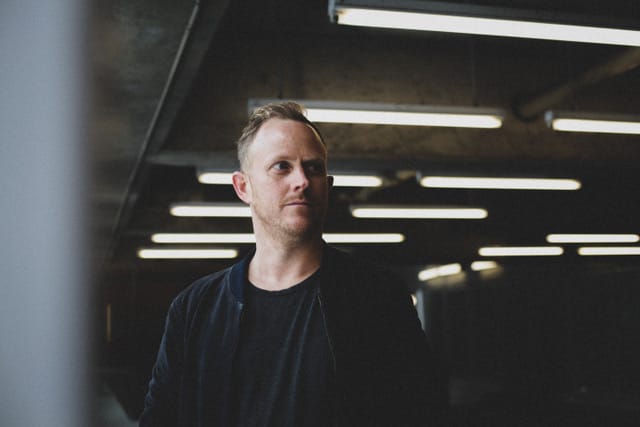
John Monkman’s “Signal” arrives on Vapour Records with the kind of control that has defined his catalog for years. The UK-born, Ibiza-based producer has released through Kompakt, Ellum, Siamese, Anjunadeep, and Crosstown Rebels, and this latest record keeps him in familiar territory without sounding fixed in place.
There is weight in the arrangement, though the larger point is how the track fits into a broader run of live activity around his Rainbow Spirit show, giving it a clear role beyond a one-off release.
That wider frame also lines up with the way Monkman talks about DJing now. He is still focused on groove, depth, and those lift-off moments that change the feel of a floor, though he is equally aware of how much context shapes a set once the doors are open. A technically clean mix can still fall flat in the wrong room, while the right event can pull everything into focus. That practical view runs through his answers and gives the interview a strong center.
What comes through most clearly is his commitment to emotional direction over trend-chasing. Monkman speaks about filtering out the obvious, trusting tested records alongside new discoveries, and keeping his own productions inside the flow of a hybrid set. He also talks plainly about growth, not as hype or visibility, but as better music, better opportunities, and a life in music that can actually hold together over time.
Interview With John Monkman
How do you stay adaptable behind the decks while remaining true to your taste?
For me the key is having a clear idea of what you want to create on the dancefloor. I’m quite specific about the mood or feeling I’m trying to build. I want the dancefloor to go deep, I want people to feel connected to the groove and the drums, and I want those ecstatic moments where everything lifts.
So it’s really about finding music that fits that criteria. It’s about filtering out the cheese and finding music that feels meaningful. I love good quality music in lots of genres, but in my sets it’s predominantly 4/4, so that does narrow the viewfinder a bit. That said, there’s so much music within that parameter that it’s basically endless.
I also believe in a balance between searching for shining new objects and trusting music that’s been tried and tested before. A lot of my DJ sets are hybrid as well, so there’s usually my own music merged into the mix somewhere, which means the other tracks need to sit next to that.
But ultimately I’m just having fun with it, looping things, using multiple decks, playing around. It really comes down to having a clear idea of what you want to express. For me that emotion and feeling has stayed pretty consistent over the years.

Have you ever played a set that felt technically solid yet revealed something new about connection?
I’m not totally sure what “technically solid” really means, because you can mix tracks together perfectly and that might be technically solid, but a lot of it comes down to the event, the dancefloor and the people there.
You can play the same set one night and it goes off, and then play it again somewhere else and people just aren’t feeling it. That can come down to the club, the space, the festival, the time of day, or just the general vibe on the dancefloor. Is the floor full or empty? Do people feel liberated? Is it a commercial crowd where people are there for different reasons than the music?
All of these things shape the connection. Sometimes you come away feeling like it didn’t quite land. As you go on in this career, part of it is learning not to take that too personally. Often it’s not really about you, it might just be the wrong party, the wrong booking, or the wrong moment.
When it’s the right event with the right people though, things tend to align naturally. That’s the feeling that makes it something worth pursuing.
As the culture shifts, how do you continue evolving without losing clarity in your identity?
For me the only real way forward is to double down on the things that genuinely excite you.
Genres shift all the time, but underneath that it comes back to a simple question: what emotion do I want to transmit on the dancefloor? That core feeling can be repackaged through different productions or different styles, but the emotional intent stays the same.

What’s something you’ve intentionally moved away from as your style matured?
One thing I’ve tried to cultivate over the years is a sense of trust in my own experience.
When you go into a show it’s very easy to overthink things. You can worry about a set for days or weeks beforehand. But then you’re suddenly in the moment, things connect, and afterwards you realise all that worrying was kind of pointless.
It’s a bit like the old stoic idea, there’s not much point being anxious about something that hasn’t happened yet. I still get nervous before big shows, and I think that anxiety keeps you sharp, but I’m always trying to loosen my grip on it a little and just accept what is.
How do you personally define growth at this stage of your career?
That’s a difficult one, especially in music where it’s not always obvious what growth actually looks like.
Sometimes hindsight helps. You look back ten years and realise you wouldn’t have believed where you are now. There are also practical markers, I’d be lying if financial sustainability wasn’t one of them. Being able to support yourself through music is a very real measure.
But for me the deeper question is whether I’m making music that truly represents me. Is the sound getting better? Am I still learning? It’s always been a constant learning curve.
Growth also shows up in the opportunities, playing the kinds of events you genuinely want to play. It’s a nice feeling when someone invites you to perform somewhere and it happens to be an event you already admired.
Ultimately though, the goal is a sustainable life in music. It’s never just one thing. It’s lots of plates spinning: studio work, performances, releases, projects. But when it’s working well, it comes down to meaningful shows, meaningful music, and feeling happy doing the work.
What keeps your offstage self and your onstage presence aligned?
For me it’s about not getting too caught up in the noise and the little dramas around the industry.
Staying focused on the music is the main thing. It’s very easy to get distracted by shiny objects. I try to keep my blinkers on and stay close to what actually matters.
Outside of music, simple things help keep me aligned, exercise, sauna, ice baths, swimming in the ocean, walks, and spending time with family. Those things keep me grounded.
Can you recall a moment where adjusting in real time strengthened the exchange with the crowd?
The whole experience of DJing is really a real-time exchange with the dancefloor.
When you’re at the right event and people are aligned with the music, it becomes almost subconscious. You’re selecting and mixing records, but it starts to feel like you and the crowd are part of the same system.
A great feeling is when you look at your library and feel like you could play music for days, rather than staring at it and feeling like you have nothing to play. Those real-time adjustments usually come from the energy you hear back from the floor, the cheers, the laughter, the whoops. Those moments push you forward and make you want to find the next piece of music that keeps that energy flowing.