The Incredible iLoud Precision 6 MK II with ARC X – 2025 Editor’s Choice Award Winner
Table of Contents
Flipping out monitors in your studio is like breaking up with someone: you have doubts and a roller coaster of emotions. I recently made the switch from a set of KRK V8 S4s to the new iLoud Precision 6 with ARC X, and yup, it felt like a breakup. I built Magnetic Studios in 2019 from scratch. It was a raw space that required almost every detail, from drywall to flooring to insulation. It was a three-month process, and since then, I’ve only had two sets of monitors, and now I’ve made the jump to a third, and I’m extremely happy that I did.
The iLoud Precision 6 MK II is everything I wanted it to be: razor-sharp, adaptable, and paired with an ARC (Acoustic Room Correction) mic and software that can dial in your space and let you emulate other monitors via the ARC X plugin. I’ve spent about 30 hours on these, calibrated them to my studio, and haven’t looked back. So, from calibration to producing some tracks for Magnetic Magazine Recordings, here is my experience and thoughts on these exceptional studio monitors.
There’s a certain moment every producer knows too well: you finish a mix that sounds solid in your studio, bounce it out with confidence, then play it in the car and immediately start hearing problems. Too much low-end. Vocals are muddy. Hi-hats thinner than you like, and what sounded great in your room sounds underwhelming in the real world. Most bedroom or even semi-pro producers don’t have the luxury of A/B monitor setups or the space for them.
The pros can use a consumer-grade pair of speakers to run the mix through alongside a clinical monitor setup, which is a huge help when mixing down a track. Hearing your mix on a lower-end pair of consumer speakers lets you hear reality. This is what the majority of people will hear, so you need to mix it down so that it sounds great across the board, which is not easy.
IK Multimedia’s iLoud Precision 6 MK II, paired with the company’s ARC X calibration system, is designed to end that cycle—or at least drastically reduce how often it happens. This is IK stepping fully into major league, serious studio monitor territory, and not just with clever DSP tricks, but with real-deal acoustic engineering, thoughtful design, and a calibration workflow that actually respects how modern producers work.
After living with the iLoud Precision 6 monitors for an extended stretch—mixing, referencing, producing, listening for fun, and generally trusting my ears more than I have in years—it’s clear these monitors aren’t just good for their size. They’re amazing.
Build Quality: Compact, Serious, and Quietly Confident
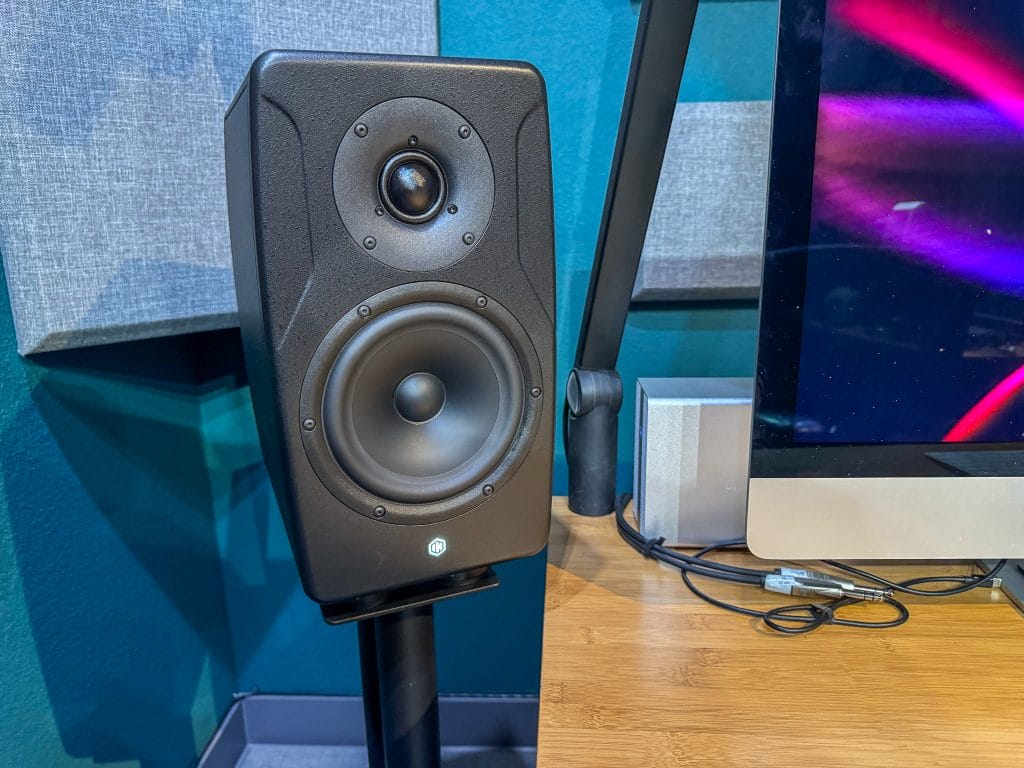
The iLoud Precision 6 MK II doesn’t scream for attention visually, and that’s a compliment; they are clean and simple, letting the sound take center stage, as it should. These are monitors for people who care more about what comes out of the box than what the box looks like on Instagram.
The cabinet is solid, dense, and feels as if it were finished with Rhino Lining, with none of the hollow knock or resonance you sometimes get in compact enclosures. At roughly the footprint of a classic 6-inch nearfield, they fit comfortably on a desk or stand, but feel noticeably heavier and more substantial than you’d expect. That weight translates into stability and reduced cabinet coloration—two things you want working quietly in your favor.
On the front, you’ve got a 6.5-inch long-throw woofer paired with a 1.5-inch high-definition dome tweeter, both designed specifically for this series. Around back, things get interesting: balanced XLR input, power, and a surprisingly deep set of DSP controls—standalone room compensation, voicing options, and bass management. The real magic, though, happens when you plug them into ARC X. Everything about the Precision 6 says: this was built by people who mix for a living.
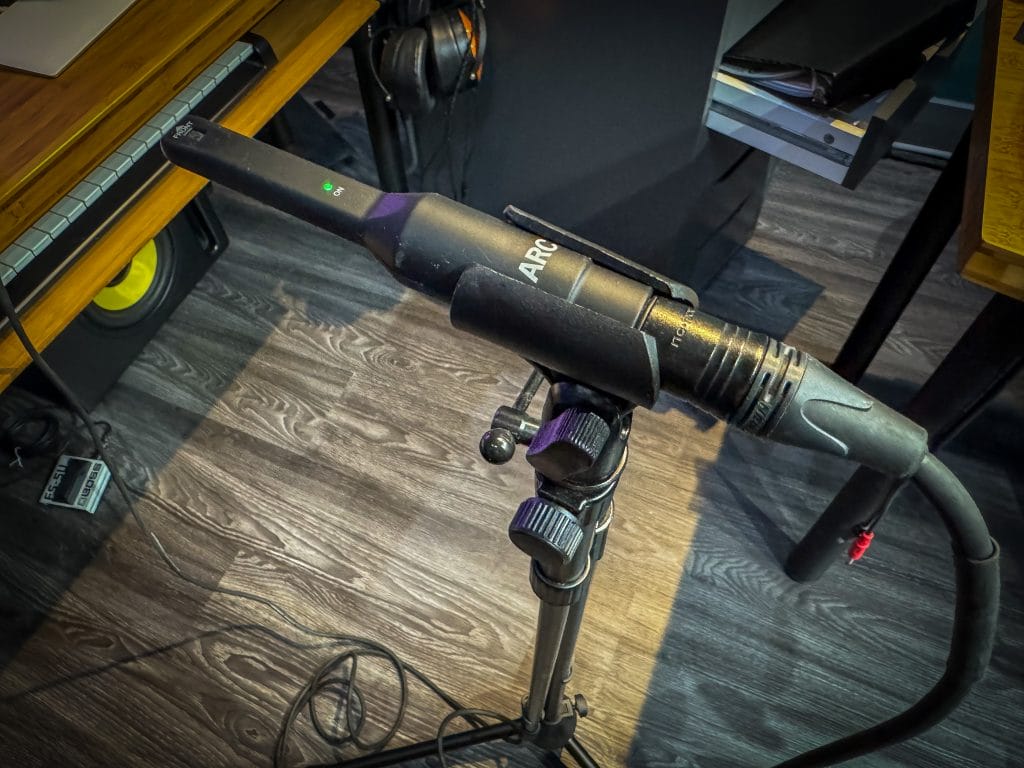
The ARC mic can plug directly in the back of each speaker or run the ARC mic through your audio interface, which is what I did as I had a subwoofer set up.
Sound Quality: Honest, Controlled, and Deep
I call this brutal honesty, which is the best kind for music producers. The iLoud Precision 6 does not flatter your mix. It doesn’t hype the low end, nor does it polish the top end to keep things “pleasant.” What it does instead is far more valuable—it tells the truth. I spent some time with them “out of the box” and uncalibrated with ARC X, and even without the room correction, I was immediately hooked on the sound profile.
I’m lucky enough to have a decent-sounding studio that was designed to get the best sound possible in the space I had. The more I worked on the iLoud Precision 6 MK IIs, the more I started hearing small details in ways I hadn’t with other monitors. Precision was the perfect name for them, as that’s the feeling you get when you listen to them with a well-mastered track; you hear everything.
I also took them for a spin with some albums to listen to for the details, both WAV and MP3 formats, and you will hear things that you haven’t before, so just be warned that this could cause issues with some of your favorite recorded music. You might hear some flaws, and in older albums, it’s almost guaranteed.
Note: The speakers also come with stabilizer pucks to prevent vibration. I already had Iso-Acoustics Iso-Pucks, so I just used those, but it’s a nice additional offering inside the box.
Low End
For a monitor of this size, the low-frequency performance is genuinely impressive. The bass is tight, controlled, and articulate, extending lower than you’d expect without turning into a vague rumble. Kick drums sit where they should. Bass guitars and synths separate cleanly. You don’t feel like you’re missing information, nor do you feel tricked into overcompensating. It’s the kind of low end that makes you trust your decisions, which is arguably the hardest thing to achieve in smaller rooms. I kept my KRK subwoofer, and it has worked well with tracks that have more of that sub-bass rumble, so I’m not missing any low, important end frequencies or, more importantly, overdoing it.
Midrange
The midrange is where the iLoud Precision 6 MK IIs really got me excited, and running the track back consistently. Vocals, guitars, synths, and snares sit in a clear, unexaggerated space that makes balancing elements feel almost boring—in the best way. You’re not fighting the monitors. You’re just mixing.
This clarity is especially noticeable when working on dense arrangements. Layers that might blur together on softer-sounding monitors remain distinct here, making EQ decisions faster and more confident. Think lots of percussive elements or multiple synth pads that can often get lost in the mix but, when they pop, are essential to a track.
Highs
The top end is smooth, detailed, and non-fatiguing. You can work long sessions without feeling like your ears are starting to get wonky, yet there’s enough resolution to hear reverb tails, transient detail, and stereo width with surgical accuracy.
In short, these monitors don’t impress you with fireworks. They impress you with their accuracy and the stunning details they bring out.
ARC X Calibration: The Room Finally Joins the Team
If the iLoud Precision 6 MK IIs are the body, ARC X is the nervous system. Using IK’s included measurement microphone and ARC X plugin, you measure your room directly through your DAW. The process is straightforward: place the mic at your listening position, follow the guided sweep tones, then repeat for multiple positions around the sweet spot. ARC X builds a 3D acoustic profile of your space—not just frequency response, but time-domain behavior as well.
Here’s where it gets smart: instead of forcing you to choose between hardware or software correction, ARC X gives you both. You can load the correction directly into the monitors or use the ARC X plugin on your master bus.
Logic Pro X Integration
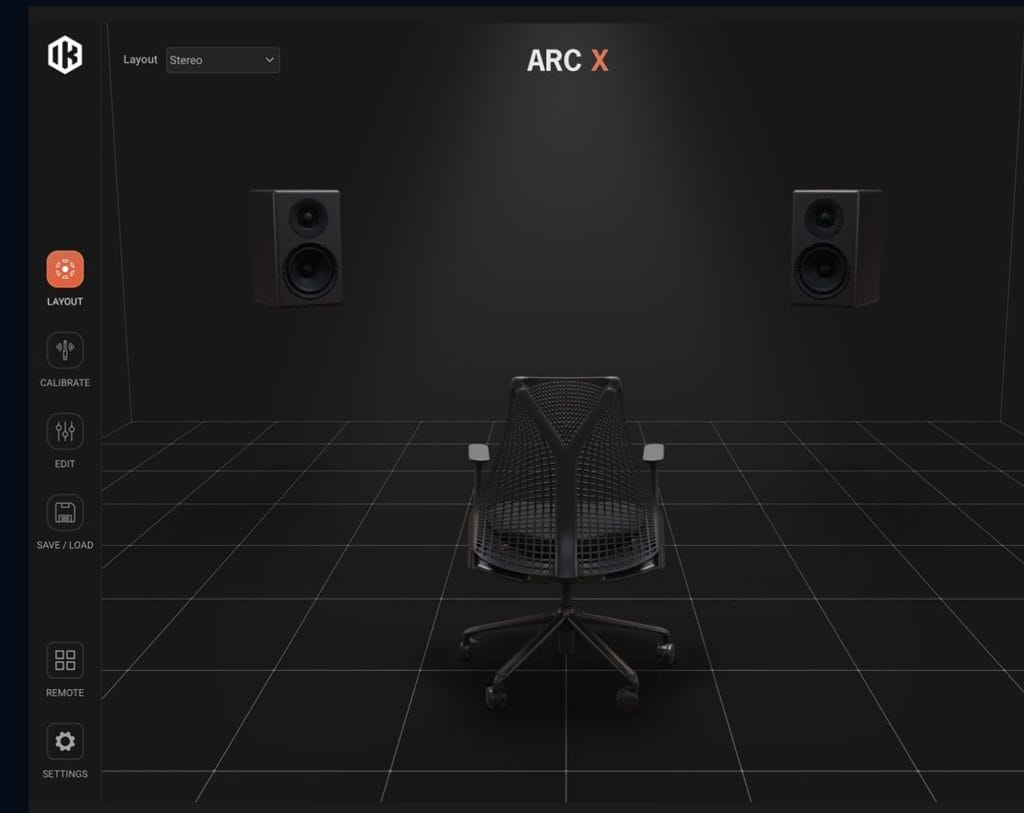
In Logic Pro X, ARC X feels right at home. Insert the plugin on your stereo output, choose your calibration profile, and you’re done. Latency is negligible for mixing, and you can bypass it instantly when bouncing or referencing.
What’s especially useful is ARC X’s Virtual Monitoring section—allowing you to audition how your mix translates to different speaker types, rooms, and listening environments. It’s not a gimmick; it’s a sanity check. The kind that saves you from endless export-and-check cycles.
After calibration, the difference is not subtle. Low-end buildup disappears. Stereo imaging tightens. The room stops lying.

Who This Is For
The iLoud Precision 6 MK II with ARC X is for producers, mix engineers, and creators who:
- Work in small to medium-sized rooms
- Need accurate monitoring without building a room from scratch
- Value translation over hype
- Want pro-level calibration without hiring an acoustician
- Want to hear different monitor profiles via the plug-ins
This setup is equally at home in a bedroom studio, a mobile production rig, or a professional mixing space where accuracy matters more than raw SPL.
If you’re making electronic music, pop, hip-hop, rock, film scores, or podcasts—anything where clarity and balance matter—these monitors will serve you well.
Competitors: How It Stacks Up
In this category, the iLoud Precision 6 MK II competes with some heavy hitters:
- Genelec 8030/8040 – Immaculate build and sound, but significantly more expensive once calibration is added.
- Neumann KH 120 II – Stunning midrange accuracy, but again, a higher price of entry and external room correction required.
- Adam A7V – Excellent ribbon tweeter detail, though some may find the highs more pronounced without correction.
- Focal Shape 65 – Musical and engaging, but less neutral out of the box in untreated rooms.
What sets the iLoud Precision 6 MK II apart is value. You’re getting high-end DSP, serious acoustic design, and a full calibration ecosystem in one package—with a better all-around bang for the buck.
iLoud Precision 6 MK II Specs
- 150 W total RMS power
- Reference frequency response: 45 Hz – 30 kHz +/- 1dB
- 37 Hz low-frequency extension at -4 dB
- Max SPL, continuous: 103.0 dB
- Max SPL, peak: 115.2 dB
- 6.5″ ultralight coated paper mid-woofer
- 1.5″ high output, low distortion graphene reinforced textile dome tweeter
Living With Them:
The easiest way for me to explain these monitors is that they are exciting to work on. I am confident in what’s coming out, and the level of detail lets me really dig into the details of tunes with a lot of layers, especially percussion elements. I’ve put about 30+ hours on them already, so they are just starting to break in, and we have finally gotten to know each other. It’s funny how you can build such a personal relationship with a studio monitor.
I always throw on my Audeze LCD-XC closed-back headphones to double-check my mix, and I don’t have to do that anymore, but I still will just for my own peace of mind.
For producers in smaller spaces, like a studio apartment, they can serve as your all-rounders. They’re the kind of speakers you can work on all day, then casually listen to records at night and still enjoy the music. No ear fatigue. No hype hangover.
And in a world where many producers are balancing creativity with limited space, the Precision 6 feels like a thoughtful solution to modern realities—not a compromise.

Final Thoughts: Editor’s Choice, Earned
The IK Multimedia iLoud Precision 6 with ARC X isn’t about flashy specs or bold claims. It’s about solving real problems—room acoustics, translation, trust—without overcomplicating your workflow.
It delivers accuracy without intimidation, power without excess, and intelligence without friction. For its size, price, and feature set, it’s one of the most complete monitoring solutions available today.
That’s why it earns our Editor’s Choice Award—not because it tries to impress you, but because it quietly makes you better at what you do.
And honestly? That’s the highest compliment a studio monitor can get.
For More info and to purchase the iLoud Precision 6 MK IIs, head to IK Multimedia’s Website (Single $899 / Pair with ARC X $1799)