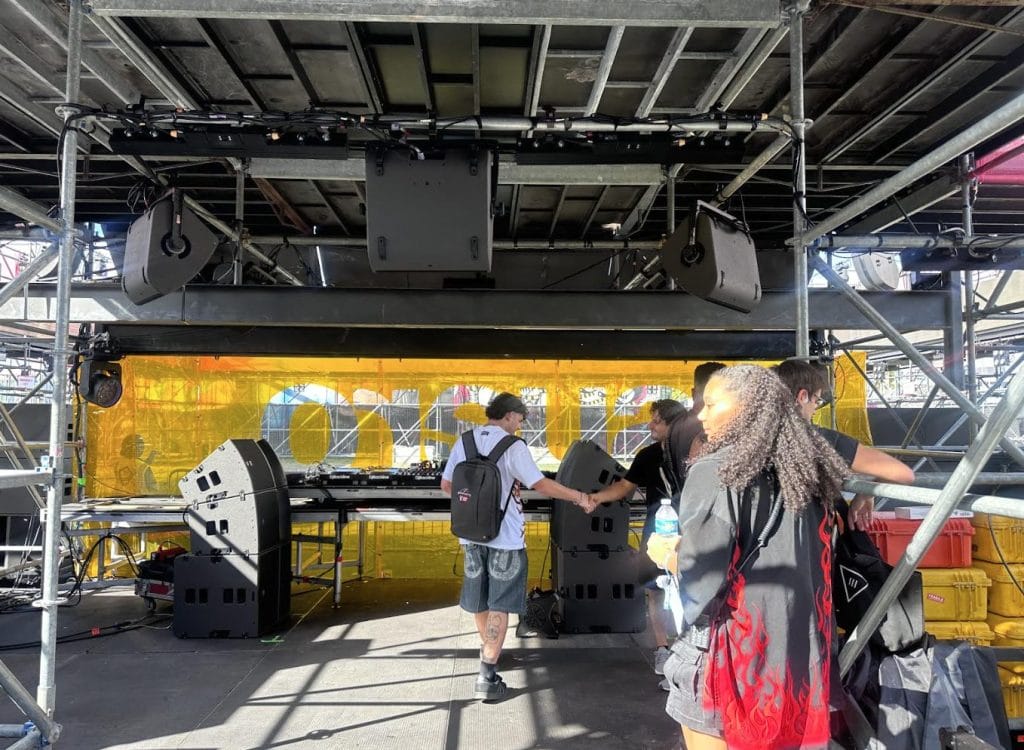
Kujo on Performing at III Points With L-Acoustics DJ
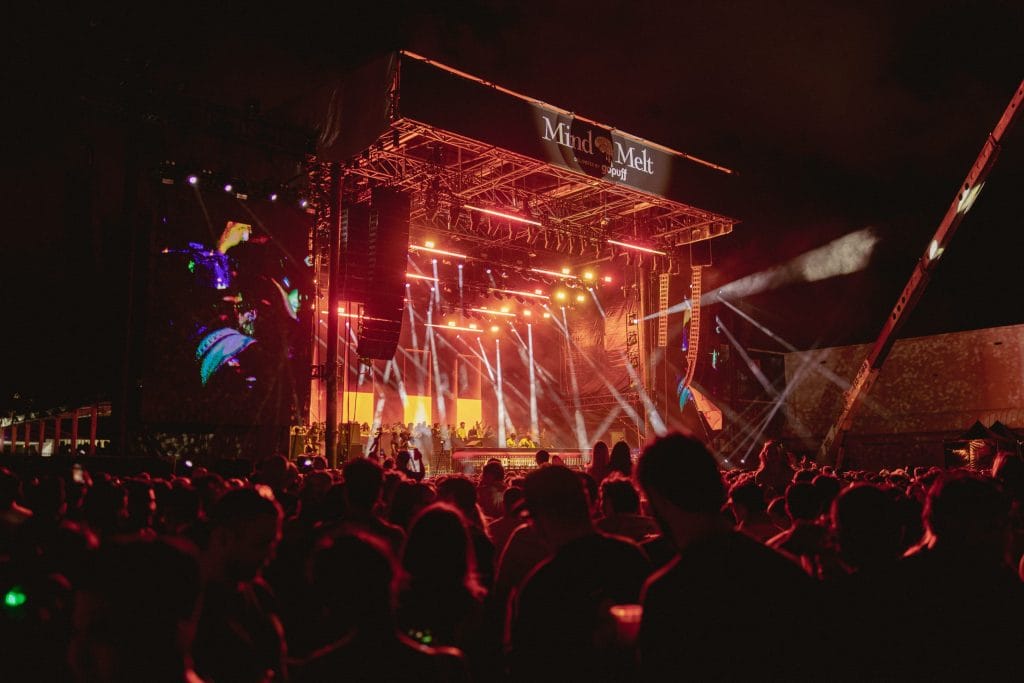
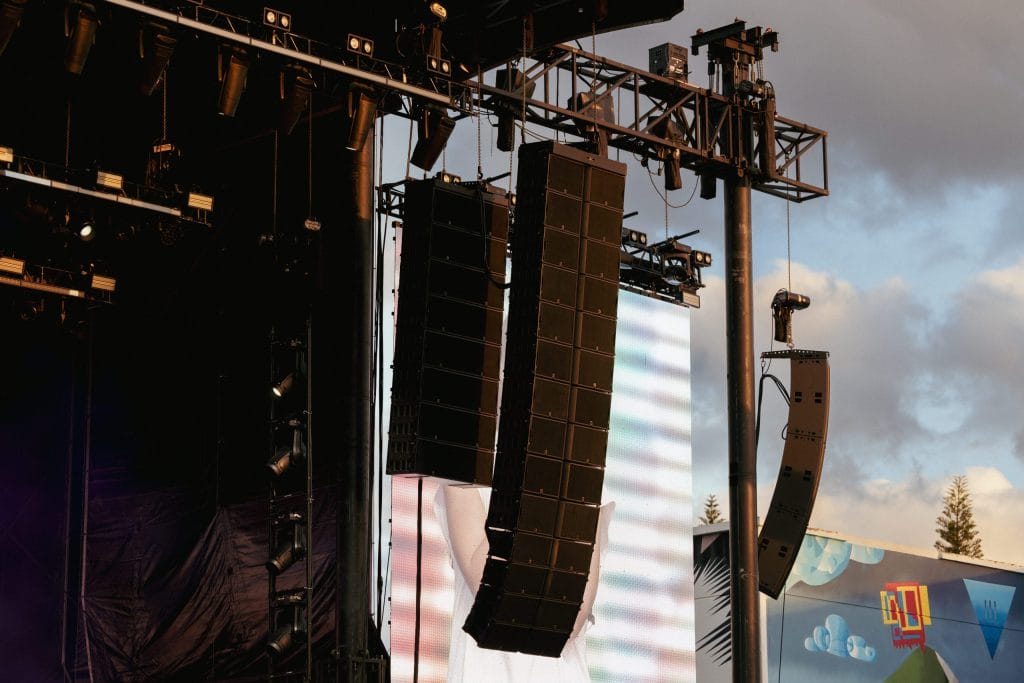
For nearly a decade, III Points has treated sound system design as a core part of its identity, not an afterthought. Every stage at the festival has been powered by L-Acoustics for eight consecutive years, establishing a consistent technical foundation across the site and positioning Mana Wynwood as a testing ground for new approaches to large-scale electronic music playback. That long-term collaboration set the stage for more ambitious experiments in how DJs interact with sound in a live environment.
In 2024, the festival took a major step forward by introducing L-ISA technology to North American festival audiences at the 444 stage. The multi-speaker configuration placed listeners inside the playback field rather than in front of it, creating a uniform listening experience across the room and opening new possibilities for movement, depth, and placement during a DJ set. Building on that momentum, III Points expanded its approach in 2025 with the debut of the S3QU3NC3 stage and the introduction of L-Acoustics DJ, a system designed to let artists shape spatial placement in real time using familiar DJ workflows.
Kujo was one of the artists selected to perform on the new system at III Points, bringing a rhythm-focused, club-driven style into a format that rewards intention and restraint. His set offered a practical look at how DJs can think beyond left and right channel placement while staying grounded in physical crowd response. In the conversation below, Kujo breaks down how he approached preparation, how the system changed his decisions during the set, and what this type of performance could mean for DJs and producers moving forward.
Interview With Kujo
What drew you to experiment with immersive sound during your set, and how did you prepare for it creatively?
What drew me in was the challenge.
My sound already lives across a lot of tribal-driven genres – techno, tribal house, Latin-club, electro, Brazilian funk, hard groove, minimal, house, even some 140 stuff – so the idea of taking all those rhythms and placing them in a three-dimensional space felt exciting.
Miami crowds are super physical; they react to tension and movement. Immersive sound gave me a new way to move the room without changing the BPM or stacking extra layers. It let percussion and vocals feel like they were traveling instead of sitting in a left-right stereo field. That opened up a whole new storytelling lane for me.
Creatively, I selected tracks that were heavily percussive and would naturally feel wide once the FX hit the space – congas, snares, shakers, and chant-style vocals that almost feel like they are being hit or shouted from different corners of the room. I treated the spatial engine like an extension of my drum programming. I used the width to create the illusion of drums echoing all around the crowd. That preparation helped me feel confident that the movement would translate emotionally once I was on stage.
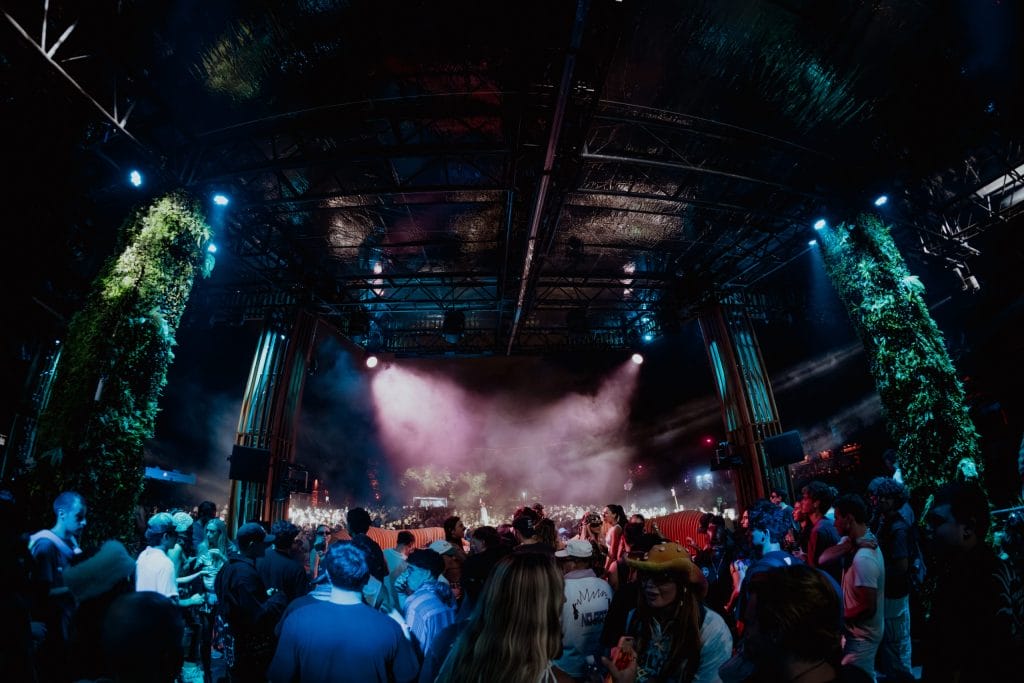
Were there specific moments in your set where you intentionally used the spatial panning to heighten tension or release?
Yeah, there were definitely intentional moments.
On rises and breaks, I used the mode that sweeps left-to-right and front-to-back. With big buildups, especially ones with rolling snares, tom fills, or percussive FX, I would let the sound travel around the whole space. It created a sensation of momentum, like energy was circling the room and tightening with every bar.
Right before the drop, I would stop all that movement and snap everything back into its pocket. That freeze added a lot of impact. The contrast between sound everywhere and sound hitting dead center made the drops feel more powerful. People reacted instantly, not only to the loudness, but to the way the motion suddenly collapsed into the groove.
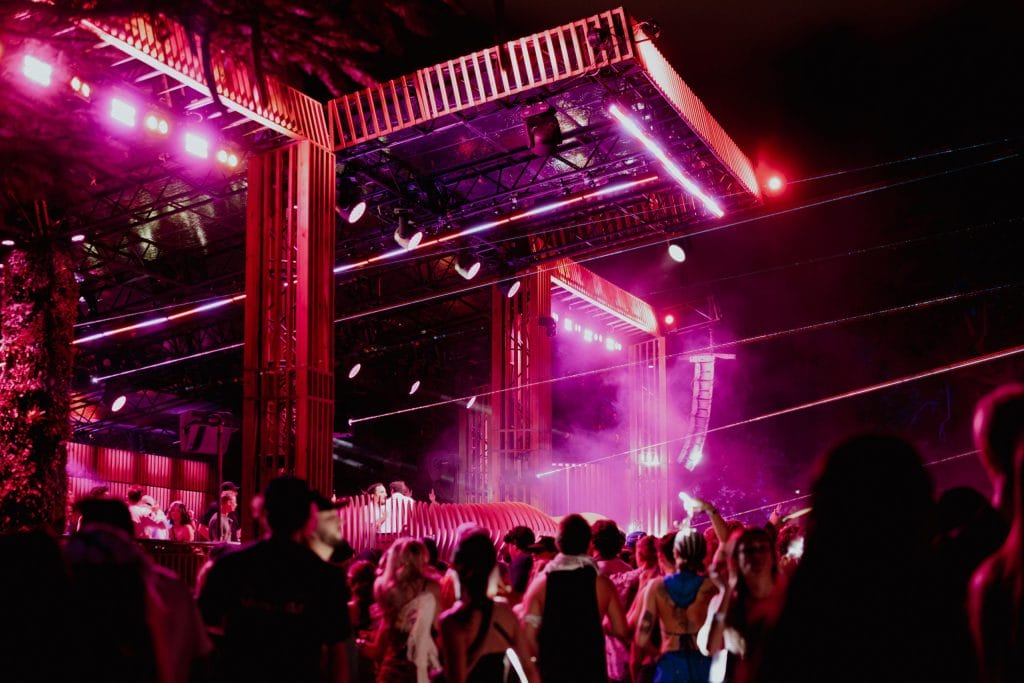
What was the setup process like when integrating your DJ rig with the L-Acoustics DJ interface?
The setup process was surprisingly smooth. Their team walked me through the routing, and once I understood how each channel mapped to different spatial zones, it felt intuitive, almost like working with multiple sends, just in 360 degrees. I love a minimal approach to gear, so I kept things clean and focused on the tools that actually added something emotional to the set rather than overcomplicating it.
I was also lucky to be able to test the rig the day before. That extra time let me get fully comfortable with the interface, which meant that by the time the event rolled around, I knew exactly how my low-end and percussion would translate in the room. Having that head start made me ready for the show. Once I hit the stage, the spatial tools already felt natural.
Do you think spatial audio performance could change how DJs produce or perform music in the next few years?
Absolutely. I think it is going to push DJs and producers to think beyond left-right mixing and start considering the shape and movement of the room as part of the experience. Spatial audio rewards producers who leave space, who design intentional moments, and who treat percussion or FX like moving characters instead of static layers. Once more people experience it, it will influence how we arrange tracks, especially breakdowns, builds, and transitions.
As someone who really values the art of performance, spatial audio felt like a natural extension of what I already do. It gives you another dimension to play with, a way to guide energy and tension in a physical way, not only through sonics or BPM. It is going to be interesting to see how different DJs use it across different venues and systems, and how that feeds back into production choices.
What did the III Points environment mean to you personally as an artist exploring sound innovation?
III Points has always felt like a place where Miami gets to dream out loud, so performing there hit on a deeper level for me.
It is one of the few festivals that encourages artists to push boundaries and experiment, and that energy makes you feel comfortable taking risks. Being able to explore spatial audio in that environment felt aligned with who I am, Cuban-American, Miami-raised, tribal and club-driven, always trying to bend things a little sideways. It felt like I was adding a new layer to what Miami can sound like.
On a personal level, it felt like a full-circle moment.
III Points has been a huge inspiration for me, musically and creatively, long before I was on any lineup. Being invited to explore something new there made me feel aligned with my growth as an artist. The crowd was open, the energy was right, and it reminded me why I enjoy creating in the first place. It felt like the right place to show a new side of myself and represent my city in a way that felt honest.