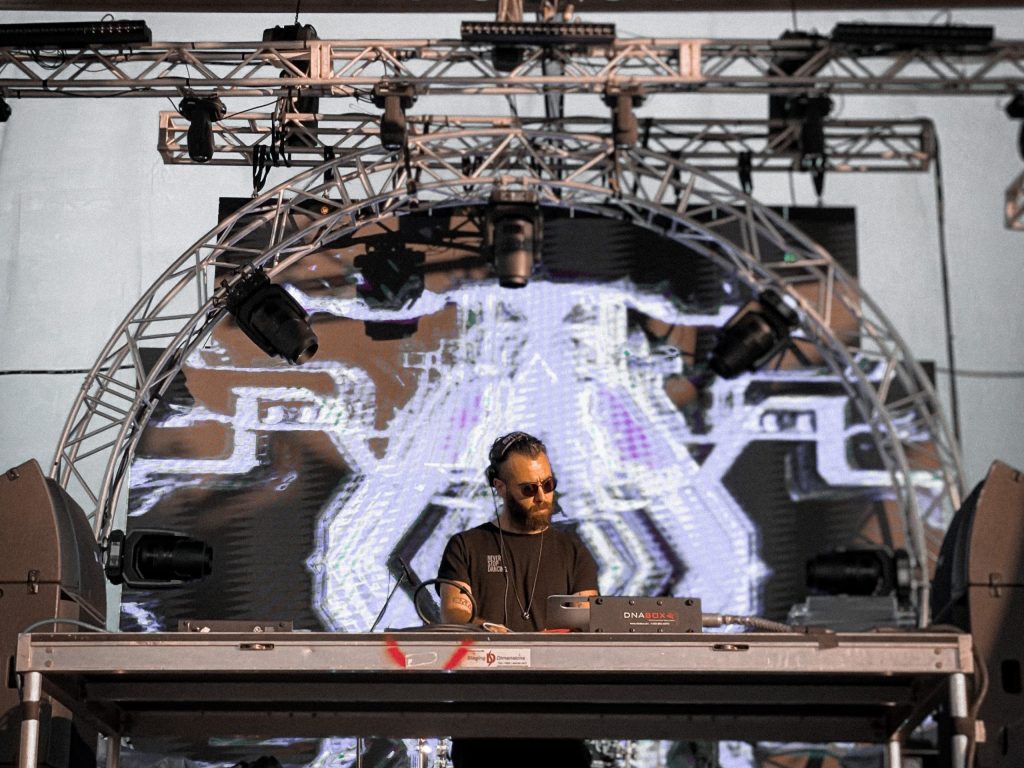
Bobi Stevkovski on the Art of Patience and Subtle Control in DJing
Bobi Stevkovski has reunited with YokoO for their latest EP, Stranger Things, released on the SATYA imprint. The record serves as a masterclass in patient, hypnotic electronic music, featuring two original tracks—”Someone Else” and “They From Space”—alongside remixes from Sublee and Hostox that further explore the EP’s deep, atmospheric textures. It is a release designed for the long haul, favoring the slow-burn intensity of a late-night set over the fleeting gratification of quick-fix club tracks.
Stevkovski’s perspective on the craft is informed by a career that spans over two decades. Starting in the early 2000s in Macedonia before moving to Atlanta, he became a central figure in the city’s underground scene, helping to build institutions like Project B. and ZEMYA. His approach to the booth is not that of a performer seeking the spotlight, but rather a curator focused on the practical, often invisible work of building a cohesive musical journey.
The Philosophy of Restraint
For Stevkovski, the most vital lesson for any DJ is one that often takes years to internalize: the dancefloor does not require a display of technical ego. “The last thing a room needs from you is proof that you can mix,” he explains. “If that is the case, you are either not a DJ or you are in the wrong room. Technical ability should be a given.”
Instead, he emphasizes the importance of reading the room and understanding the specific needs of the moment. As he has gained more experience, his reliance on heavy layering and excessive effects has diminished. “Technique, timing, and harmony create moments unlike anything any FX would,” he notes. “A great record played at the right time, mixed with intention and patience, will always have a bigger impact than a handful of effects.”

Context Over Control
When asked about the “it” factor that makes a record stand on its own, Stevkovski points to context. He argues that even the most beautifully produced track can fall flat if it is played at the wrong time, while a simpler tool track can captivate a crowd if it fits the narrative of the set. “The ‘it’ factor often comes down to context more than the track itself,” he says.
This philosophy extends to his own performance style. While younger DJs might feel the pressure to leave their mark on every transition, Stevkovski has learned that true personality is expressed through selection and timing. “The crowd does not need to see what you are doing,” he concludes. “They just need to feel the result of it. That is where subtle control becomes powerful.”
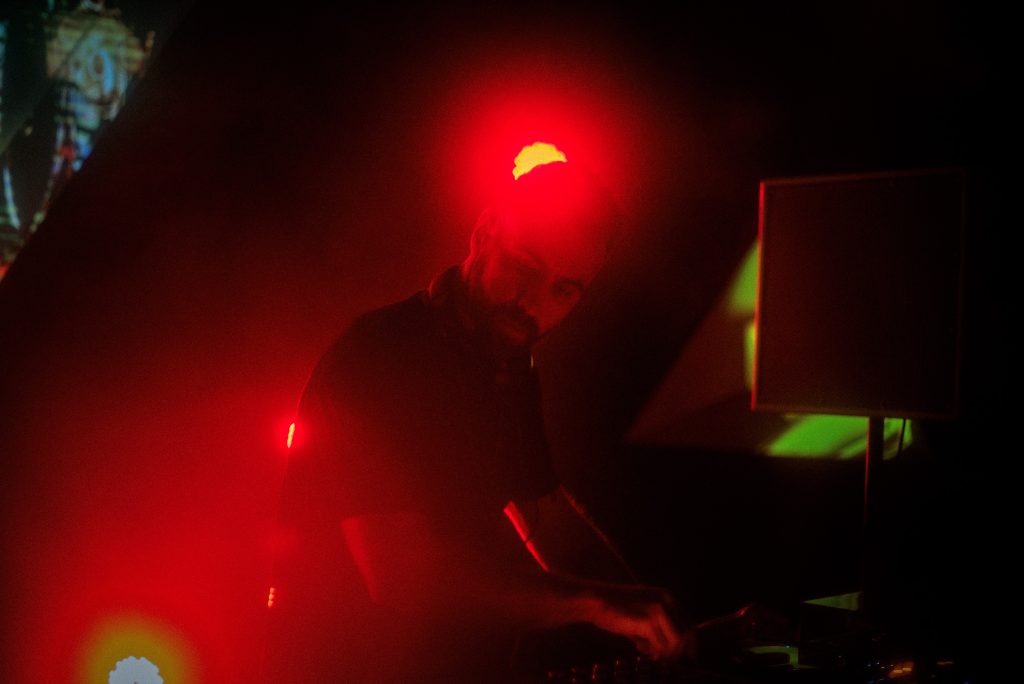
By prioritizing the music as the “main character” of the set, Stevkovski continues to refine a sound that is both technically precise and emotionally resonant, proving that in the world of underground dance music, sometimes the most powerful move is to simply let the record play.