How Sacha Robotti’s 1990s Roots Shaped “Whistle Man” on Dirtybird
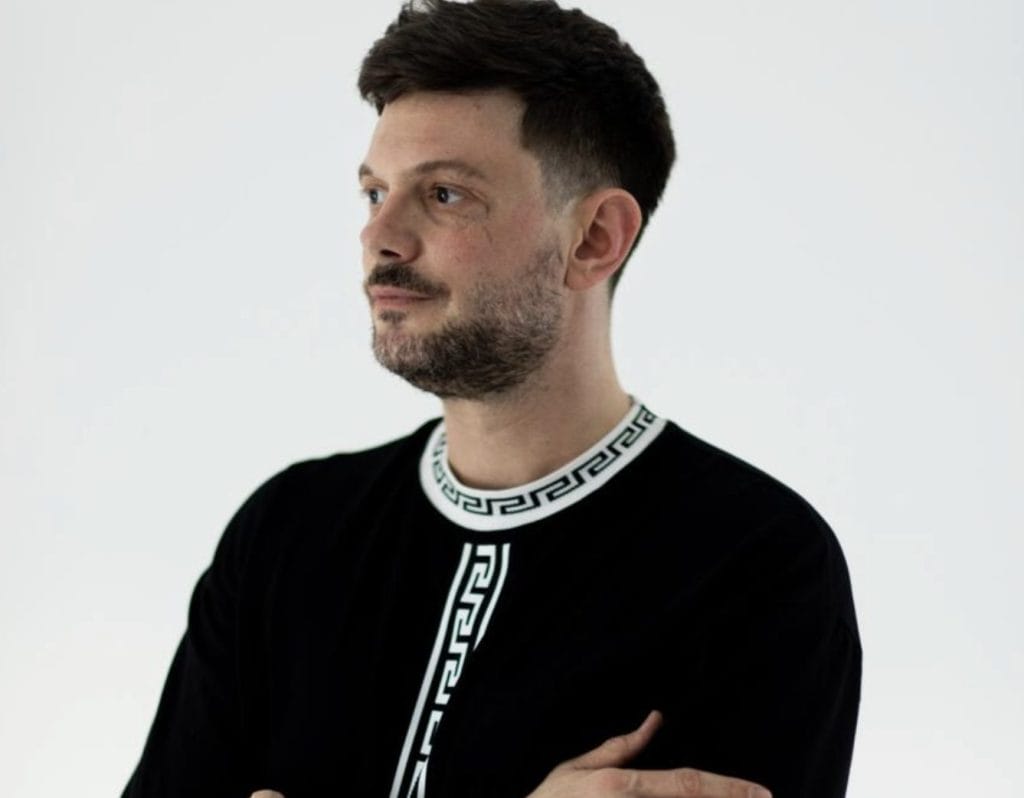
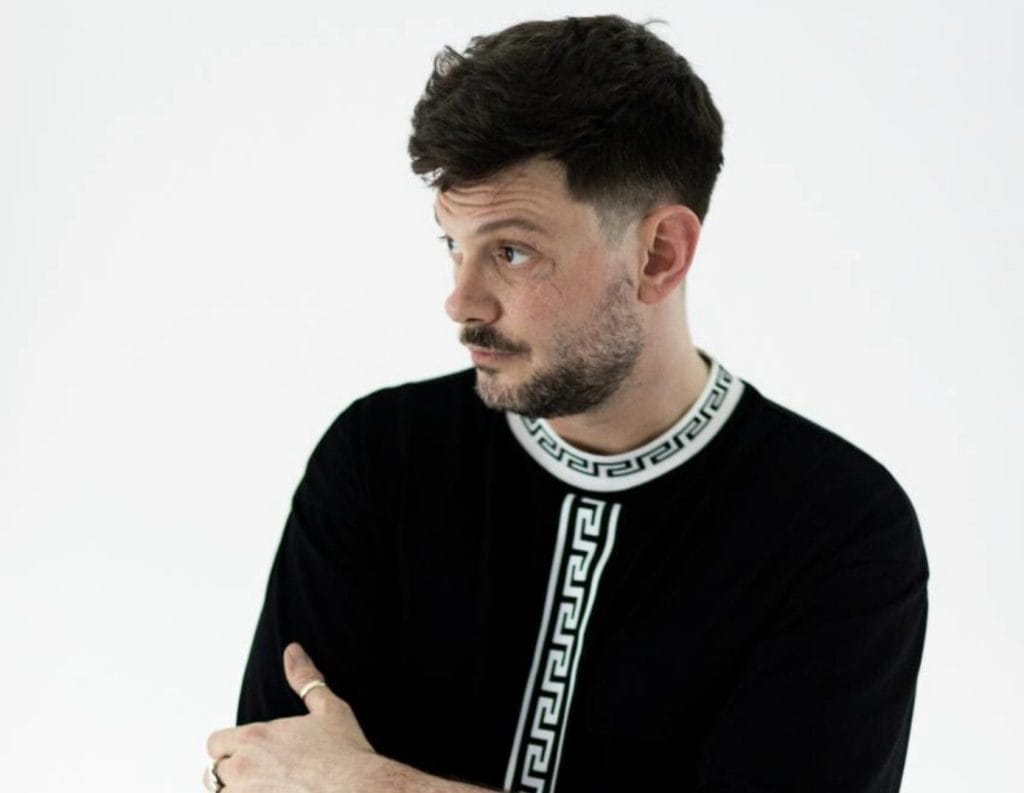
Sacha Robotti’s new single “Whistle Man” arrives via Dirtybird as the latest release from his forthcoming debut album I, Robotti. The track brings him together with Felix and Eric D. Clark, two artists whose work shaped dance music during the 1990s. Their collaboration connects Robotti’s present-day production with the era that first informed his listening and DJ career, drawing a direct line between early club influences and current studio output.
In his interview, Robotti explains how his musical foundation was built through exposure to house, techno, disco, and related styles during the mid-1990s, first in Belgium and later in Berlin. He describes those records as long-term reference points rather than passing phases, and notes that many of the artists who influenced him then now appear as collaborators on I, Robotti. Felix and Eric D. Clark fit into that same lineage, making “Whistle Man” part of a wider process of revisiting and reshaping formative material through contemporary production tools.
The single reflects the same values Robotti discusses in the interview, including groove, simplicity, and emotional response as core measures of musical relevance. “Whistle Man” joins earlier album singles with SYREETA, SIAN, Blakkat, JOPLYN, and Victoria Rawlins, reinforcing I, Robotti as a project built around long-standing creative relationships. Together, the release and the conversation show how Robotti’s early listening habits continue to guide his choices in both collaboration and sound design.
Sacha Robotti Interview
Do you ever go back and listen to the music that first got you into DJing? What hits differently now?
I started DJing in Brussels, Belgium, in 1995. The electronic music I was exposed to back then was a mix of techno and house and all their subgenres—Chicago house, filter house, disco house, acid house, ghetto/booty house, hard techno, schranz, gabber, drum & bass/ jungle, garage, hip-hop, trip-hop, IDM, rave, electro, Italo, and trance—alongside classical and jazz music at home. As a DJ today, I primarily play music somewhere between house and techno, influenced by all of the above.
Honestly, I don’t feel like I’ve departed very far from my original influences taste-wise. I moved to Berlin in 1999 and absorbed a lot of the music and culture there. I started my professional DJ career in Berlin-Kreuzberg under the alias Robosonic with Cord around 2005, and a lot of what I do now is rooted in that time between 1995 and 2010 or so. I still listen to the music that first got me into DJing—actually, a lot.
I also still play some of the same music that made me want to become a full-time DJ back in 1995. As I’ve become more mature as a DJ, I’ve realized that the music I loved back then is still the blueprint for what I’m trying to do musically, and for what many others are trying to create —or recreate. It all comes in waves and cycles, especially once capitalism steps in looking for something new to exploit and rinse (I’m looking at you America). I feel lucky to be able to bring my taste to new generations of young people with fresh ears and excitement. I don’t know if I’d call it educational—it’s more about sharing.
What hits differently now compared to the ’90s are the sonics and the technology. Even if you’re trying to recreate a specific sound, it will never be exactly the same. Music is a snapshot of a specific era. Even when a piece of music is regarded to be “timeless,” it still reflects the time it was made in. In electronic music especially—the griminess, the way records were mastered for vinyl, how they were played on the sound systems of the time, as well as the arrangements, the length of tracks, the spontaneity of the production, and the pioneering spirit of the process—all of that contrasts with the meticulous way music was made on what is now considered ancient gear that very few people know how to use.
Today, we’re still emulating the way things were done back then, except the technology has been miniaturized and condensed into computers and now also AI algorithms. The blueprints remain the same.
Has your relationship with your early influences changed over time—or stayed consistent?
It’s stayed quite consistent. I still love those early influences, and I’m sure I subconsciously compare what I do now to those same blueprints.
Are there tracks or artists from your past that keep showing up in your sets in new ways?
Yes—quite a lot. It’s been amazing to get the opportunity to work with artists who influenced me early on, and to remix some of my all-time favorites. Working with Gene Farris, whom I adored in the ’90s, or remixing a track by ZDS with DJ Funk vocals, was huge for me. I was also really excited to have a feature on Claude VonStroke’s track “Lay It Down” with DJ Nephets about a decade ago. In general, I love re-editing older material and putting it into a format I can play out, whether I share these re-edits or remixes with the world or just keep them on my USB.
For example, I once produced an edit of Thomas Bangalter’s “What to Do” that may or may not have been released vinyl-only in Berlin some years ago. I also had the honor of remixing Eddie Amador’s “House Music” and “Rise,” as well as Chiapet’s “Tick Tock” on Yoshitoshi Recordings, all under our Robosonic alias. Those remixes were definitely career defining. Fast forward to 2026—my album I, ROBOTTI is coming out on Dirtybird. For the album, I worked with Felix, Eric D. Clark, Blakkat, and SIAN, among others who consciously or subconsciously shaped my taste back in the day. With SIAN, I also form the duo Third Culture.
How do you separate nostalgia from genuine connection when revisiting old music?
It’s honestly both at the same time. I feel very passionate about those “good old days,” and I miss them musically. But nostalgia fades on the dance floor—connection doesn’t.
Has anything from your early taste aged better than you expected—and what do you make of that?
Absolutely. In techno and house especially—Jeff Mills’ Axis releases, early Drumcode, Missile, Dance Mania, Primevil, Roulé, Bush, Planet E, F Communications, Soma, Peacefrog, Riviera, Tresor, Planet Rhythm, DJAX-Up-Beats, Force Inc., and so many more labels. Everything by Green Velvet, Underground Resistance, Plus 8, R&S, Novamute, and others. The list is long, but I think these records aged so well—at least in terms of feeling and vibe —because they’re still the blueprints for everything we’re trying to do today.
Do you think your younger self would be surprised by the music you play now?
I think my younger self would dig it, haha.

When you look back, what core values or instincts about music have always been there?
Groove, authenticity—for lack of a better word—as well as simplicity and emotion. Music that’s evocative and takes you on a journey. If I can’t visualize imagery in my head when I hear it, or if it doesn’t give me goosebumps, or makes me feel something, it’s not for me.