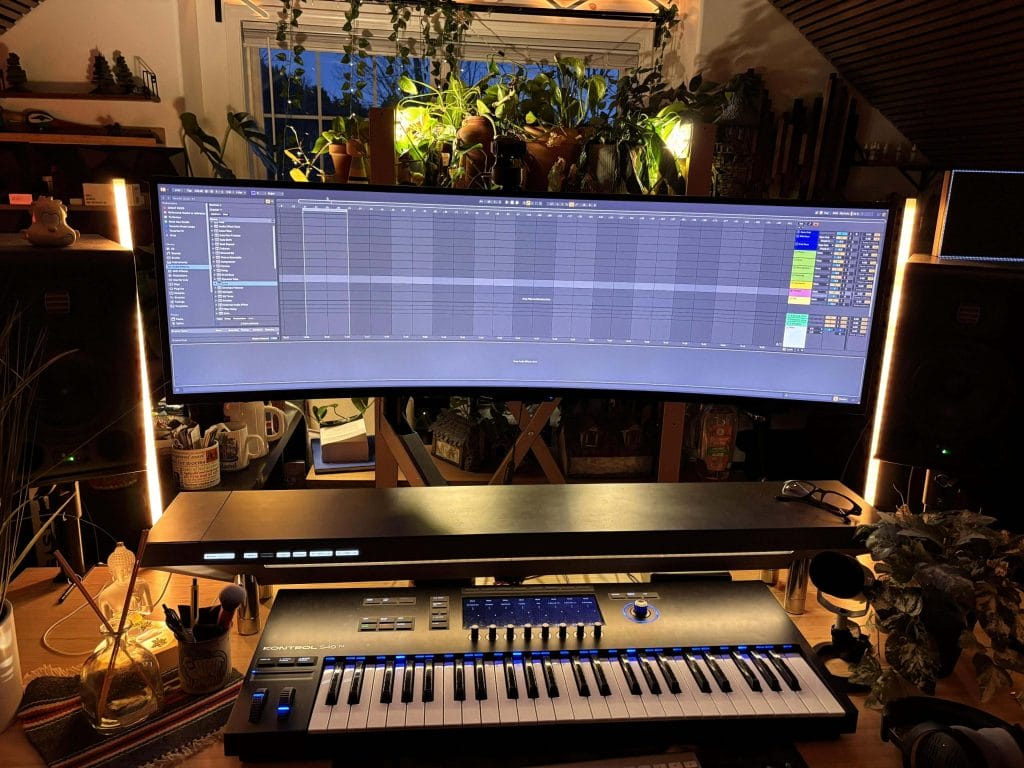
Nanoleaf Smart Multicolor Floor Lamp Review – Ambient Lighting That Actually Works in a Studio
One of the things I underestimated for years as a producer was how much lighting affected my ability to stay focused during long sessions. I went through phases of overhead lights that felt exhausting after an hour, desk lamps that created glare on screens, and RGB setups that looked good for photos but felt distracting once the work actually started. At some point, I realized I wanted lighting that could sit in the room quietly, support the space visually, and then get out of the way.
That was the mindset I had when I set up the Nanoleaf Smart Multicolor Floor Lamp in my studio.
I was not looking for something dramatic or reactive right out of the box. I wanted consistency, scheduling that worked without babysitting, and lighting that filled the room without becoming a focal point. After living with it through daily production sessions, editing work, and late-night listening, it became clear where this lamp fits and why it has quietly gained traction among people who actually use their spaces instead of staging them.
Jump to these sections
Design, Build Quality, and Studio Fit
The first thing I noticed when I pulled the lamp out of the box was how slim it actually is.
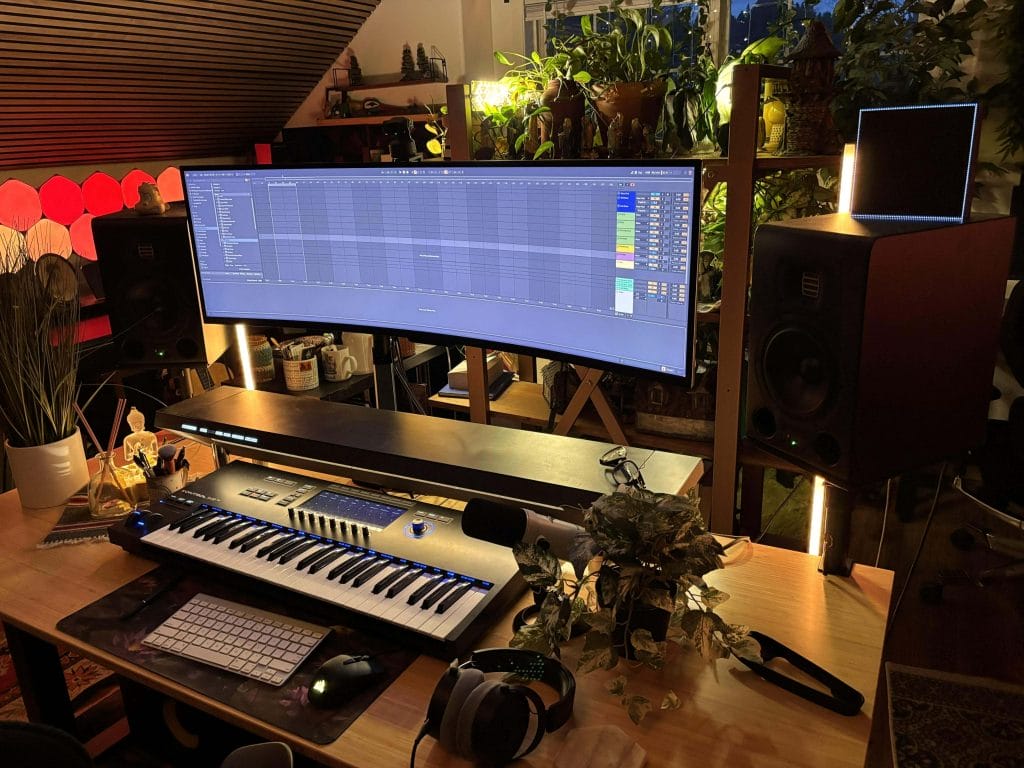
In my room, floor space matters, especially near desks, monitor stands, and racks, and I found that this lamp slipped into a corner without forcing me to rearrange anything. The narrow footprint makes it easy to place behind a desk or slightly off to the side without feeling intrusive.
The aluminum construction also stood out immediately. I have owned RGB lighting before that felt plasticky or temporary, and this did not give off that impression at all. The finish looks clean in a studio environment, and it does not clash with other gear or furniture. The weighted circular base ended up being more important than I expected, because once it was in place, I stopped thinking about it entirely. It never felt unstable, even when moving around cables or shifting gear nearby.
Height is something worth mentioning. In my studio and office-sized rooms, the lamp felt proportioned correctly and produced an even wall wash. In larger living spaces, I can see how it might feel undersized unless paired with a second unit. For tighter production rooms and corners, though, the size actually works in its favor.
Assembly and Initial Setup Experience
Assembly was straightforward, and I appreciated that it did not require tools or guesswork. The only moment where I slowed down was installing the light strip, but Nanoleaf’s video guide made that process clear enough that I did not feel stuck. From unboxing to standing upright in my room, the whole process took only a few minutes.
Once powered on, pairing through the Nanoleaf app was familiar territory if you have used their products before. I connected it over Wi-Fi to unlock the full feature set, and I also tested Bluetooth control out of curiosity. Bluetooth worked reliably as a fallback, which I ended up appreciating more than I expected when my network was temporarily unavailable.
After firmware updates finished, the lamp stayed connected without any recurring drops. That stability became one of the most important aspects over time, because nothing breaks the flow of a session faster than lighting that randomly disconnects or resets. Once setup was complete, I found that it behaved predictably day after day.
Music Reactivity and Screen Integration
I spent some time playing with Rhythm Mode during casual listening and general playback, and I found it worked best in very specific moments rather than as something I left on all the time. Because the lamp reacts to sound in the room instead of pulling a direct audio feed, it felt more natural in screen-based setups, especially when I was watching something or letting music play in the background. During focused production sessions, I rarely reached for it, though when I switched into listening mode or stepped away from the desk, it added a nice layer to the room without demanding attention. And for obvious reasons, I should mention they don’ really work when you’re mixing in headphones (which I do fairly often).
Screen mirroring pushed things a bit further once I paired the lamp with Nanoleaf’s desktop software and a 4D setup. In a PC or TV environment, I noticed the light extending the visual field around the screen in a way that felt cohesive rather than gimmicky, without needing extra fixtures or cluttering the room. For studios that pull double duty as entertainment spaces, that kind of integration fits naturally into how the room already gets used.
What I liked most was that none of this felt forced. Those features stayed out of the way until I wanted them, and when I turned them off, the lamp went right back to doing its quiet ambient job without leaving behind any sense that I was missing something.
Smart Home Integration and Matter Support
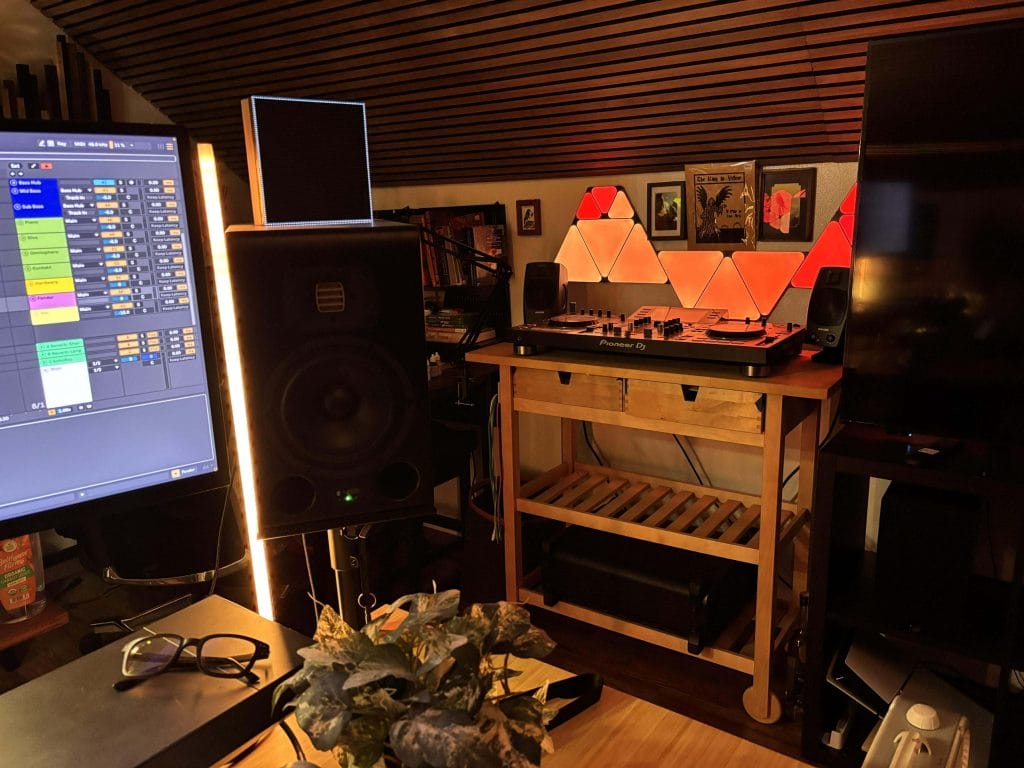
Matter support ended up being one of the reasons this lamp stayed in my setup. Connecting it to my existing smart home ecosystem worked without drama once a compatible hub was in place. I tested grouping behavior with multiple units, and synchronization remained stable across sessions.
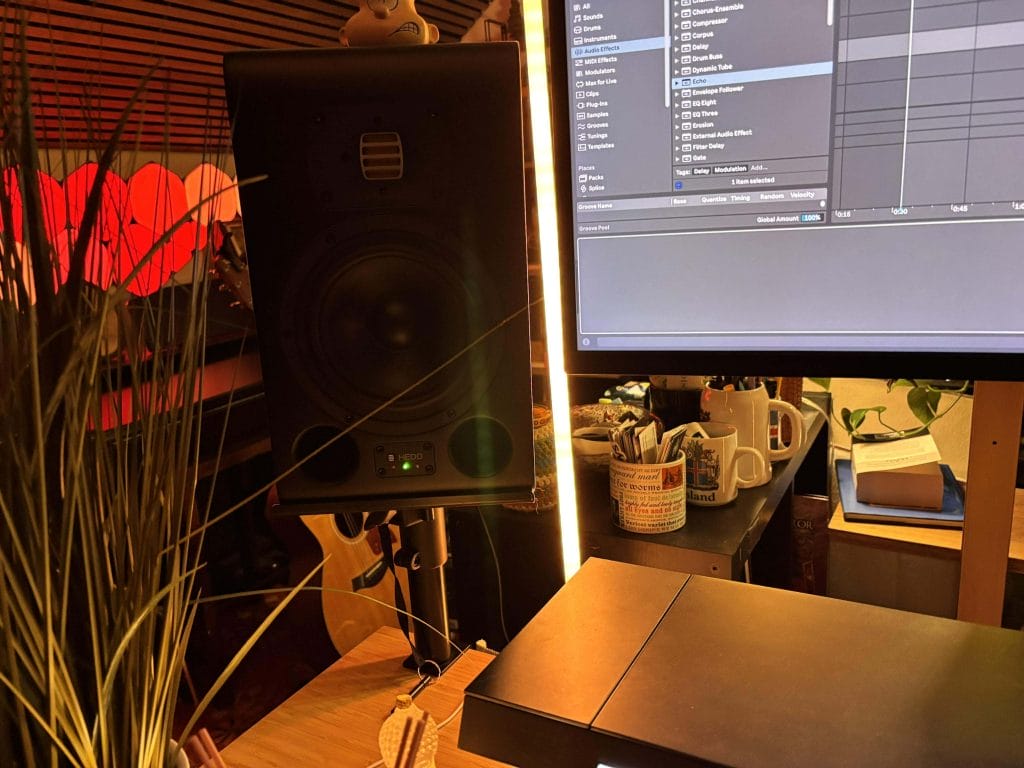
Automations and schedules inside the smart home platform behaved consistently. The lamp responded to triggers and scene changes without lag or desync. Over time, that predictability mattered more than any advanced feature.
Bluetooth fallback also deserves credit. When Wi-Fi was unavailable, basic control remained accessible. That redundancy added confidence and made the lamp feel dependable rather than fragile.
Everyday Use for Music Producers
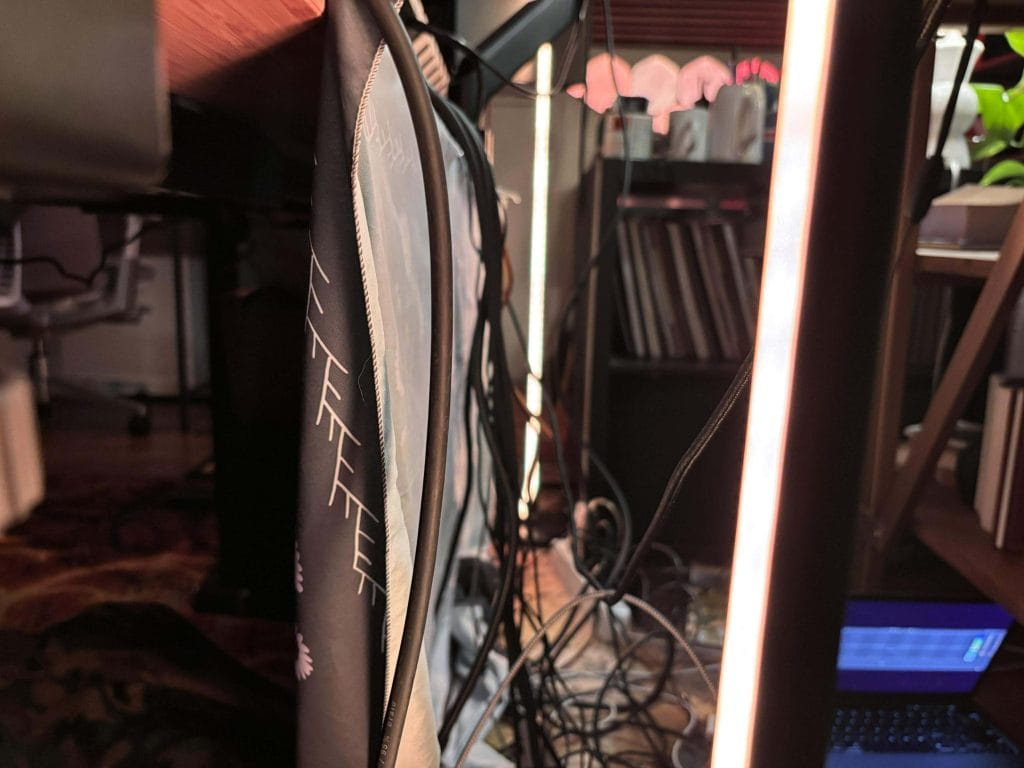
In my studio, I kept coming back to placing the lamp as a wall wash either behind the desk or slightly off to the side, because that placement filled my peripheral vision in a really comfortable way and helped soften the jump between bright screens and a darker room. During longer sessions, especially late ones, I found my eyes felt less strained compared to setups where overhead lights or desk lamps were doing all the work, and that subtle difference added up over hours of sitting in front of monitors.
That same logic carried over easily into home office and bedroom setups. Once I had schedules in place, the light handled itself, coming on and shifting tone without me thinking about it, and I leaned on the color temperature range to match different parts of the day without touching a switch. In larger rooms, I found that running a single lamp felt a little restrained, whereas pairing two units gave the space more balance and coverage.
I also spent time running multiple lamps together, and I paid close attention to how they behaved as a group. Scenes stayed locked together, changes applied evenly, and nothing drifted out of sync over time. That consistency made it easy to think about adding units gradually, instead of feeling like everything had to be built all at once.
TL;DR? These are a super vibey way to get some ambient light going in your studio ASAP. Plus, they have the added benefit of being very mobile, which means you can move them about and not commit to placement in the same way that I had to do with some of the other lights in my studio.
Limitations and Considerations
The biggest hesitation I kept coming back to was the app, because while it does a lot and clearly has depth, I found that it asked for more patience than I wanted to give it early on, especially if all you’re trying to do is get scenes and routines dialed in quickly. I had a few moments where I had to slow down, poke around, and figure out where things lived, but once I pushed through that setup phase and got my schedules locked, I noticed I barely touched the app again, which honestly made that early friction feel far less important over time.
I also ran into some color weirdness inside Apple Home, mostly with reds looking off compared to what I saw in the Nanoleaf app, and that felt less like a hardware issue and more like a platform translation thing. Inside Nanoleaf’s own app, colors stayed consistent and predictable, so it never became a deal breaker for me. The height is another thing worth calling out, because in bigger rooms it can feel a little undersized, whereas in offices, studios, and corners it actually feels proportioned correctly.
None of this ever ruined the experience for me, but it did shape how I thought about where the lamp fits best. Once I treated it as ambient support that fills the room visually instead of something meant to light the entire space on its own, everything clicked and the lamp made a lot more sense in daily use.
Final Verdict On The Nanoleaf Smart Multicolor Floor Lamp
After living with the Nanoleaf Smart Multicolor Floor Lamp in my studio, what stood out most was how little attention it demanded once configured. It delivered consistent ambient lighting, reliable scheduling, and flexible control without pulling focus away from the work. For music producers who care about atmosphere but value stability over spectacle, it fits naturally into a daily workflow.
Its strengths show up over time rather than in the first five minutes. Used with realistic expectations, it becomes part of the room rather than a distraction within it.