Tomorrowland’s Single-Use Cup Penalty Reduced After Legal Review
Tomorrowland, the iconic Belgian electronic music festival, has been battling ongoing issues around single-use plastic cups in recent years, as environmental regulations across Belgium have tightened.
For context, Belgium introduced stricter waste regulations for large events in 2023. Under these rules, festivals are required to use reusable cups instead of disposable plastic ones. Organisers must also achieve a high return rate, typically around 90%, to ensure cups are reused rather than discarded. The aim of the policy is to reduce plastic waste generated by major festivals. Events like Tomorrowland can use millions of cups over a single weekend, making single-use plastics a major environmental concern.
During 2024 the festival, Tomorrowland continued using single-use plastic cups instead of fully switching to a reusable system. Flemish authorities later ruled that this violated waste legislation. As a result, the festival was fined and ordered to hand over the financial advantage gained by using cheaper disposable cups.
What The Original Penalty Included
The original penalty consisted of two parts : First, a fixed administrative fine for breaching environmental regulations. Second, an additional amount designed to remove any economic benefit Tomorrowland gained by not complying.
Authorities calculated this second figure by estimating how much money the festival saved by using disposable cups instead of reusable ones. This included production, cleaning, and logistics costs associated with reusable systems. The combined total initially ran into the hundreds of thousands of euros, prompting Tomorrowland to challenge the calculation.
But, Tomorrowland did not dispute the breach itself. Instead, it challenged how the financial benefit had been calculated. Festival organisers argued that the original estimate included broader operational costs that were not directly linked to cup usage. After reviewing the case, Belgium’s enforcement body agreed that the calculation was too broad. While the violation was upheld, the financial advantage component was revised downward, significantly reducing the total amount payable. Authorities said the adjusted figure better reflected the actual savings tied specifically to disposable cups.
This was not Tomorrowland’s first clash with environmental authorities over cups. In previous years, the festival faced substantial fines, including one case where penalties exceeded €700,000, largely due to similar “advantage removal” calculations. Officials also warned that sanctions could increase further if compliance did not improve.
The Reusable Cup Controversy
Even after moving toward reusable cups, Tomorrowland faced renewed criticism.
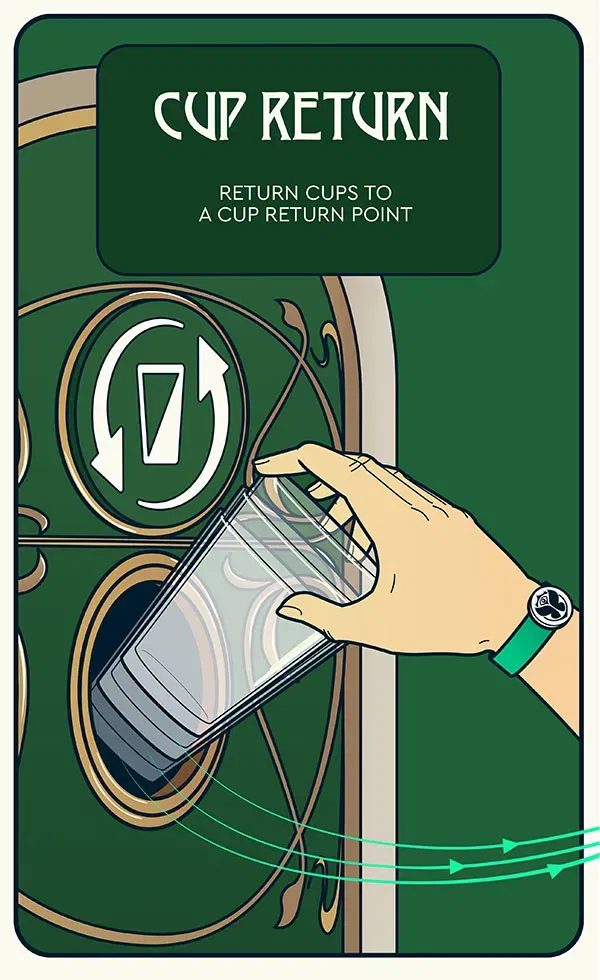
In 2025, the festival came under scrutiny for introducing high-tech reusable cups containing electronic chips. These chips were designed to track cup returns and improve collection rates. Festival goers were typically charged a deposit, which could be reclaimed by returning the cup or kept as a souvenir. However, Belgian officials and environmental groups raised concerns that the chips relied on rare earth materials, questioning whether the environmental cost of producing and recycling such cups outweighed their benefits.
The criticism highlighted a broader debate within the festival industry: whether complex, technology-heavy sustainability solutions are more effective than simpler reusable cup systems already used by many other events.
Tomorrowland’s case has now become a reference point in Belgium’s wider push to reduce festival waste. It shows how environmental rules are being enforced in practice, and how organisers are being held accountable for the economic impact of non-compliance.
*Source: Brussels Times