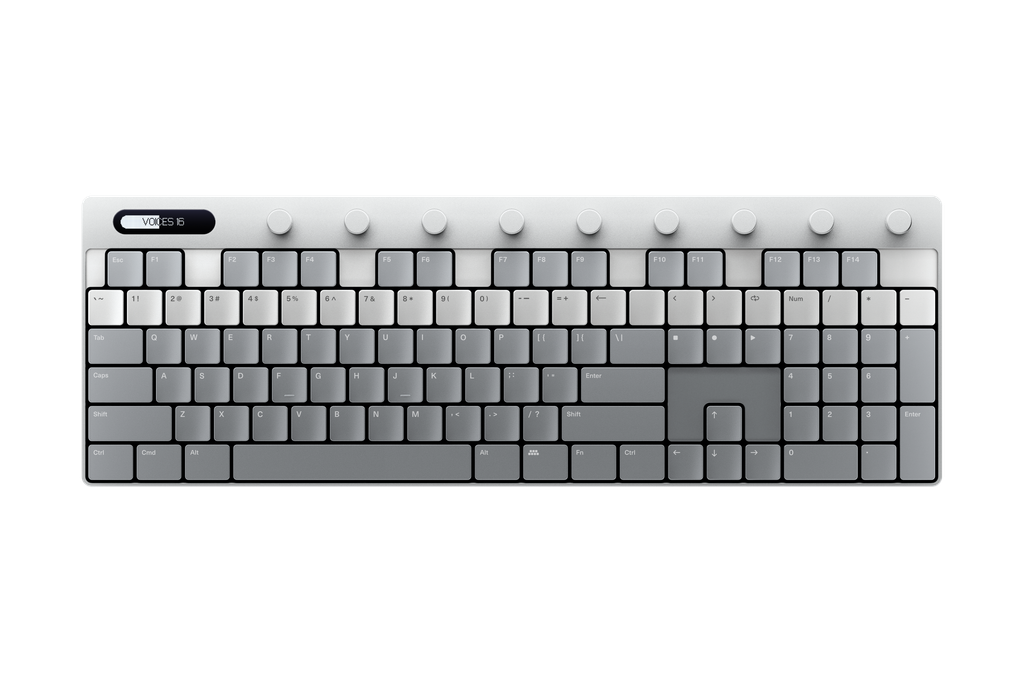
Polyend Keys Turns a QWERTY Keyboard Into a Three-Octave MIDI Controller
Polyend has introduced Keys, a mechanical QWERTY keyboard designed for musicians who spend as much time typing as they do making music. On the surface, it looks like a low-profile computer keyboard with a few extra controls across the top. The more interesting idea is built into the layout itself: the number row and function keys are arranged as a three-octave piano keyboard.
That makes Keys a strange little bridge between computer work and music work. The same device used to write emails, search samples, edit metadata, or name tracks can also play notes, record melodies, and control external MIDI hardware. It is a simple idea, but it points at a real studio habit: a lot of producers are already sitting at a QWERTY keyboard when the musical idea hits. Keys tries to remove one small piece of setup drag. Instead of reaching for a separate controller every time you want to sketch a part, the keyboard already in front of you can become the starting point.
The Piano Layout Is the Smartest Part of the Design
Plenty of producers have used a computer keyboard to enter notes. Most DAWs offer some version of that feature, and it is usually fine for quick input. The problem is that it rarely feels intentional. It often feels like a fallback when the real MIDI keyboard is not connected. Polyend Keys takes that rough idea and builds hardware around it.
By arranging the number row and function keys into a three-octave piano layout, Polyend gives the QWERTY keyboard a clearer musical purpose. It is still not a replacement for a full keybed, and it does not need to be. The value is in immediacy. For melody sketches, bass ideas, chords, synth control, and quick note entry, that could be enough. It puts a playable layout directly under the producer’s hands without asking for more desk space.
That makes Keys sit in a different lane from something like the Novation Launchkey MK4, which is built around a more traditional MIDI keyboard workflow. Polyend is aiming at the space between typing and playing, which is a smaller target, but a pretty practical one.
Nine Assignable Knobs Keep It From Feeling Like a Novelty
The nine rotary controls are where Keys starts to feel like a proper studio device rather than a clever keyboard layout. Those knobs can be assigned to MIDI CCs for controlling parameters in a DAW or hardware setup. They can also handle everyday computer functions like volume, scrolling, and brightness.
That dual-use idea is the whole product in miniature. Keys is not asking to be treated only as a music controller or only as a typing device. It wants to live in the middle, where the same physical controls can move between production, playback, and normal computer use. The built-in display helps with that by giving feedback for controls and leaving room for application support and future features.
Open-Source Software Could Be the Long Game
The most flexible part of Keys may be its open-source software. Polyend says the software can be expanded beyond its original functions, opening the door to alternative layouts, new control modes, custom MIDI controllers, sequencers, and other applications. That is where the device could grow past the launch feature set.
A QWERTY keyboard with MIDI, a display, knobs, TRS output, Bluetooth, USB, and open software gives technically minded users a lot to play with. The obvious use is note input, but the more interesting uses may come later from people building their own layouts and control systems. That open-ended controller thinking also connects with the way producers use devices like the Novation Launch Control XL 3, where assignable controls become much more powerful once they are tied to a repeatable personal workflow.
Polyend Keys Feels Built for the Desk Where Music Actually Happens
Polyend Keys is a good example of a product aimed at the messy reality of modern production. A lot of music is made at desks, between admin, browsing, editing, writing, arranging, and half-finished ideas. The keyboard is already there for all of that. Polyend is asking what happens when it becomes part of the musical surface too.
That is the appeal. Keys does not need to replace a serious MIDI keyboard, a pad controller, or a dedicated hardware sequencer. It needs to catch ideas quickly, offer hands-on control, and make the line between computer input and musical input less annoying. Polyend will show Keys for the first time at Gamescom in Cologne from August 26 to 30 in Hall 02.2, D031. Price and availability will be announced soon.