The Best Live Vocal Processors for Electronic Artists
To avoid getting too prosey, let’s dive right into the best live vocal processors for electronic artists so you can get what you came for. Choosing the right hardware depends on whether you need a reliable floor unit for standard vocal polish or an experimental device to transform your voice into raw electronic material.
How I Chose These Live Vocal Processors
The primary consideration for any live setup is physical control. A vocalist holding a microphone operates a floor unit differently than a producer standing behind a mixer. If you need to change vocal scenes with your feet, you require predictable preset behavior and sturdy switches. If you prefer to manipulate pitch, formant, or granular feedback during a breakdown, a tabletop processor is often the better choice.
I also evaluated how far each processor can take the voice. Beyond basic pitch correction and harmony, modern electronic performance demands vocoding, rhythmic gating, and heavy spatial processing. The following units were selected based on their connectivity, MIDI integration, and ability to serve as an extension of your creative identity.
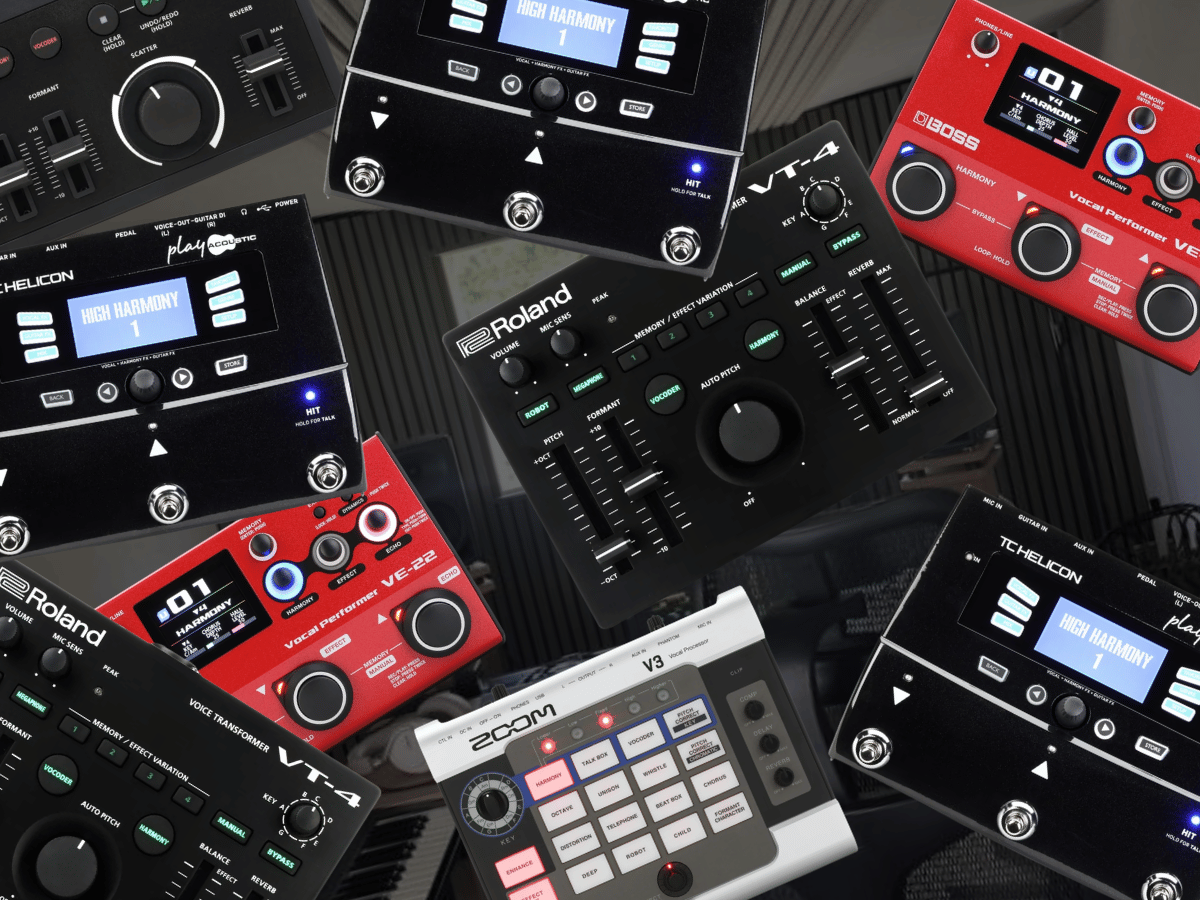
| Vocal processor | Best use | Key specification | Main limitation | Typical price |
|---|---|---|---|---|
| BOSS VE-22 | Best overall | XLR mic input, phantom power, pitch correction, harmony, 37-second looper, USB-C | Less immediate for extreme formant performance | Around $400 |
| Roland VT-4 | Best for transformation | Pitch and formant faders, vocoder, hard tuning, MIDI, 8 scenes | No integrated looper | Around $300 |
| Roland AIRA Compact E-4 | Best portable looper | Auto Pitch, harmony, vocoder, Scatter, 24-second looper, MIDI | 1/4-inch mic input | Around $270 |
| Zoom V3 | Best tabletop processor | 16 voice effects, 3-part harmony, XLR, phantom power, USB audio | Hands-free control needs optional hardware | Around $280 |
| TC-Helicon VoiceLive Play | Best affordable floor | 200+ presets, harmony, pitch correction, looper | Older design | Around $230 |
| SOMA Laboratory WARP | Best experimental | 15 algorithms, stereo I/O, micro-loops, granular effects, CV control | Needs external preamp/mixer | Around $650–$720 |
Top Picks for Electronic Performers
The BOSS VE-22 is the most versatile recommendation for a wide range of electronic artists. It handles pitch correction, harmony, and looping while remaining easy to operate from the floor. For those who prioritize radical transformation, the Roland VT-4 offers dedicated pitch and formant faders, making it an essential tool for techno and house producers who want to manipulate their voice in real-time.
If portability is your priority, the Roland AIRA Compact E-4 excels at rhythmic processing and looping, fitting perfectly into a compact rig. For producers performing behind a mixer, the Zoom V3 provides a tabletop solution that keeps essential effects within reach. Finally, the SOMA Laboratory WARP serves as the ultimate experimental tool, offering granular reverbs and CV control for those who want to turn their voice into entirely new electronic textures.
Disclosure: This article contains affiliate links. Magnetic may receive a commission if you purchase something after following one of them. That does not change which products I include or what I say about their limitations.
Ultimately, the best processor is one that fits your specific workflow. Whether you choose the reliability of a Ableton-integrated setup or the raw power of a dedicated hardware chain, these units provide the tools necessary to make your live vocals a central part of your performance.