The Best Hardware Synths for First-Time Buyers in 2026
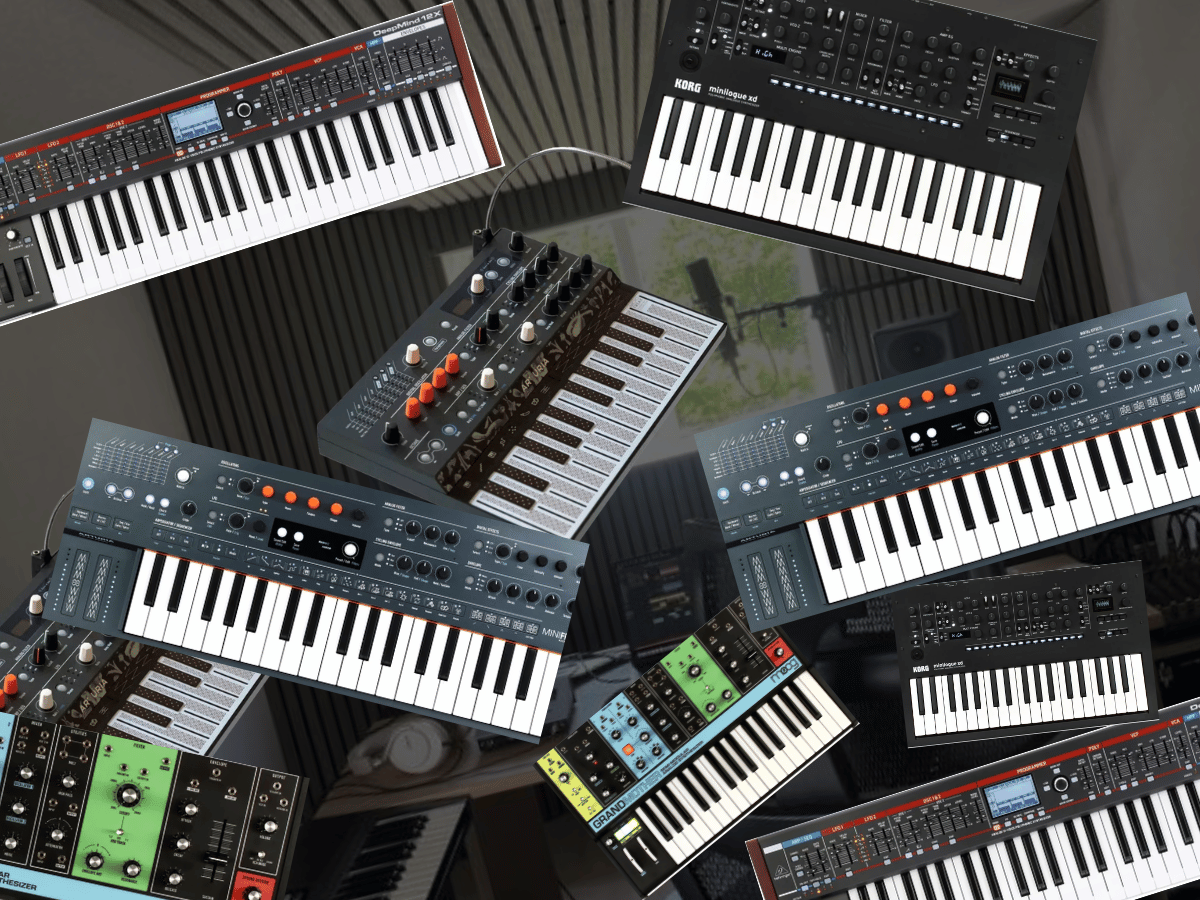
If you are looking to purchase your first hardware synth in 2026, the sheer volume of options can be overwhelming. The goal is to find an instrument that you will use constantly, rather than one with the longest feature list. For most producers, I would start with the Korg Minilogue XD; it provides a perfect balance of analog oscillators, a digital multi-engine, and a clear, readable panel that makes learning synthesis intuitive.
How to Choose Your First Hardware Synth
When selecting a first instrument, the criteria shift from building a collection to finding a reliable teacher. You want a panel that provides immediate feedback—where oscillators, filters, and envelopes are physically accessible. Understanding how these components interact is the foundation of sound design. Furthermore, consider your workflow: do you need patch memory for DAW integration, or are you looking for a hands-on, experimental tool?
Disclosure: This article contains affiliate links. Magnetic may receive a commission if you purchase something after following one of them. That does not change which products I include or what I say about their limitations.
Top Recommendations for Beginners
The Korg Minilogue XD remains the top choice for its versatility, offering four-voice polyphony and a built-in sequencer. It has been a staple for artists like Fourth Daughter, Dualist Inquiry, and ONYVAA, who have all utilized its accessible architecture to bridge the gap between initial ideas and finished records.
For producers transitioning from software, the Arturia MiniFreak is an excellent bridge. It offers six-voice polyphony and a deep modulation matrix, making it ideal for those who want to maintain the sonic breadth they are accustomed to in a DAW environment. As Louen Popp and QRTR have demonstrated, its integration with the MiniFreak V software makes project recall seamless.
If your focus is on basslines and leads, the Novation Bass Station II is a powerful, focused tool. Its monophonic nature encourages a deep dive into timbre and modulation without the distraction of complex chord voicings. For those on a tighter budget, the Arturia MicroFreak offers an experimental, compact alternative that has found its way into the projects of artists like Villager and QRTR.
For the purist, the Moog Grandmother is the ultimate educational tool. Its semi-modular design allows you to learn analog routing and patching through physical connections, a process Durante and Gromo have both cited as a catalyst for unique sonic discoveries.
Finally, for keyboard players who require more polyphony, the Behringer DeepMind 12X provides 12 voices and a traditional layout that handles complex pads and chords with ease.
Common Pitfalls to Avoid
A frequent mistake is assuming that analog is inherently superior to digital. The best synth is the one that gets you to a musical decision quickly. Additionally, be mindful of polyphony requirements; while a monophonic synth is perfect for bass, it will not suffice if your primary goal is playing pads. Always prioritize an instrument that fits your desk space and inspires you to create, as the most powerful synth is the one you actually turn on every day.