
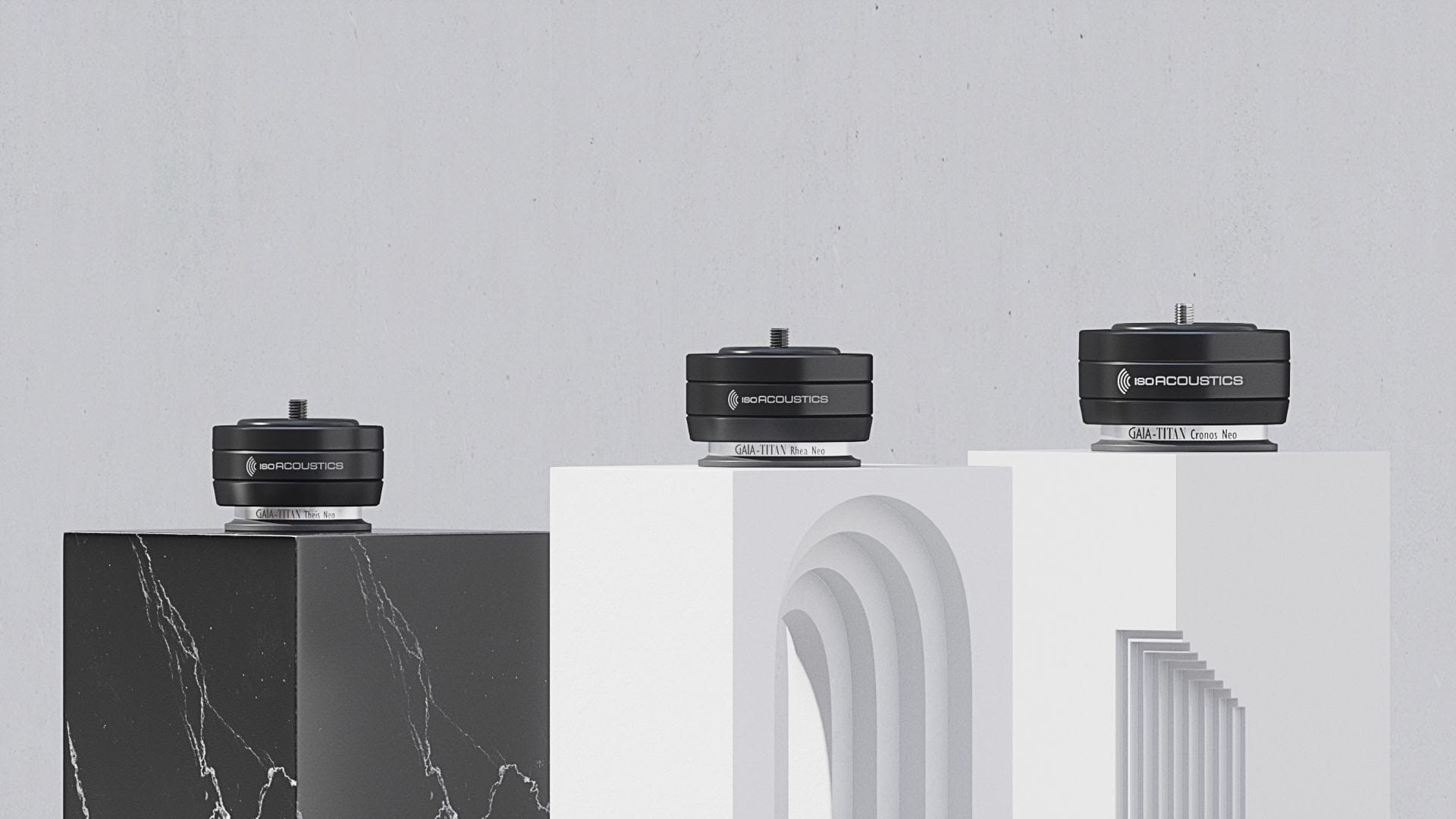
While studio professionals often dedicate significant resources to selecting premium speakers and perfecting acoustic treatment, the physical interface between the monitor and its support surface is frequently overlooked. Even the most sophisticated monitoring setups can suffer from mechanical energy transfer, where vibrations from the speaker cabinet migrate into the floor, potentially coloring the sound. For those utilizing high-mass floorstanding monitors or substantial subwoofers, the IsoAcoustics GAIA-TITAN Neo series offers a refined solution to manage these structural interactions.
This latest iteration improves upon the original GAIA-TITAN design by incorporating updated internal isolation components. The system is engineered to provide a stable, decoupled foundation for heavy loudspeakers, with models supporting equipment ranging from 320 to 620 pounds. Pricing for a set of four begins at $1,264.99.
Before reaching the consumer market, this isolation technology saw implementation in flagship products from brands like JBL and Marten, who collaborated with IsoAcoustics on custom integrations. Now, the standalone GAIA-TITAN Neo series brings this capability to a broader range of high-end listening environments and professional reference studios.
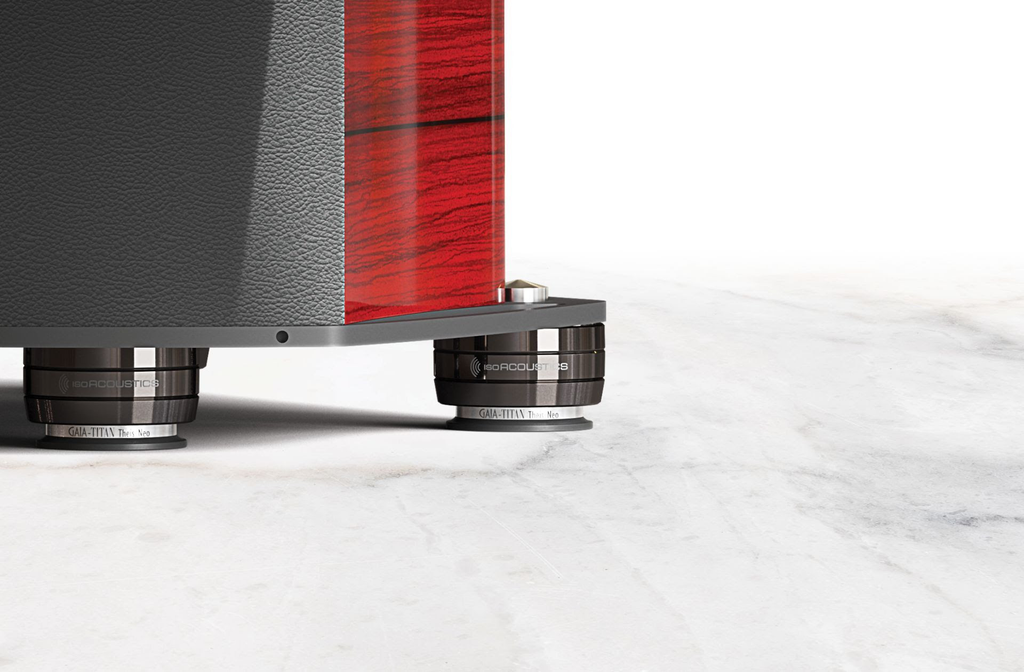
The core philosophy behind the GAIA-TITAN Neo is to mitigate the mechanical coupling that occurs with traditional speaker spikes. By using specialized internal isolators, the system prevents vibrational energy from traveling between the cabinet and the floor. Research conducted at the National Research Council of Canada indicates that this method effectively reduces cabinet resonance while preserving a neutral frequency response.
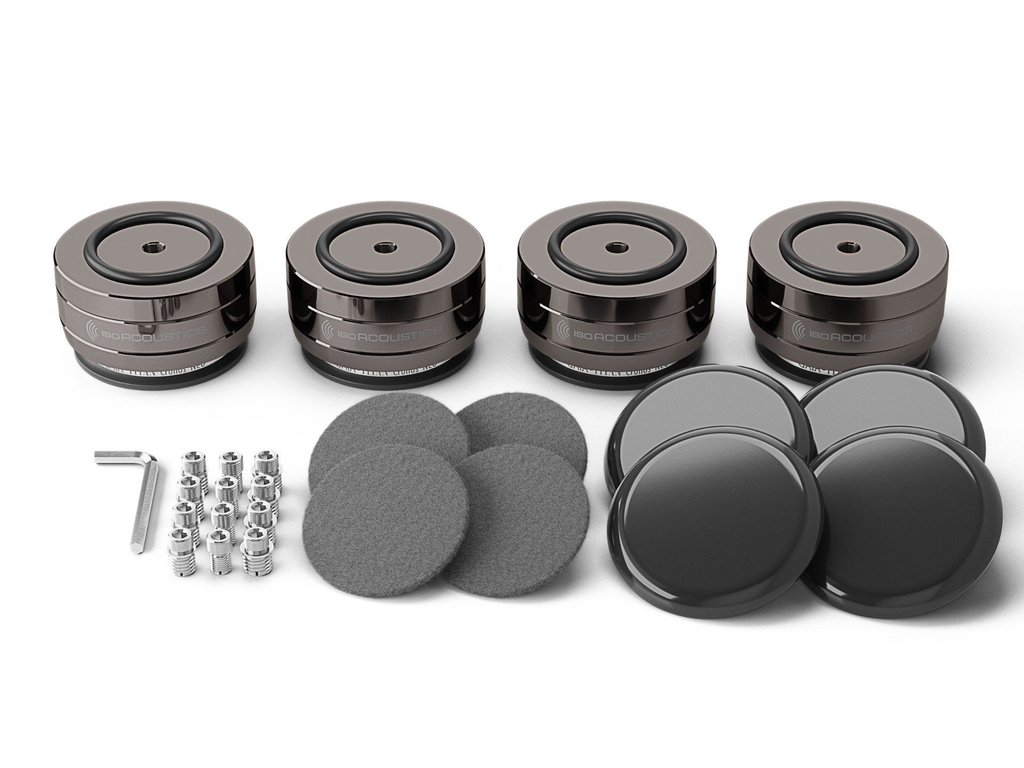
Beyond the internal material upgrades, the Neo series streamlines the user experience. Each unit now features an integrated height adjustment mechanism, allowing for up to 8.5 mm of travel. This is a significant functional improvement for users managing massive speakers, as it simplifies the process of leveling the cabinet on uneven surfaces. Furthermore, the lower isolation element is designed to pivot, ensuring consistent contact with the floor, while the updated housing provides a cleaner aesthetic by removing the need for external lock nuts.
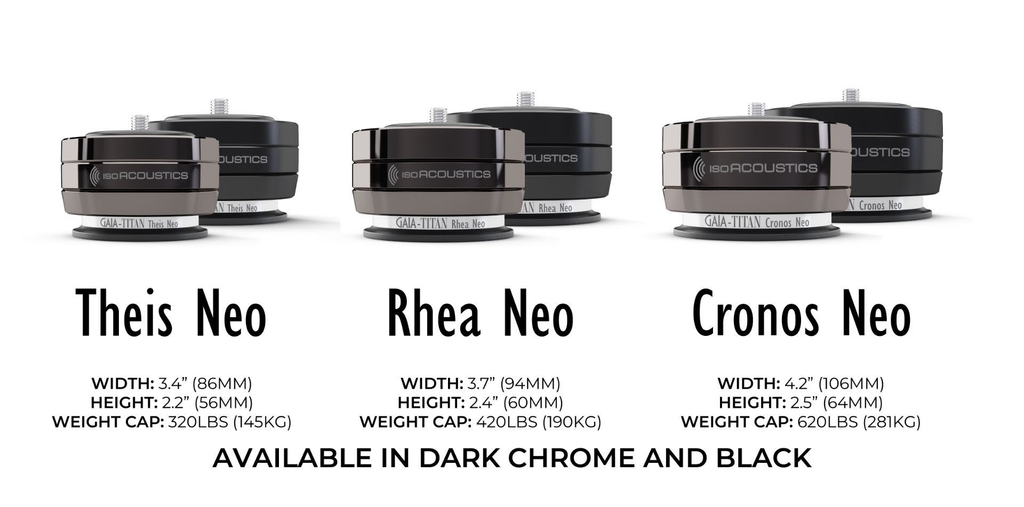
It is important to note that the GAIA-TITAN Neo is a specialized tool for heavy-duty audio equipment. Owners of standard nearfield monitors will find the company’s existing range of smaller isolation feet more appropriate for their needs. Additionally, while these isolators excel at reducing mechanical vibration, they are not a substitute for proper room acoustics or correct speaker positioning. For those who have already optimized their room environment, the GAIA-TITAN Neo represents a logical final step in maximizing the performance of a high-mass monitoring system. Interested users can find more details through the official IsoAcoustics GAIA-TITAN Neo product page.