MiraclE Rebuilds His Sound Around UK Bass
MiraclE’s new EP sounds like an artist using a release to mark a line in the sand. That does not mean it abandons everything he was doing before. His earlier work centered on melodic dubstep and melodic bass, so the emotional writing and low-end pressure are still part of the DNA. But this EP is clearly not trying to live in the same place. It is faster in some corners, looser in others, and more interested in rhythm as identity.
That is the part I like most about it. You can hear an artist stepping away from the oversized emotional grammar of melodic bass and moving closer to the mechanics of UK bass. Garage swing, deep dubstep space, drum & bass speed, and UK bass tension all show up here as more than surface references. They feel like MiraclE testing what happens when the drums start carrying as much meaning as the melodies.
That is a big shift, especially for a producer coming from melodic dubstep. That space often teaches producers to think in huge harmonic gestures, emotional builds, bright lead writing, and cathartic drops. UK garage and deep dubstep ask for a different kind of discipline. The gaps matter. The shuffle matters. The bassline does not always need to explain itself. MiraclE seems to understand that this EP is not only a genre experiment; it is a new working method.
“Actual Life” Starts With the Vocal
“Actual Life” began with R&B vocal samples, which MiraclE pitched up while building a more emotional, lo-fi atmosphere around them. That starting point makes sense for this kind of transition. A vocal can give a producer emotional access before the drums fully decide where the track is going. Here, the pitched treatment helps place the track between intimacy and distance. The voice feels human, but altered enough to become part of the texture instead of sitting on top as a traditional topline.
Much bass music uses vocals as a shortcut to feeling. Drop in a pretty sample, stretch it out, add reverb, and suddenly the track has “emotion” without doing much real work. “Actual Life” feels more considered because the vocal treatment shapes the record’s character. It is not just a hook; it is the color temperature of the track. This is where MiraclE’s melodic bass background still helps him. He knows how to build emotional architecture. The difference is that now he seems more willing to let the rhythm and texture do some of the talking.
“Born Again” Uses the Drops Differently
“Born Again” is built around contrast, with MiraclE giving the two drops different rhythmic patterns. That is the kind of move that separates a producer chasing a style from one who actually learns how rhythm creates narrative. In bass music, the second drop is often treated like a payoff button. Add more layers, change the bass patch, maybe throw in a switch-up, and you’re done. Here, the interest is in changing the track’s physical feel as it moves.
That matters because MiraclE is working inside styles where groove is not optional. UK garage lives and dies by swing. Drum & bass is all about forward pressure and break logic. Deep dubstep depends on space and low-end placement. If the rhythmic pattern changes, the listener’s body has to adjust.
The EP Points Toward a More Flexible Future
The most important thing about this release may be what it sets up. MiraclE frames the EP as a new starting point after university, and that makes sense. It feels like a young producer making a practical decision about the next phase of his sound. Not every release needs to be a grand arrival. Sometimes a release is more valuable because it shows an artist figuring out what to keep, what to leave behind, and what to build next.
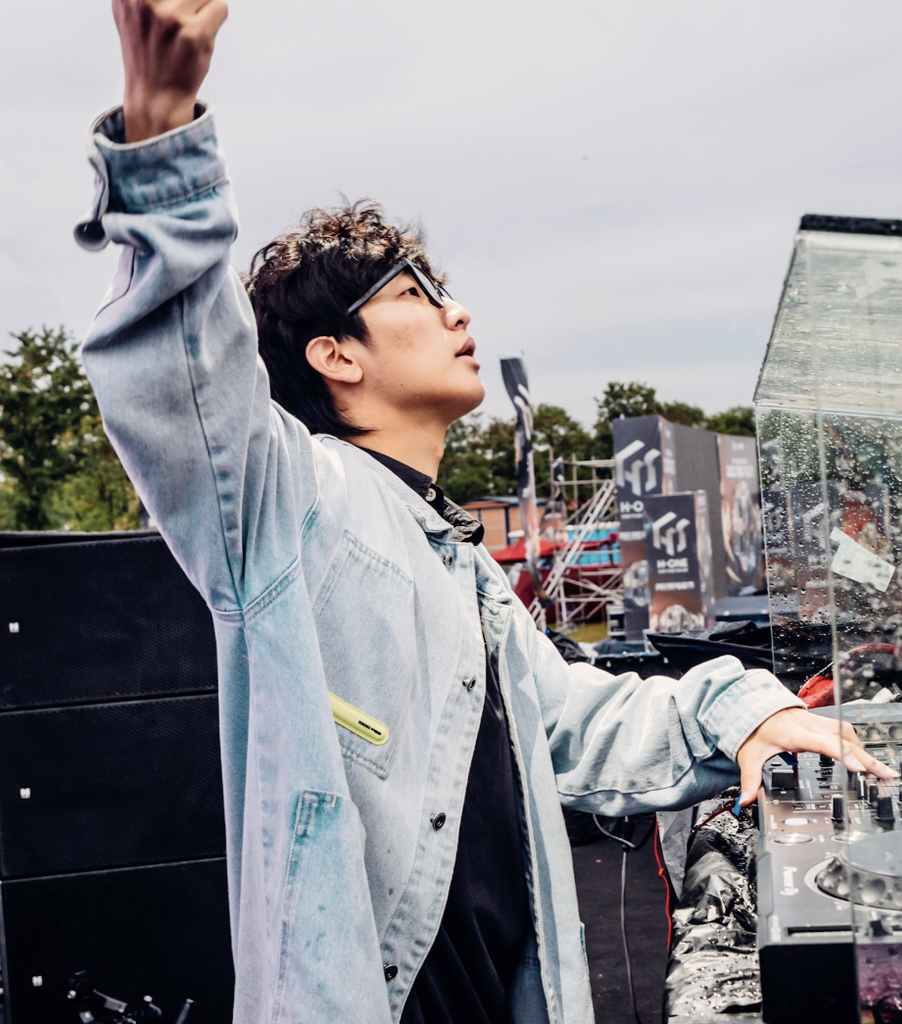
His performance background gives the project more context too. He has played in China and the UK, including VAC Festival and Ministry of Sound in London, and has supported artists such as INFEKT, Eptic, Zomboy, and Seven Lions. That background makes the shift into UK club sounds feel less isolated. He’s already been around different kinds of bass music live. Now the productions are catching up to that range. This EP suggests MiraclE is starting to find that throughline. The vocals, rhythmic switches, timbral detail, and low-end choices all point toward a producer thinking harder about motion, not only impact. MiraclE’s EP feels like the start of that answer.