The Future of Music Promotion Platforms in the Streaming Era
The music industry has fully crossed into a streaming-first economy, and after more than a decade of transition, the consequences are now impossible to ignore. Global recorded-music revenue surpassed $30 billion in 2024 and is projected to approach $45 billion within the next five years, yet the real story sits beneath those headline figures. Independent music now accounts for roughly 40 percent of recorded-music revenue, signaling a structural shift in who holds leverage across the industry.
That shift has not occurred because labels stepped aside, but because platforms lowered barriers while expanding access to music distribution services, discovery, and monetization at scale. In early 2024, the independent sector surpassed Universal Music Group in market share, and independent-label revenues grew at nearly double the overall industry rate. Spotify alone paid $4.5 billion to independent labels and publishers in 2023, roughly half of its total payouts, confirming that meaningful scale no longer requires institutional backing.
Streaming economics remain unforgiving at the track level, with hundreds of thousands of streams required to generate modest income, and that reality has forced a strategic reframing. Artists who thrive today treat streaming as infrastructure rather than outcome, using it to drive discovery while building parallel systems that convert attention into stability.
Direct-to-fan platforms have filled the gap left by streaming payouts. Patreon creators have earned more than $8 billion since launch, supported by tens of millions of free memberships and over ten of millions of free memberships and over ten million paying fans, with more than half of creator revenue now coming from within the platform’s own network. Streaming reflects a similar trajectory, with independent music’s share of Spotify streams doubling since 2017, reinforcing the value of ownership alongside reach.
What connects these systems is data.
This article examines how AI, TikTok, streaming analytics that are supercharged by platforms like One Submit (with whom this article is made in partnership with), and cross-platform intelligence are reshaping music promotion, and how artists can use these tools to build sustainable careers that depend less on labels and more on informed, strategic control.
An Overview Of What We’re Talking About
AI does not remove the need for creative judgment, but it dramatically reduces friction across tasks that once required teams, budgets, or institutional access but when used deliberately, AI allows artists to operate with the strategic clarity once reserved for labels while retaining full creative control. What makes AI particularly transformative is its ability to scale decision-making without scaling overhead. Independent artists can now analyze behavior, test messaging, and adjust timing at a pace that previously required infrastructure.
This shift repositions artists from reactive participants to informed operators within their own release cycles.
AI-Powered Audience Targeting and Precision Marketing
AI-driven audience targeting enables artists to analyze listener behavior across streaming platforms, social networks, and content ecosystems, identifying high-affinity listeners instead of broadcasting blindly. Machine-learning systems evaluate audio features, genre signals, listening history, and engagement patterns to surface audiences most likely to connect with a track.
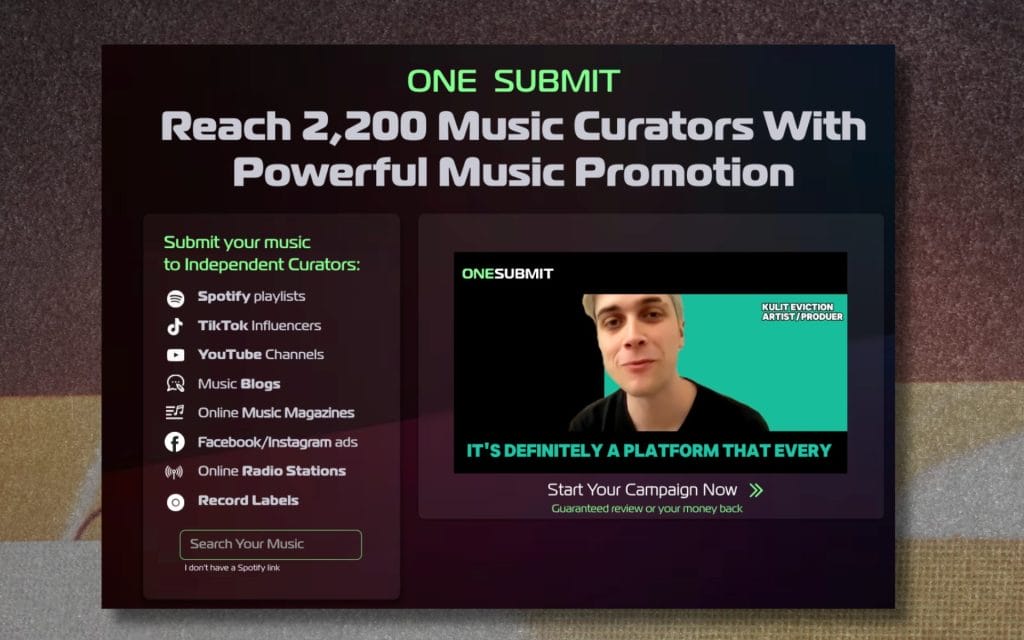
Playlist-matching platforms such as One Submit apply this logic by comparing songs against historical placement data, helping artists focus promotional energy where it produces measurable results.
This transition from mass outreach to precision targeting mirrors developments in ecommerce and performance marketing, where relevance consistently outperforms reach. For independent artists, this approach conserves time and budget while increasing the probability that early engagement sends positive algorithmic signals. Instead of chasing exposure everywhere, artists can concentrate on the listeners who matter most.
Data-Informed Release Timing and Rollout Strategy
Release timing has increasingly become a data problem rather than a calendar decision. Analytics platforms now analyze seasonal listening behavior, competitive release density, genre momentum, and platform-specific trends to identify windows of opportunity. When artists align releases with algorithmic conditions rather than personal convenience, they improve early performance without increasing promotional spend.
Independent teams using data-informed timing have documented meaningful increases in algorithmic playlist inclusion simply by adjusting sequencing and rollout structure and which is why leaning on resources like One Submit really start to pay off when used consitently across multiple campaigns. These gains compound when paired with consistent output, reinforcing the idea that success often comes from timing alignment rather than louder promotion.
AI-Enabled Fan Communication and Scalable Engagement
Fan engagement benefits from AI through tools that support personalized messaging, automated content delivery, and responsive communication at scale. Chatbots and automated systems allow artists to maintain direct contact with growing audiences without sacrificing consistency or responsiveness. When used transparently, these tools enhance access rather than diminish authenticity.
Fans respond to acknowledgment and availability, and automation enables that responsiveness without burnout. For independent artists managing multiple roles, this support preserves energy while strengthening relationships that drive long-term sustainability.
Algorithmic Playlist Targeting and Metadata Optimization
Playlist pitching increasingly relies on algorithmic compatibility rather than personal relationships alone. Systems that analyze audio characteristics, listener behavior, and historical playlist data improve efficiency while reducing wasted outreach. Accurate metadata becomes critical in this context, since algorithms interpret descriptive inputs literally and use them to categorize music.
Artists who understand how metadata shapes discovery improve their chances of algorithmic inclusion while maintaining clarity for human curators. This dual alignment strengthens visibility across both automated and editorial pathways.
TikTok has fundamentally changed how music enters public awareness because it prioritizes participatory discovery over traditional promotional sequencing. Songs now surface through repeated contextual use rather than through linear campaigns, which allows meaning and familiarity to accumulate gradually across thousands of short interactions.
This shift has made TikTok one of the most influential upstream drivers of streaming growth, touring demand, and chart performance, particularly for independent artists operating without label infrastructure. Visibility on the platform depends less on budget or access and more on clarity of presentation and consistency of output.
As a discovery engine, TikTok collapses distance between exposure and action. Users demonstrate higher rates of discovering, sharing, and saving new music than on other short-form platforms, and those behaviors consistently translate into downstream streaming activity. When a track gains traction on TikTok, listeners often encounter it multiple times in different contexts before ever opening a streaming app, which lowers friction at the moment of conversion.
This repeated contextual exposure explains why TikTok-originated songs often outperform expectations once they reach Spotify or Apple Music.
User-Generated Content and Participatory Growth Loops
User-generated content sits at the center of TikTok’s effectiveness as a music promotion platform.
Features that allow direct saving to streaming services have generated massive volumes of track saves, reinforcing TikTok’s role as a feeder rather than a closed ecosystem. Artists who design their content to invite participation, through challenges, reinterpretations, remixes, or open-ended narrative prompts, consistently outperform those who treat the platform as a broadcast channel. The algorithm favors music that can live comfortably inside many different creator identities rather than tracks that rely on a single authoritative presentation.
Participatory formats also extend the lifespan of a song.
Each new creator interpretation introduces the track to a slightly different audience, which reinforces discovery signals while preventing saturation. This dynamic rewards flexibility in how music is framed, encouraging artists to think less about definitive messaging and more about adaptability. Songs that function as raw material for expression travel further than songs that require strict context to land.
Storytelling Formats That Sustain Attention Over Time
Storytelling has emerged as one of the best TikTok music strategies, especially when structured as a sequence rather than a single post. Short serialized narratives that reveal process, intent, or progression give viewers a reason to return, while also training the algorithm to recognize sustained engagement rather than momentary attention.
Clear emotional framing, visual intent, or narrative tension established early increases the likelihood that viewers stay through the clip and engage with subsequent posts. Artists who understand this dynamic treat each video as an entry point into a broader arc, allowing discovery to compound across multiple pieces of content rather than peaking once and fading.
TikTok as an Accelerant Rather Than a Standalone System
Case studies consistently show that TikTok performs best as an accelerant rather than a complete promotional system. Artists who pair viral traction with touring, media coverage, and consistent output convert short-term visibility into sustained growth, while those who rely on the platform in isolation face volatility as algorithms shift. This reality makes diversification a strategic necessity rather than a defensive measure.
Ownership of fan relationships stabilizes growth across cycles. TikTok can introduce music into cultural circulation quickly, but long-term resilience comes from channels the artist controls. When discovery, conversion, and ownership align, TikTok becomes a powerful lever rather than a fragile dependency.
TikTok rewards curiosity, repetition, and participation, and artists who approach it as a living community space rather than a promotional billboard gain far more than exposure. They gain feedback, leverage, and a direct line into momentum that once required label infrastructure to access.
Harnessing Spotify Data and Algorithmic Playlists
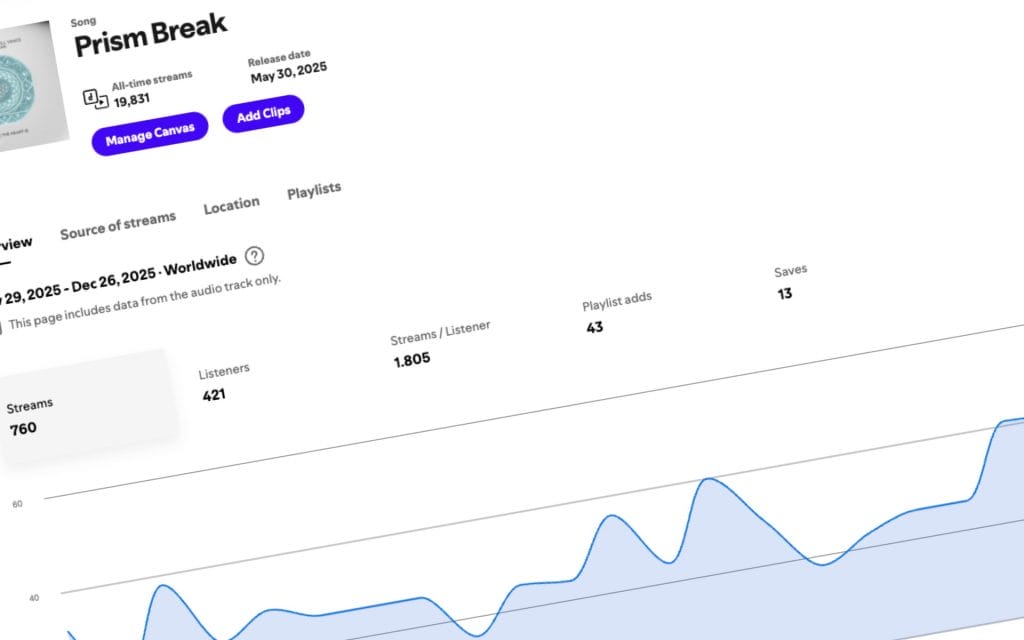
Spotify operates primarily as a recommendation engine driven by behavioral data, and understanding how that system interprets listener signals allows artists to influence outcomes without relying on editorial placement. Algorithmic playlists now function as the dominant discovery channel for emerging artists, often determining whether a track quietly circulates or accelerates into sustained growth. This shift places strategic control in the hands of artists who understand how behavior translates into visibility.
Rather than responding to branding or reputation, Spotify responds to patterns. The platform evaluates how listeners interact with a track, how quickly engagement builds, and how consistently those behaviors repeat across audiences. Artists who design releases around these mechanics operate with more predictability than those waiting for editorial attention.
Behavioral Signals And Contextual Accuracy
Spotify tracks listening duration, skips, saves, playlist adds, and sharing behavior, and these inputs form the foundation of its recommendation logic. Streams shorter than 30 seconds generate neither revenue nor positive signals, which places immediate importance on early engagement. The first moments of a track influence not only earnings but also how aggressively the algorithm continues to test it with new listeners.
These signals compound quickly. When early listeners stay engaged, save the track, or share it outward, Spotify interprets that behavior as relevance rather than novelty. This interpretation increases the likelihood of algorithmic expansion into playlists such as Discover Weekly and Release Radar.
Metadata plays a critical role in how Spotify categorizes and distributes music. Genre labels, mood descriptors, lyrical themes, and instrumentation tags help the platform determine where a track belongs and which listeners it should reach. Precision in these inputs improves compatibility with algorithmic playlists by reducing ambiguity in how a song is interpreted.
Listener Retention And The Metrics
Skip rates function as quality indicators within Spotify’s system. High abandonment signals mismatch or disengagement, which reduces future placement opportunities. This dynamic incentivizes clarity and focus in arrangement, particularly in the opening moments of a track.
Shorter intros, immediate thematic direction, and strong early engagement help retain listeners long enough for the algorithm to register meaningful interaction. Artists who understand this relationship between structure and behavior design release that perform better without compromising artistic intent.
Saves and shares amplify reach by extending a track’s lifespan beyond release week. When listeners add songs to their personal playlists or share them with others, Spotify registers those actions as a resilient interest rather than a momentary curiosity. These signals stay strong over time, allowing tracks to re-enter recommendation cycles long after initial promotion fades.
Encouraging these behaviors subtly, through narrative framing or release context, strengthens algorithmic positioning without overt calls to action. Over time, this approach builds momentum that compounds across releases.
Consistency as an Algorithmic Advantage
Consistency plays a significant role in maintaining algorithmic relevance. Regular releases train Spotify’s system to expect activity, which increases inclusion in algorithmic playlists that favor ongoing engagement. Artists who release steadily remain present within recommendation loops, while long gaps often reset momentum.
This does not require sacrificing quality for frequency, but it does reward intentional scheduling and a clear release strategy because consistency creates continuity, and continuity supports discovery.
Interpreting Spotify for Artists Data
Spotify for Artists provides visibility into how streams are sourced, distinguishing between algorithmic playlists, editorial placements, and listener-generated activity. Interpreting these patterns allows artists to evaluate which efforts are driving growth and which signals deserve reinforcement.
When artists understand where momentum originates, they can allocate time and resources more effectively, reinforcing systems that work rather than guessing at causes.
Strong algorithmic performance often precedes editorial inclusion rather than following it. Editors frequently look for evidence of organic traction before committing placement, which means that listener-driven momentum creates leverage. Artists who prioritize algorithmic growth build credibility that supports editorial consideration later.
Diversified Revenue Streams and Fan-Centric Platforms

Streaming exposure may open doors, but diversified revenue keeps those doors from slamming shut when algorithms shift. Independent artists who build sustinable careers increasingly view streaming as discovery infrastructure rather than a financial foundation, which reframes how success gets measured and where effort gets allocated.
This shift is not ideological, but practical, since per-stream economics make it clear that sustainability requires layered income models.
Community Hubs
Fan-centric platforms like Patreon demonstrate how direct relationships outperform scale alone. Membership systems allow artists to monetize depth rather than reach, which changes the creative incentive structure entirely. Instead of optimizing everything for mass appeal or algorithmic compatibility, artists can create work that resonates deeply with a smaller audience while still generating meaningful income. Over time, this alignment produces more stable revenue and stronger community ties, both of which reduce reliance on external gatekeepers.
Merchandise
Merchandise follows the same logic when treated as an extension of identity rather than an afterthought or obvious cash-grab.
Limited runs, intentional design, and narrative integration consistently outperform generic offerings, especially when tied to specific releases or moments like a tour or album drop. Platforms like TikTok have shown that fans exposed to artists through short-form video often spend more on merchandise than traditional listeners, which reinforces the importance of connecting discovery with ownership opportunities.
Not every fan wants a subscription, but many are willing to pay for specific artifacts, unreleased material, or curated collections. Offering these options respects different engagement levels while capturing revenue that would otherwise be lost to passive listening. This approach mirrors strategies used by independent filmmakers and writers, who routinely monetize archives alongside new work.
Live Streaming
Live streaming, virtual events, and hybrid performances further decouple income from geography. High-profile examples like virtual concerts inside gaming platforms have proven that scale is possible without touring, yet smaller artists benefit just as much from intimate digital experiences that foster connection. These formats reduce overhead while expanding access, which allows artists to experiment without risking financial collapse.
The common thread across all of these revenue streams is ownership.
When artists control how money flows, they gain freedom to create, release, and evolve. Diversification transforms success from a single fragile channel into a resilient system, and that resilience is what ultimately weakens the grip of traditional label dependency.
Prediction Time! Preparing for a Platform-Driven Industry
Looking ahead, the trajectory of music promotion points toward deeper personalization, increased transparency pressure, and continued decentralization. Platforms will evolve, regulations will shift, and new tools will emerge, yet the underlying trend remains consistent: artists who understand systems adapt faster than those who chase tactics.
Algorithm transparency will likely increase as regulators demand more precise explanations of recommendation logic. Artists who already understand how signals function will be better positioned to respond when these systems change. Personalization will deepen as platforms incorporate contextual data, potentially rewarding music tailored to specific moods, activities, or environments.
Voice-based discovery and AI-driven curation will influence how metadata and presentation matter, while immersive experiences will expand beyond novelty into routine engagement. Blockchain-based licensing and royalty distribution may normalize faster, fairer payments, especially for independent artists willing to experiment.
Perhaps most importantly, micro-communities will continue to outperform mass-market strategies. Trigger cities, language-based audiences, and interest-driven clusters will shape how music spreads, reinforcing the value of targeted growth over universal appeal.
The artists who thrive in this environment will not be those with the most significant budgets, but those with the clearest understanding of how attention, data, and ownership intersect. Platforms have democratized access, but leverage now belongs to those who learn how to use it deliberately.