ARC On-Ear Review: IK Multimedia Just Solved Headphone’s Biggest Mixing Problem (And Took Home An Editor’s Choice Award For It)
Table of Contents
I have spent years trying to get a dependable headphone monitoring chain that I can trust across laptops, travel setups, and late-night sessions, and the problem never fully went away. Headphones remove room variables, which helps, but they also exaggerate stereo separation; they push me into second-guessing the low end, and they can make the midrange balance feel different from what I hear on speakers.
The usual answer has been correction software inside the DAW, plus some type of room or crossfeed plugin, but that approach adds layers and steps, and I end up thinking about the monitoring chain as much as the mix. Then I open a new session, I forget a plugin, I change headphones, or I swap from laptop to tablet, and the whole thing turns into a checklist again. Over time, that friction matters, because it pulls attention away from the decisions that actually move a track forward.
That is the angle where ARC ON·EAR makes sense to me, because it takes the most important part of headphone correction and moves it onto a dedicated piece of hardware.
The basic promise is simple: keep calibration and spatial processing outside the DAW so my monitoring stays consistent from one session to the next, and from one device to the next. It aims to be a studio-quality converter and headphone amp that also stores headphone calibration and a speaker-style listening simulation, and it does that without requiring a plugin host or DAW routing.
Why ARC On-Ear Brought Home The Editor’s Choice Award

As we wind down 2025, it feels like the number of new music production products hitting the market has never been higher, yet genuinely “useful”, game-changing things have become harder to find. A lot of releases promise workflow breakthroughs or claim to fix long-standing problems, but in practice they end up adding complexity, leaning too hard on software layers, or solving issues that producers already worked around years ago.
What separates ARC ON·EAR from that noise is how directly it addresses a real, everyday problem without asking users to change how they work or adopt new habits. It takes a familiar challenge, trusting headphones for serious decisions, and handles it in a way that feels intentional, focused, and grounded in actual studio use rather than speculative features.
ARC ON·EAR earns the Editor’s Choice Award because it delivers on its core idea with clarity and restraint. Moving headphone calibration and spatial processing onto dedicated hardware simplifies monitoring in a way that feels immediately useful, and it does so without overpromising or leaning on flashy gimmicks.
The design choices prioritize consistency, speed, and confidence, which are the qualities that matter most when you are deep into a session and trying to make decisions that hold up outside the studio. In a year filled with ambitious launches and crowded feature lists, ARC ON·EAR stands out by making headphone monitoring feel calmer, faster, and more dependable, which is why it easily takes home Editor’s Choice as we close out 2025.
ARC ON·EAR and the Practical Problem It Targets
ARC ON·EAR is aimed at the part of headphone mixing that tends to slow me down, which is trust.
When my monitoring chain lives inside a session, I always feel one step away from forgetting a setting, loading a wrong preset, or mixing into a curve that I did not intend. Moving the correction to the device itself removes the need to run correction software inside the DAW, and that change affects the whole workflow immediately. I set it up once, I store it, and it follows me, which means I stop rebuilding the same chain in every project. That alone changes how relaxed I feel when opening a session.
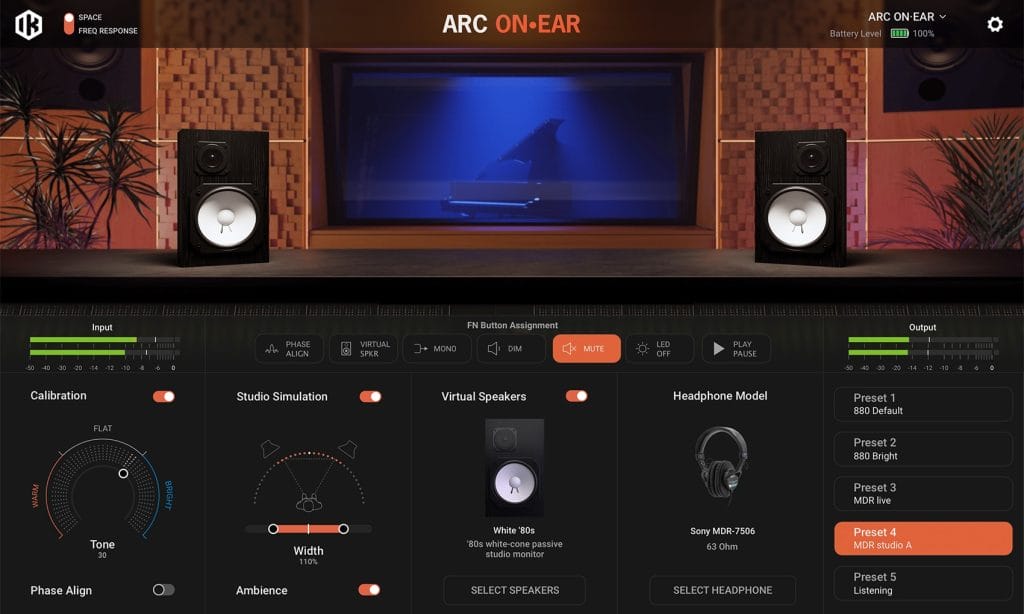
Another foundation piece is the headphone profile database.
There is a large list of supported headphone models available from the start, which matters because calibration only helps when the reference data actually matches what you are wearing. What I appreciate is that the calibration strength scales in a sensible way based on how neutral the headphones already are. Neutral studio headphones receive a lighter touch, while more uneven models get stronger shaping, and that keeps the end result from feeling processed. The device stores five onboard presets, so switching between headphones and listening targets becomes part of the workflow instead of a disruption.
Portability is another reason the concept works.
The unit is battery-powered, which makes it easy to use away from the studio without rebuilding your monitoring chain from scratch. That portability really helps with the continuity of this thing in practice. If I work half a session at my desk and half somewhere else, I want the same monitoring assumptions to carry over. With digital and analog inputs available, it slots easily into laptop setups, tablets, phones, and even analog sources without fuss.
The workflow value of hardware buttons
One detail I keep appreciating is that the hardware buttons make mono, dim, preset switching, and function access immediate. There is a user-assignable function button that can be set to common actions, which keeps the device feeling like studio hardware instead of a menu-driven accessory.
When I am checking balances, I want those moves to be fast and repeatable. I also care about switching in real time without clicks or dropouts, because anything glitchy breaks concentration. ARC ON·EAR handles that well, and the result is a workflow that feels faster than software-based solutions that rely on menus and plugin windows.
Headphone Calibration and How It Changes My Decisions
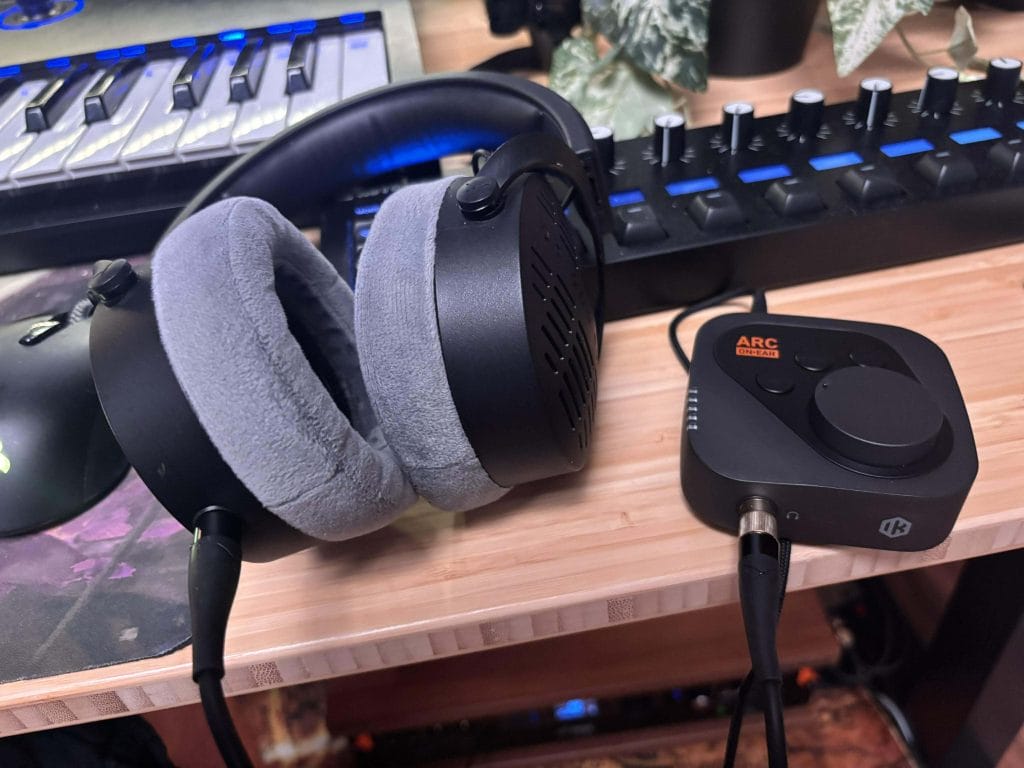
The most meaningful benefit for me is that calibration improves low-end judgment and center image clarity.
I notice it when I am setting kick and bass balance, and I notice it again when I am placing lead vocals or main melodic elements in the center. With uncorrected headphones, it is easy to overdo low frequencies because the headphone response exaggerates certain areas, and that leads to mixes that fall apart on speakers. With calibration engaged, I spend less time chasing corrective EQ moves and more time evaluating arrangement and dynamics choices that translate.

Another major benefit is that it makes difficult or uneven headphones usable for mix decisions. I own headphones that are comfortable or isolating but unreliable for balance work, and calibration brings them into a range where I can actually trust what I am hearing. That expands the situations where I can make real progress, especially when traveling or working late at night. I also like that on-device calibration stays active outside the DAW, so reference listening, stem checks, and rough bounces all pass through the same monitoring lens.
Switching headphones mid-session also becomes less of a mental hurdle. With presets stored on the device, I can move between my main studio headphones, a closed-back pair, and a translation target quickly, without reloading anything. That kind of immediacy encourages more frequent checking instead of committing to one reference out of convenience.
On the audio quality side, the DAC and headphone amp feel clean and stable, with enough headroom for demanding headphones and a low noise floor that supports detailed listening.
Real-time switching without artifacts
Real-time switching without clicks or dropouts matters more than spec sheets suggest. If switching feels risky, I avoid doing it, and translation checks get skipped.
Here, I can flip between profiles and keep working, which reinforces a faster and more disciplined workflow. Over time, that makes a difference in how consistently mixes hold up outside the studio.
Studio Simulation, Crossfeed, and Translation Checks

Stereo presentation on headphones has always been one of the harder issues to deal with, and ARC ON·EAR addresses it in a restrained way. The virtual crossfeed reduces the extreme left-right separation that headphones tend to exaggerate, which helps panning and depth decisions feel calmer and more speaker-like. The effect is subtle, but once I adjust to it, I miss it when it is gone.
This also affects how reverb decisions land. With crossfeed engaged, reverb tails feel more connected to the source instead of floating unnaturally at the edges. That makes it easier to judge decay, depth, and balance without constantly checking speakers. Consumer playback simulations add another layer here, giving quick insight into how a mix might translate to phones, TVs, or cars. I treat these as short reality checks rather than primary monitoring modes.
There is a realistic hesitation worth mentioning.
The virtual speaker and nearfield simulations are subtle, and they will not replace real monitors for everyone. I would not expect them to. I see them as reference perspectives rather than destinations. The upside of that restraint is reduced fatigue, since the presentation never feels exaggerated or distracting during long sessions.
How I actually use the simulations in a session
In practice, calibration stays on as my default. I do balance and EQ work there, then switch briefly into a consumer-style target to see what jumps out. If something feels off, I make a small tweaks and return to the main reference.
That approach keeps the simulations useful without letting them dominate decision-making.
Hardware Design, Connectivity, and Audio Performance
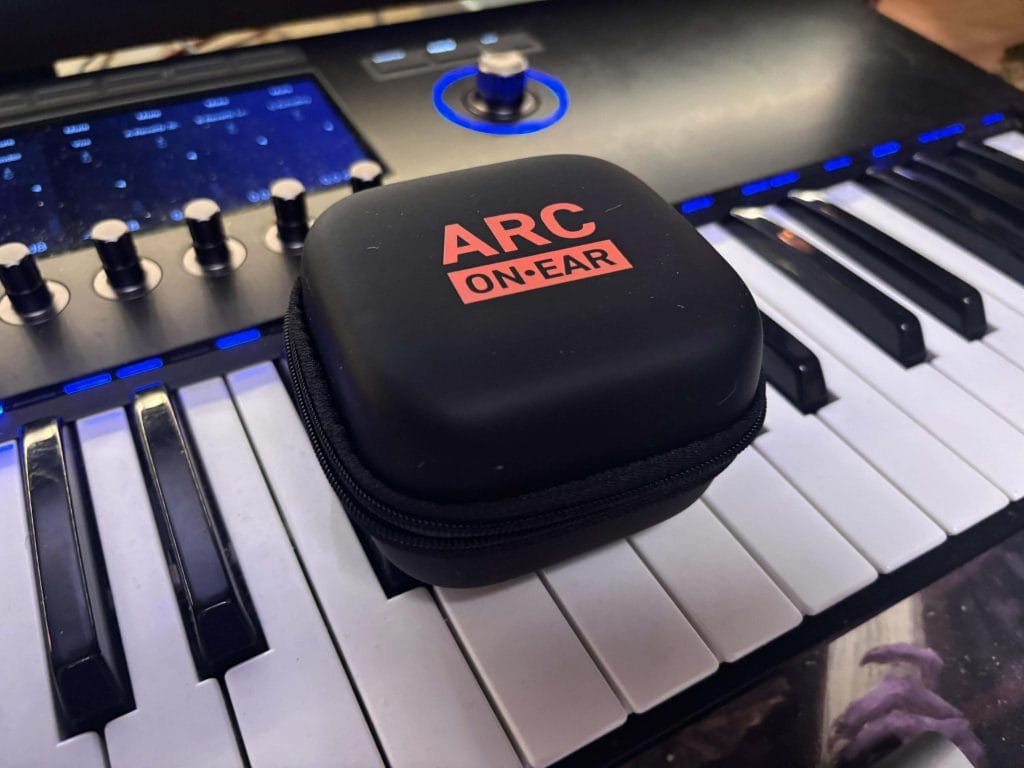
From a physical standpoint, ARC ON·EAR feels built for daily use and travel. It is compact, solid, and easy to toss into a bag without worrying about damage. The metal enclosure inspires confidence, and the included case makes it really simple to carry cables and adapters together.
These details matter when a device becomes part of a regular workflow instead of something that lives on a desk.
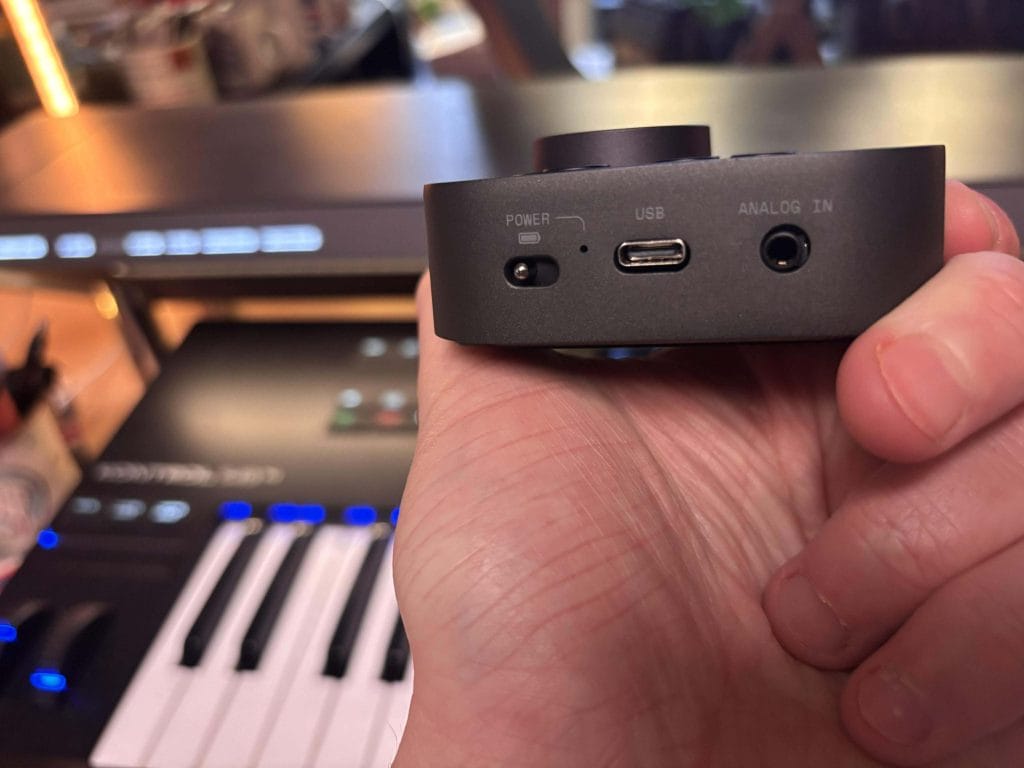
Connectivity is flexible enough to handle real-world setups. USB-C works cleanly with laptops and mobile devices, while the analog input covers situations where digital audio is not an option. The headphone output suits studio headphones, and the included cables and adapters cover the basics without requiring extra purchases. That kind of completeness reduces friction right from the start.
Performance and Battery Life
In terms of performance, the conversion and amplification feel transparent. There is enough headroom to drive demanding headphones without strain, and the noise floor stays low enough for critical listening. Even with the virtual monitoring features disabled, it functions well as a portable DAC and headphone amp, which adds to its usefulness beyond a single role.
Battery life is one of the few ordinary and expected constraints. Around four hours of use means longer sessions often require USB power, especially during extended editing or mixing days. I do not see that as a deal-breaker, but it does shape how I plan sessions on the road. The ability to run while charging helps offset that limitation.
Control Software, Presets, and Who Gets the Best Results
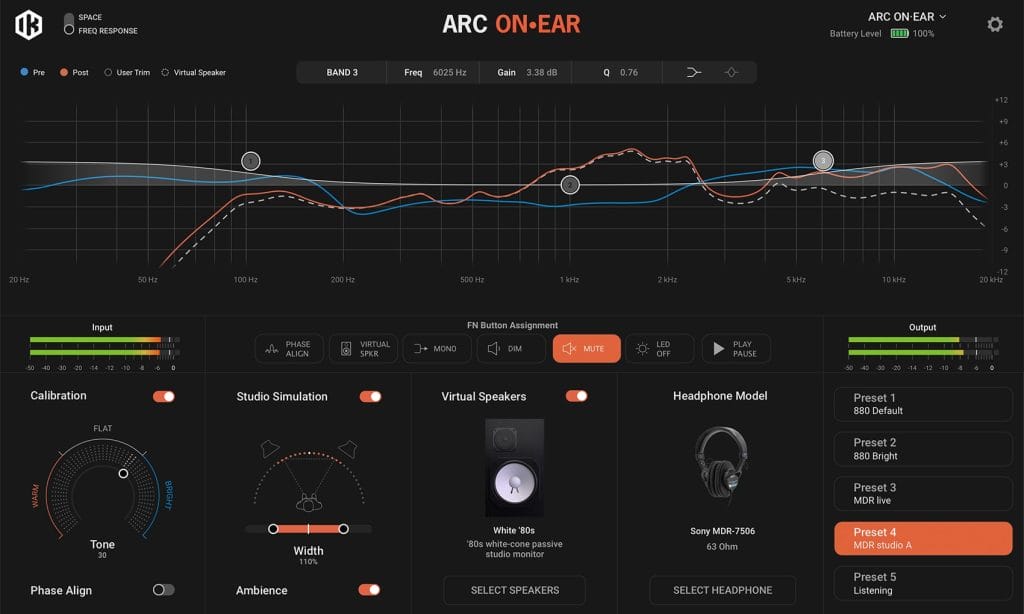
The control side of ARC ON·EAR stays intentionally simple. Presets store headphone selection, calibration, simulation settings, and function button assignments, which keeps setup centralized and predictable. Once those presets are dialed in, the device largely runs itself. That consistency across environments reduces mental overhead, especially when switching between workspaces.
Hardware controls again play a role here.
Mono, dim, and preset access live on the device, which means less time reaching for a mouse or opening an app. The result is a monitoring chain that feels faster than software-only solutions that require menu navigation. That speed supports better habits, because it removes excuses to skip checks.
The biggest dependency remains profile availability.
Results are best when your exact headphone model is supported, and while coverage is broad, it is not universal yet. That is something I would check before committing. For producers and engineers who rely heavily on headphones, travel often, or want consistent monitoring without rebuilding plugin chains, ARC ON·EAR fits naturally. For those who primarily mix on speakers in treated rooms, the impact will feel smaller, though the DAC and amp side still hold value.
What stands out most after extended use is confidence. With calibration handled on the device and accessible everywhere, I feel more comfortable committing to decisions. Translation checks become quicker, monitoring feels consistent, and the overall process stays focused on listening instead of managing tools. ARC ON·EAR succeeds where it matters most, which is in daily use across real situations, not just in ideal setups or environments.